8 Days · Year-round
8-Day Classic Tanzania Safari
Tarangire · Serengeti · Ngorongoro
From, per person
$2,625
Every park fee included
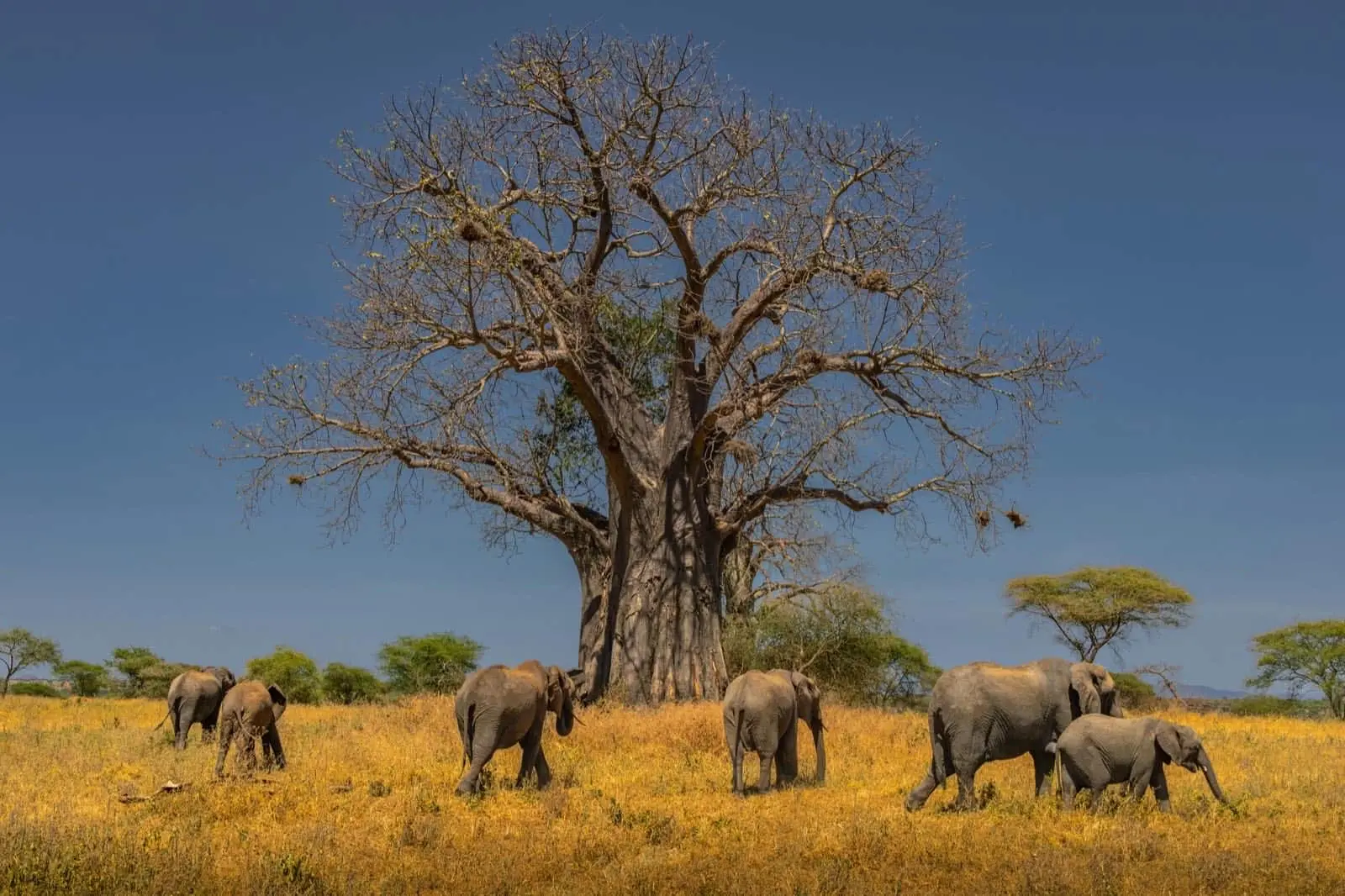
Eight days is a good length for the Northern Circuit. It allows three nights in the Serengeti, which gives you time to explore well beyond the first day's drive, and a full day on the floor of the Ngorongoro Crater. The route starts in Tarangire, known for its elephants and baobab trees, continues to the open plains of the Serengeti for big cats and wide landscapes, and finishes at the crater, a collapsed volcano that is home to around 60 lions and 50 black rhino. You travel in a private vehicle with your own guide and stay in full-board lodges and camps throughout.
The Route
- 2 nights Tarangire
- 3 nights Central Serengeti
- 2 nights Ngorongoro Crater
- Day 1Arusha to Tarangire National Park
- Day 2Full Day Tarangire
- Day 3Tarangire to Central Serengeti via Olduvai Gorge
- Day 4Full Day Serengeti
- Day 5Full Day Serengeti
- Day 6Serengeti to Ngorongoro Crater Rim
- Day 7Ngorongoro Crater: Full Day on the Floor
- Day 8Ngorongoro to Arusha
Check my dates for this tripFree quote · No commitment · Reply within 24h
Your enquiry is free and without obligation.
Safari Overview
- duration
- 8 Days / 7 Nights
- parks Visited
- Tarangire, Serengeti, Ngorongoro
- accommodation
- Mid-range lodges and tented camps
- group Size
- Private (2-6 guests)
- departs From
- Arusha, Tanzania
- best Season
- Year-round (see FAQ for seasonal detail)
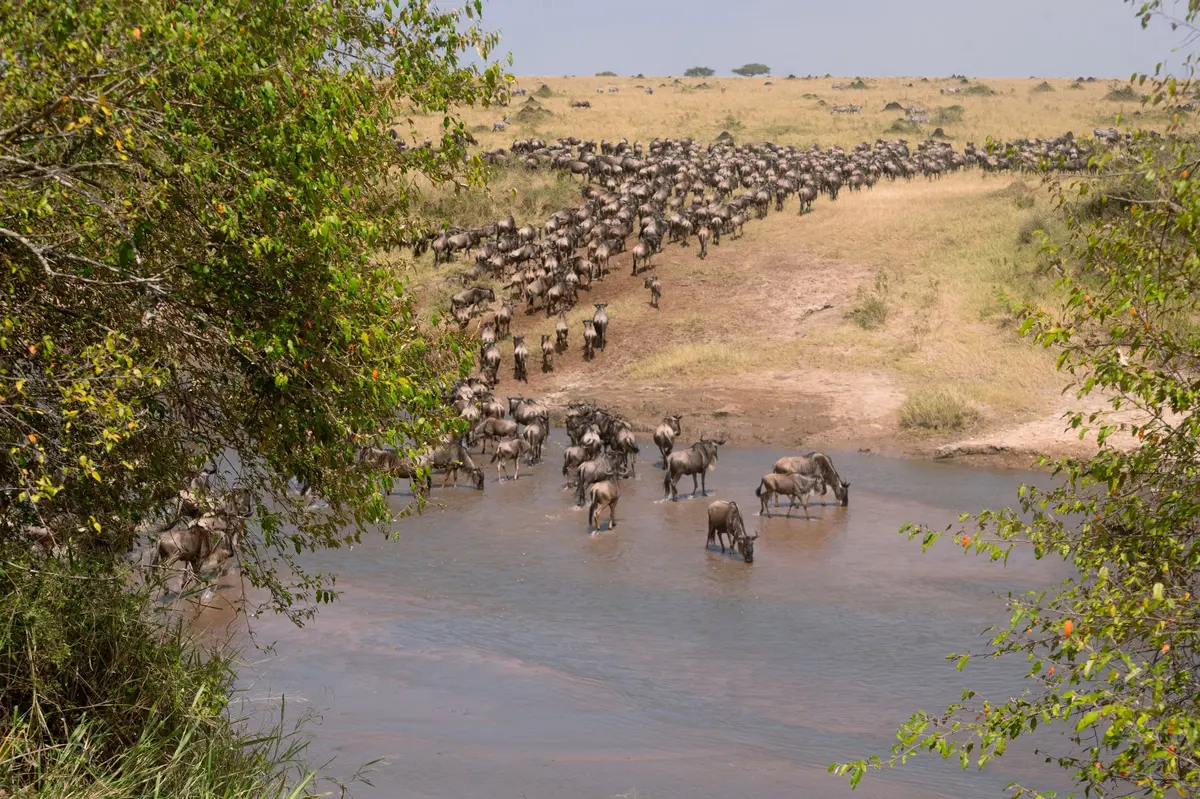
The route covers three parks: Tarangire, the central Serengeti and the Ngorongoro Crater, with about 1,200 km of driving from Arusha and back. Each park is quite different, so eight days does not feel repetitive. Tarangire is dense bush and ancient baobabs, with the Silale Swamp drawing elephants from across the region, and between June and October herds of 200 or more are common along the Tarangire River. The Serengeti, by contrast, is open short-grass plain dotted with granite kopjes around 600 million years old, and it has one of the highest predator densities in Africa. The crater walls drop 600 metres to the floor, and because most of the animals inside rarely leave, the densities of lions and black rhino are higher than anywhere else on the continent. Which part of the Serengeti you see depends on when you travel. From January to March the herds are on the southern plains near Ndutu for the calving season, when thousands of wildebeest calves are born each day at its peak. In June and July they are usually in the Western Corridor and crossing the Grumeti River, and from August to October they are in the northern Serengeti around the Mara River. In November and December the herds move south again, and your guide plans the game drives around current conditions.
Day by Day
- Day1
Day 1
Arusha to Tarangire National Park
Arusha to Tarangire · about 2 hrs, tarmacOvernight: Tarangire Safari Lodge or similar
Read moreShow less
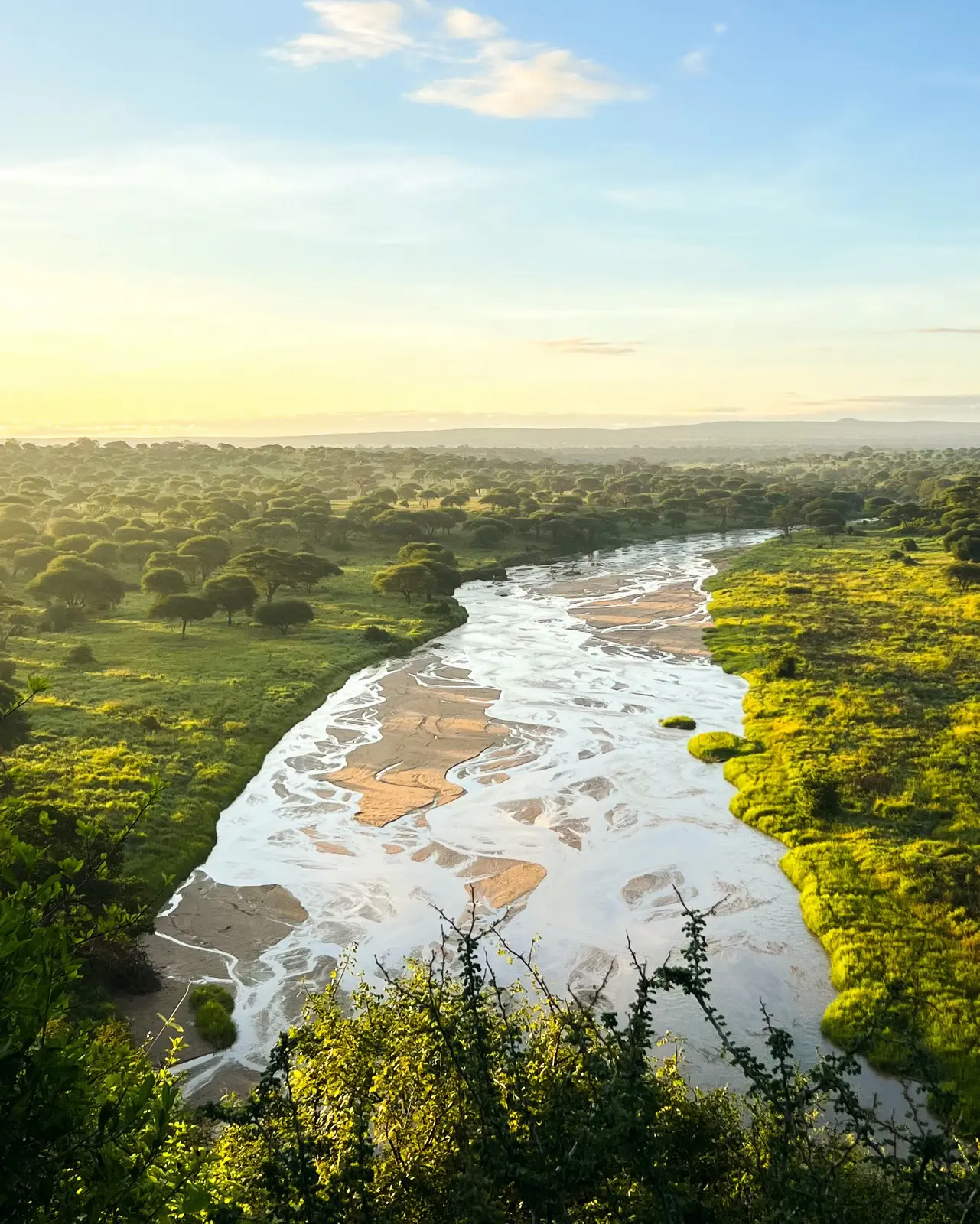
Pickup from your Arusha hotel at 7:30am. The drive to Tarangire takes about two hours, heading southeast through Maasai villages before the scrub turns to acacia woodland and the first baobabs appear. After entering through the main gate you head for the Tarangire River, where elephants from across the ecosystem gather in the dry season, and on some mornings you may see 150 in an hour. Afternoon game drive along the river, then check in before sunset.
MealsLunch, Dinner - Day2
Day 2
Full Day Tarangire
Overnight: Tarangire Safari Lodge or similar
Read moreShow less
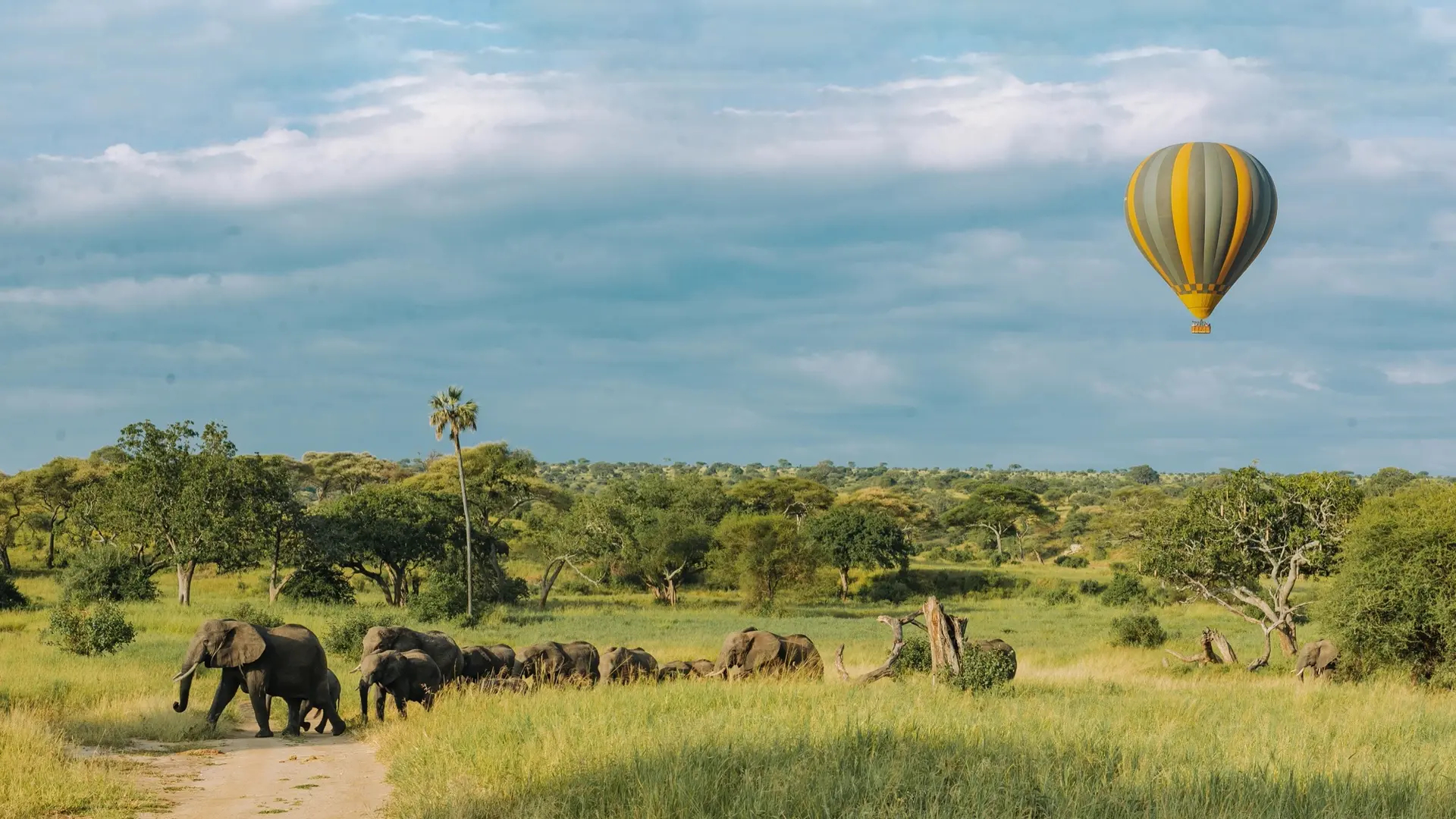
A full day inside the park, starting before 7am while the air is still cool. The Silale Swamp in the south draws buffalo, wildebeest and hippos, and few visitors reach this part of the park. Tarangire is also home to species you are unlikely to see elsewhere on this route, including the fringe-eared oryx with its long straight horns, the gerenuk, a long-necked antelope that feeds standing on its hind legs, and pythons that climb into the fig trees along the river. The park covers nearly 3,000 square kilometres, and one full day is enough to see it well.
MealsBreakfast, Lunch, Dinner - Day3
Day 3
Tarangire to Central Serengeti via Olduvai Gorge
Tarangire to Central Serengeti · 6.5 to 8 hrs with stops at Olduvai GorgeOvernight: Serengeti Serena Safari Lodge or similar tented camp
Read moreShow less
Early breakfast, then depart for the Serengeti. The drive takes about six hours with stops, passing through Karatu, up into the Ngorongoro highlands and across the Conservation Area to the west. Before Naabi Hill Gate you stop at Olduvai Gorge, where Mary Leakey found the skull of Paranthropus boisei in 1959, a hominid that lived on these plains 1.8 million years ago. The resident guide gives a 20-minute talk at the excavation site, and it is well worth the stop. You reach the Seronera area by late afternoon, in time for a first game drive on the plains.
MealsBreakfast, Lunch, Dinner - Day4
Day 4
Full Day Serengeti
Overnight: Serengeti Serena Safari Lodge or similar tented camp
Read moreShow less
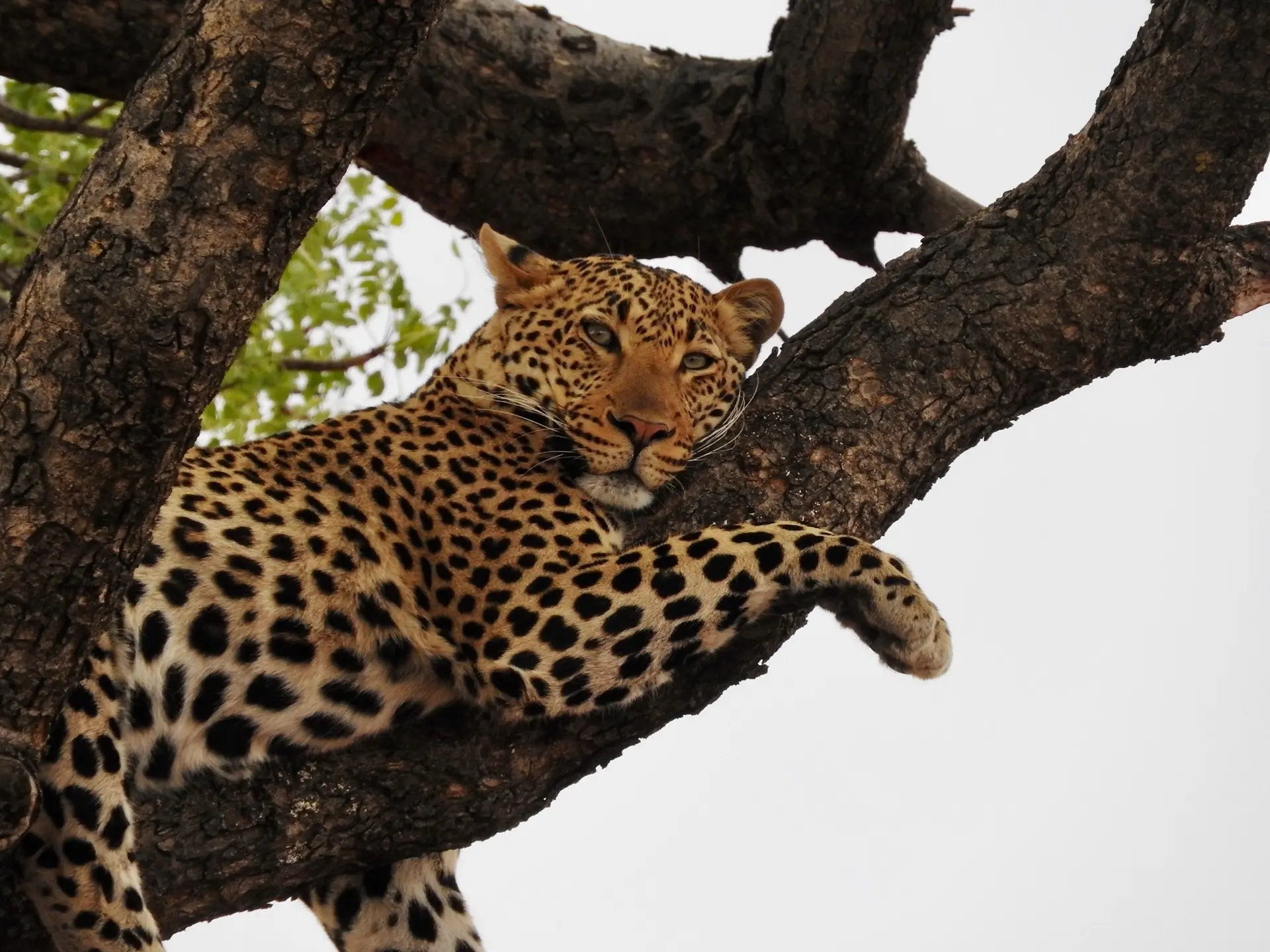
A full day exploring the central Serengeti. The Seronera Valley runs through the centre of the park and is the most reliable area for big cats throughout the year. Leopards rest in the sausage trees along the river, lions use the granite kopjes as lookouts, and cheetahs hunt on the short-grass plains south of the valley. The wider Serengeti ecosystem holds about 3,000 lions, 1,000 leopards and 225 cheetahs, and a full day in this area usually brings good sightings of at least some of them.
MealsBreakfast, Lunch, Dinner - Day5
Day 5
Full Day Serengeti
Overnight: Serengeti Serena Safari Lodge or similar tented camp
Read moreShow less
Having three nights in the Serengeti lets you slow down, and by the third day there is time to wait at a sighting instead of moving on. Your guide chooses where to go based on reports from other guides in the field. An optional hot air balloon flight leaves at 5:30am for an hour over the plains, followed by a champagne bush breakfast on landing. It costs $659 per person and needs to be booked in advance.
MealsBreakfast, Lunch, Dinner - Day6
Day 6
Serengeti to Ngorongoro Crater Rim
Central Serengeti to Ngorongoro Crater · 3 to 4 hrs, gravel then tarmac near the rimOvernight: Ngorongoro Serena Safari Lodge or similar rim lodge
Read moreShow less
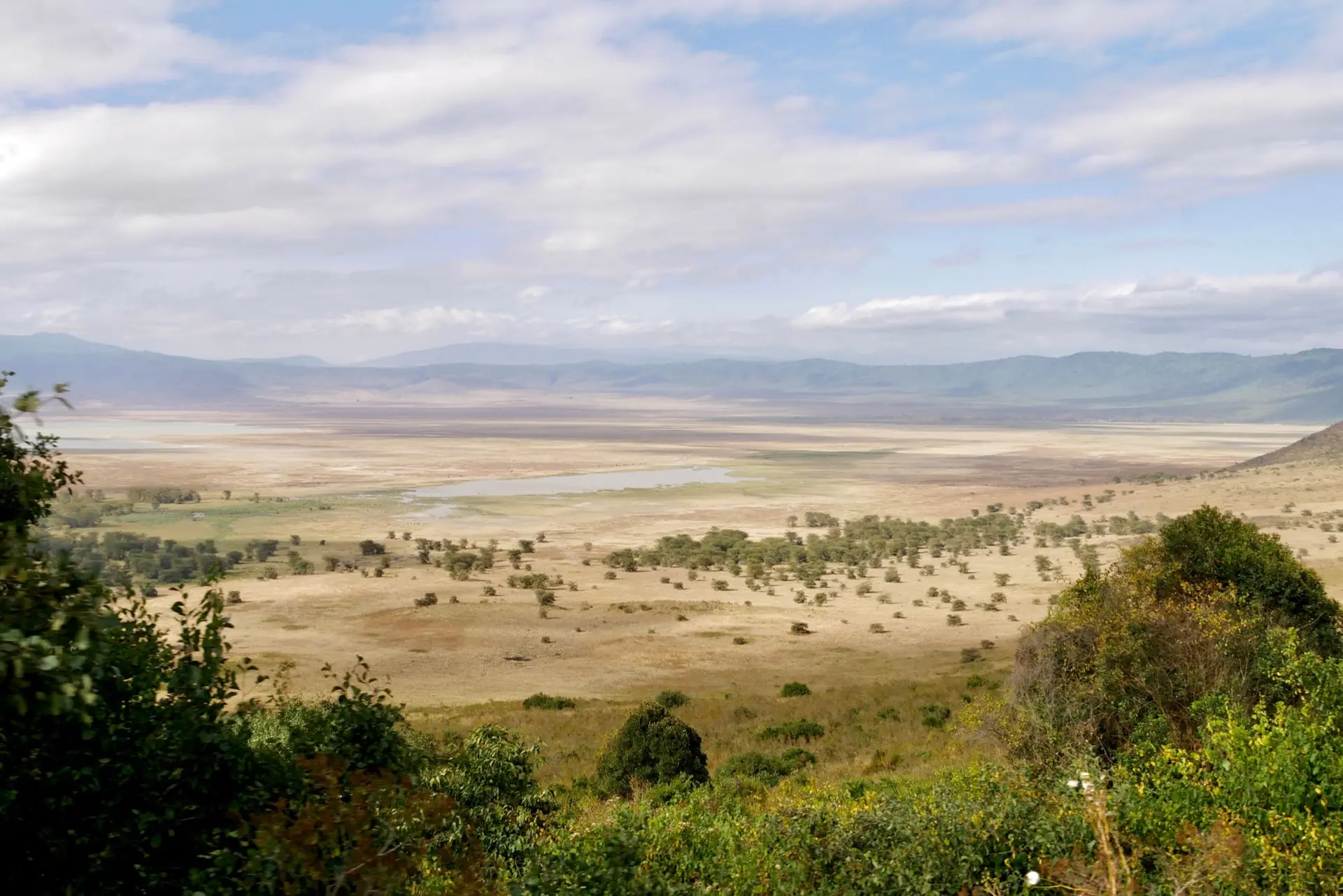
A final morning game drive in the Serengeti before leaving through Naabi Hill Gate. The drive to the crater rim takes about three and a half hours, climbing the outer slopes through montane forest of olive trees and giant heather, and you arrive in time for lunch. The crater floor lies 600 metres below the rim, and on a clear afternoon you can often see the wildebeest herds from the lodge terrace. An early dinner leaves you rested for the descent the next morning.
MealsBreakfast, Lunch, Dinner - Day7
Day 7
Ngorongoro Crater: Full Day on the Floor
Overnight: Ngorongoro Serena Safari Lodge or similar rim lodge
Read moreShow less
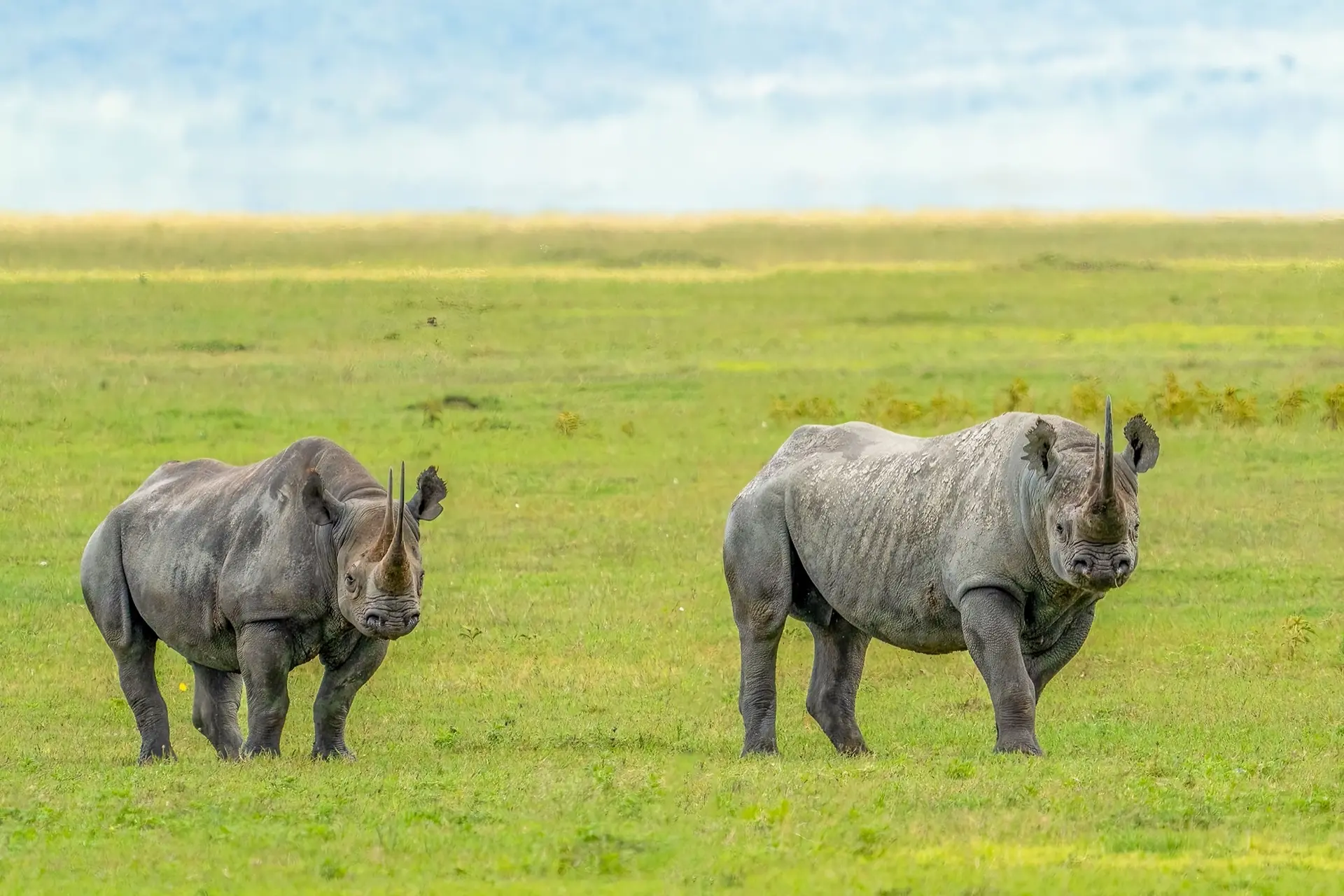
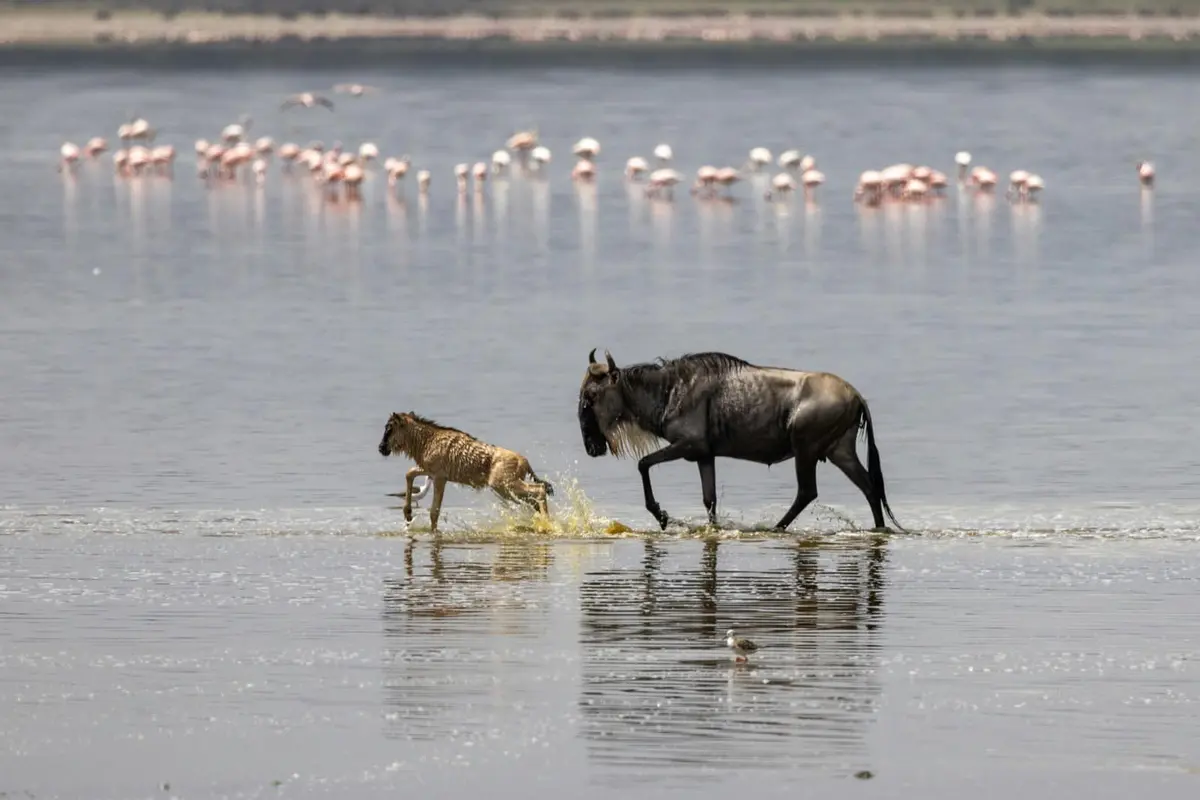
The descent starts at 6:00am, before most other vehicles arrive, and the track drops 600 metres through forest in about 30 minutes of steep switchbacks. The crater floor holds approximately 60 lions with well-defined territories, 15,000 wildebeest, 9,000 zebra, 400 hyenas and around 50 black rhino, the densest black rhino population in Africa. Lake Magadi on the western side draws flamingos and hippos, and elephants shelter in the Lerai Forest in the south at midday. There are no giraffes in the crater, as the steep walls are too difficult for them to cross. All vehicles must leave the crater floor by 6:00pm, so you have the whole day.
MealsBreakfast, Lunch, Dinner - Day8
Day 8
Ngorongoro to Arusha
Ngorongoro Crater to Arusha · 3.5 to 4 hrs, mostly tarmacOvernight: End of safari
Read moreShow less
Breakfast on the rim, then a drive of about three hours back to Arusha, with drop-off at your hotel or Kilimanjaro International Airport (JRO). If your international flight leaves the same day, the earliest departure that works is 21:00, and domestic connections from Kilimanjaro can work from 19:40.
MealsBreakfast
Prices
Green season (April–May)
| Tier | 2 guestsper person | 4 guestsper person | 6 guestsper person |
|---|---|---|---|
Comfort Comfortable tented camps and lodges on full board. This is our best-value tier, and the safari is still fully private. Tortilis mobile camps, Mawe Karatu | $3,730 | $2,900 | $2,625 |
Premium Built lodges and upgraded camps in prime locations near the park gates. Ang'ata Camps, Turaco Ngorongoro Valley (built lodge) | $4,720 | $3,885 | $3,605 |
Comfortable tented camps and lodges on full board. This is our best-value tier, and the safari is still fully private.
Tortilis mobile camps, Mawe Karatu
- 2 guests (pp)
- $3,730
- 4 guests (pp)
- $2,900
- 6 guests (pp)
- $2,625
Built lodges and upgraded camps in prime locations near the park gates.
Ang'ata Camps, Turaco Ngorongoro Valley (built lodge)
- 2 guests (pp)
- $4,720
- 4 guests (pp)
- $3,885
- 6 guests (pp)
- $3,605
Peak season (June–October)
| Tier | 2 guestsper person | 4 guestsper person | 6 guestsper person |
|---|---|---|---|
Comfort Comfortable tented camps and lodges on full board. This is our best-value tier, and the safari is still fully private. Tortilis mobile camps, Mawe Karatu | $4,410 | $3,580 | $3,300 |
Premium Built lodges and upgraded camps in prime locations near the park gates. Ang'ata Camps, Turaco Ngorongoro Valley (built lodge) | $5,775 | $4,935 | $4,655 |
Luxury Premium tented camps and a crater-rim lodge, the top of our range. Lemala Camps, Ngorongoro rim lodge | $8,425 | $7,560 | $7,275 |
Comfortable tented camps and lodges on full board. This is our best-value tier, and the safari is still fully private.
Tortilis mobile camps, Mawe Karatu
- 2 guests (pp)
- $4,410
- 4 guests (pp)
- $3,580
- 6 guests (pp)
- $3,300
Built lodges and upgraded camps in prime locations near the park gates.
Ang'ata Camps, Turaco Ngorongoro Valley (built lodge)
- 2 guests (pp)
- $5,775
- 4 guests (pp)
- $4,935
- 6 guests (pp)
- $4,655
Premium tented camps and a crater-rim lodge, the top of our range.
Lemala Camps, Ngorongoro rim lodge
- 2 guests (pp)
- $8,425
- 4 guests (pp)
- $7,560
- 6 guests (pp)
- $7,275
Prices are per person sharing, in US dollars. The 'from' price is the Comfort tier with six guests sharing in green season. The price per person falls as your group grows, because the cost of the private vehicle and guide is shared between more people. The Luxury camps close in April and May, so green season shows the Comfort and Premium tiers only. Every figure is built from real lodge rates, the cost of our own vehicle and current park fees.
Per person sharing a double room, for travel in 2027. Single rooms, children, and Christmas, New Year and Easter dates are quoted separately. Prices depend on availability at the named camps.
Where Your Money Goes
Your written quote gives one total price. See the government park fees
What's Included
Included
- All park entrance fees and Ngorongoro crater vehicle fee ($295 per vehicle)
- Private 4x4 Toyota Land Cruiser with pop-up roof
- Professional English-speaking guide, Arusha-based
- 7 nights accommodation as specified
- All meals full-board (lunch on Day 1 through breakfast on Day 8)
- Bottled water and soft drinks on game drives
- Airport and hotel transfers in Arusha
Not Included
- International flights
- Tanzania e-visa ($50 for most nationalities)
- Travel insurance
- Emergency evacuation cover (AMREF Flying Doctors), available on request
- Guide gratuity (suggested $25 per day)
- Lodge staff gratuity (suggested $5 to $7 per day via lodge tip box)
- Hot air balloon safari ($659 per person, booked in advance)
- Alcoholic beverages
- Personal expenses and souvenirs
Common Questions
Which part of the Serengeti will we visit?
It depends on when you travel. The 8-day classic is based at Seronera in the central Serengeti, which is reliable for resident predators all year, and your guide plans each day around where the wildlife is during your dates. From January to March the herds are on the southern plains near Ndutu for the calving season, and in April and May the central valley around Seronera is the best area. In June and July the herds are usually in the Western Corridor near the Grumeti River, from August to October they are in the northern Serengeti for the Mara River crossings at Kogatende, and in November and December they move back south through the central Serengeti.
What is the best time of year?
Every season has something to offer, although the experience changes a good deal through the year. June to October is the dry season, when the grass is short and animals gather around water, so they are easier to find. January to March is the calving season on the southern Serengeti plains, one of the great wildlife events in Africa. November and December bring the short rains, green landscapes, quieter parks and lower rates. April and May are the long rains, when some roads can be difficult, but prices are lower and you will share the Serengeti with very few other visitors.
What is the Ngorongoro crater vehicle fee?
The Ngorongoro Conservation Area charges a separate fee of $295 per vehicle for each descent into the crater, in addition to the standard entrance fees. It covers one full day on the crater floor, and all vehicles must leave by 6:00pm. The fee is included in the Saleh Safaris package price.
How much should I tip?
In Tanzania the usual guideline is $25 per day for your driver-guide and $5 to $7 per day for lodge staff, placed in the tip box at reception. For a 7-night safari with one guide, that comes to roughly $175 for the guide and $40-50 for lodge staff across the trip. Tips are always appreciated and make up a meaningful part of a guide's income.
Is this suitable for children?
Yes, the minimum age is 5. The crater descent is steep, but it is done entirely by vehicle and none of the parks on this route involve walking. Most lodges can also arrange an early dinner for younger children.
Can I add Lake Manyara or extend the trip?
Lake Manyara can be added as an overnight on Day 2 or 3, which extends the itinerary to 9 days. It is worth adding for the tree-climbing lions, which are rarely seen elsewhere. Extra nights in the Serengeti are also a good addition, and we are happy to adjust the route for you.