Tanzania National Parks

Tanzania has 21 national parks managed by TANAPA, and six of them are worth planning a safari around. This page compares them.

See the northern parks on the interactive map

Most Tanzania safaris follow the northern circuit of Tarangire, the Serengeti and Ngorongoro, three parks within a day's drive of Arusha. We recommend it for most visitors, as the roads and lodges are good, the wildlife is exceptional and the full circuit fits into five to ten days. Ndutu sits at the circuit's western edge inside the Ngorongoro Conservation Area (administered separately from TANAPA) and becomes the most important calving ground in East Africa, with the calving peak from late January to early March.

The southern circuit, anchored by Ruaha, requires a flight from Arusha or Dar es Salaam. Ruaha is Tanzania's second-largest national park at 20,226 km², about 1.4 times the size of the Serengeti. In return for the flight, Ruaha has one of Africa's strongest wild dog populations, and on most game drives you will rarely see another vehicle.

Each park below has its own page with entry fees, a month-by-month guide and the wildlife you can expect on a game drive. The comparison table and the questions further down the page will help you choose the parks that suit your itinerary.

Northern Circuit

Northern circuit parks within driving distance of Arusha

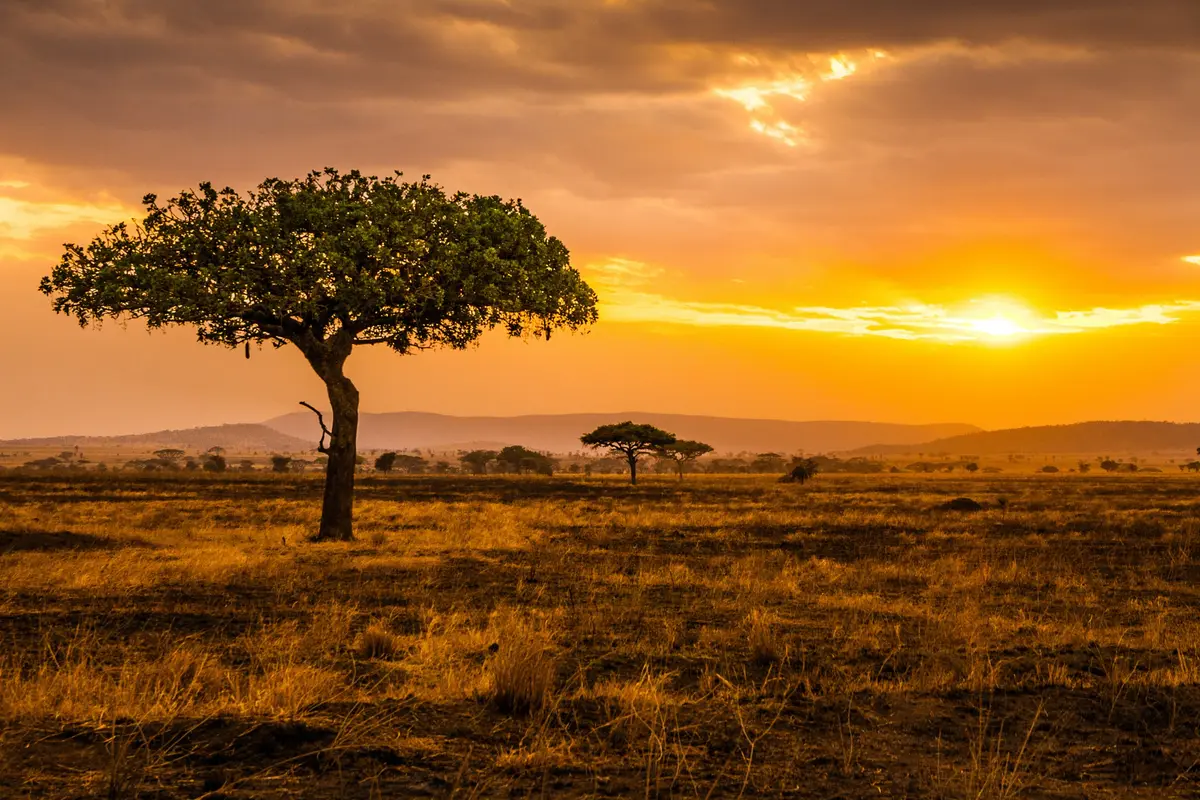
Lone acacia tree on the Serengeti plains at sunset, with acacias and hills on the horizon, Tanzania

Serengeti National Park

Best for: Great Migration, lion, open plains

Year-round · Peak June–October

Tanzania's best-known park covers 14,763 km², lies at the heart of an ecosystem of about 3,000 lions and is the only place in the world where you can watch 1.37 million wildebeest on the move. The migration crosses the Mara River in the north from July to October, and the calving season in the south runs from January to March.

Explore Serengeti
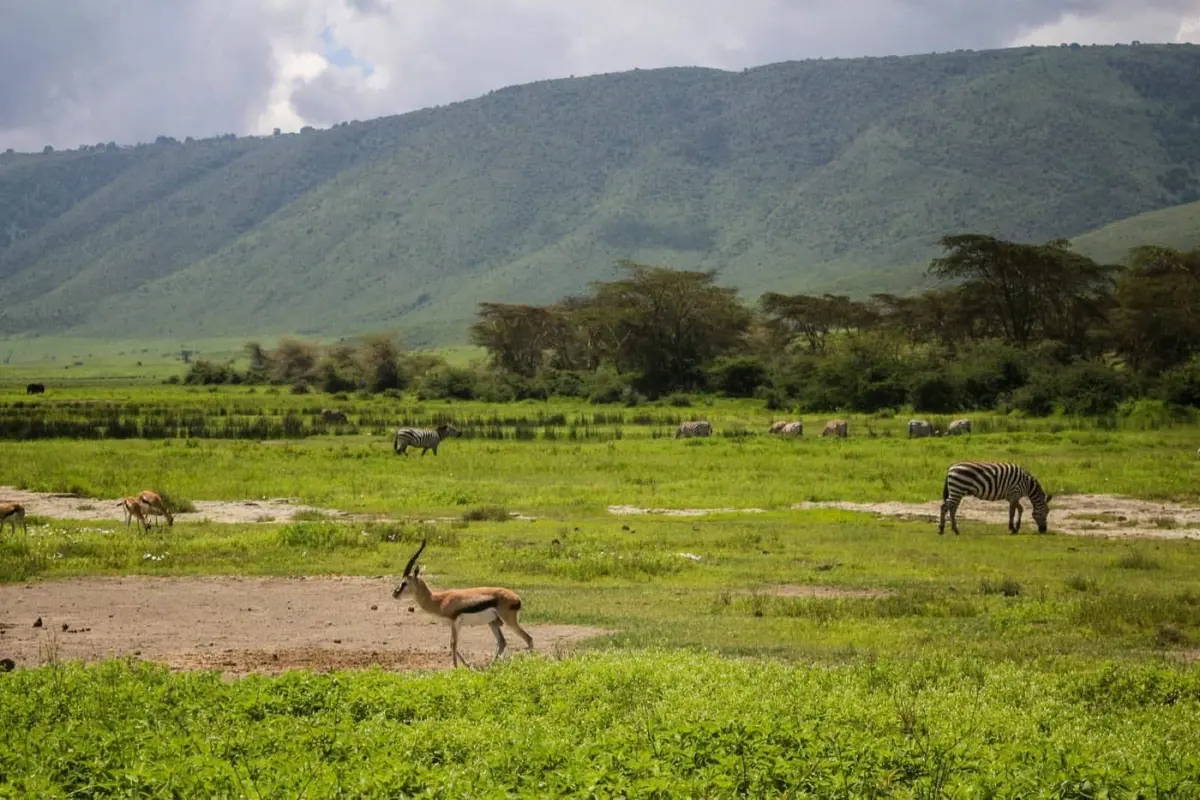
Zebra and gazelle grazing on the Ngorongoro Crater floor with the green caldera walls rising behind them, Tanzania

Ngorongoro Crater

Best for: Big Five in one day, black rhino

Year-round · June–October for clearest skies

The crater is a collapsed volcanic caldera about 20 km across, with roughly 25,000 large animals on its floor. It is one of the few places in Tanzania where you have a realistic chance of seeing black rhino, and it is a UNESCO Mixed World Heritage Site, first inscribed in 1979.

Explore Ngorongoro
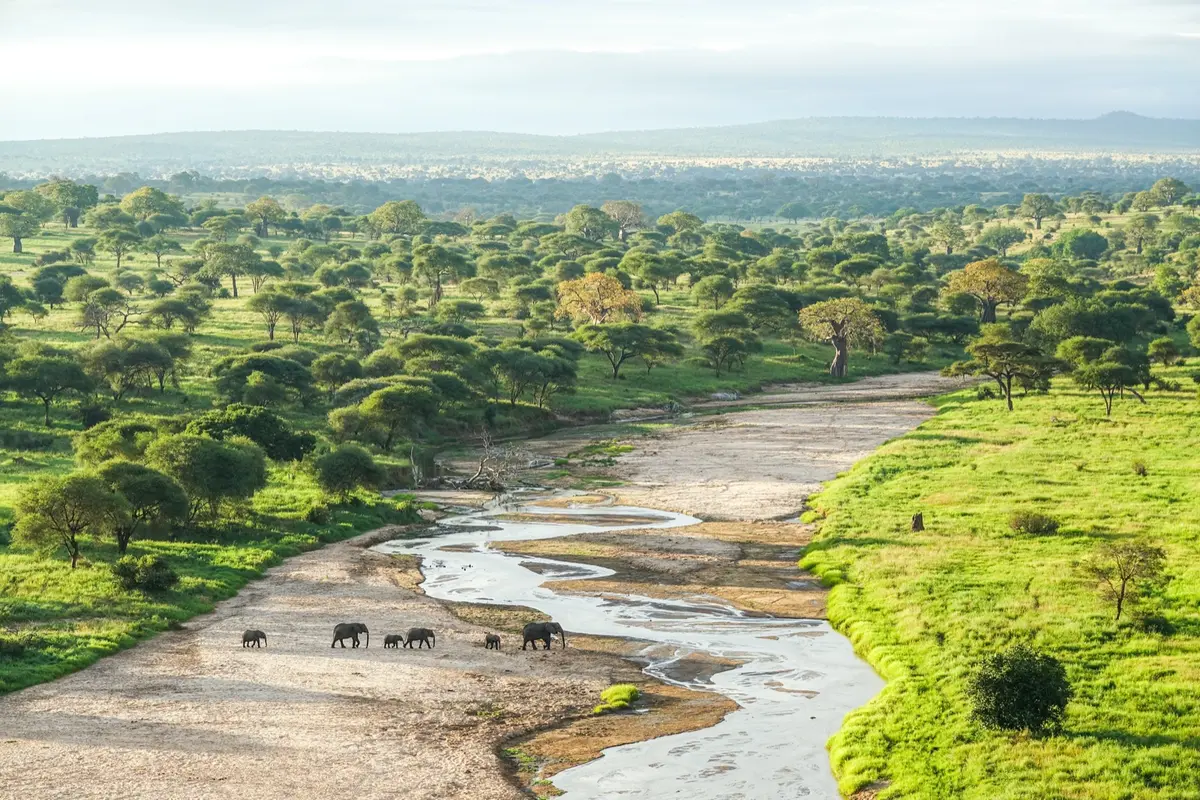
Elephants crossing the sandy bed of the Tarangire River, with woodland stretching to the horizon

Tarangire National Park

Best for: Elephant, dry-season density, baobabs

June–October (dry season)

In the dry season the Tarangire River becomes the only water source for miles around, and elephant, buffalo, zebra and wildebeest come in from across the region. The park has 588 recorded bird species, and its large, ancient baobabs give it a look of its own.

Explore Tarangire
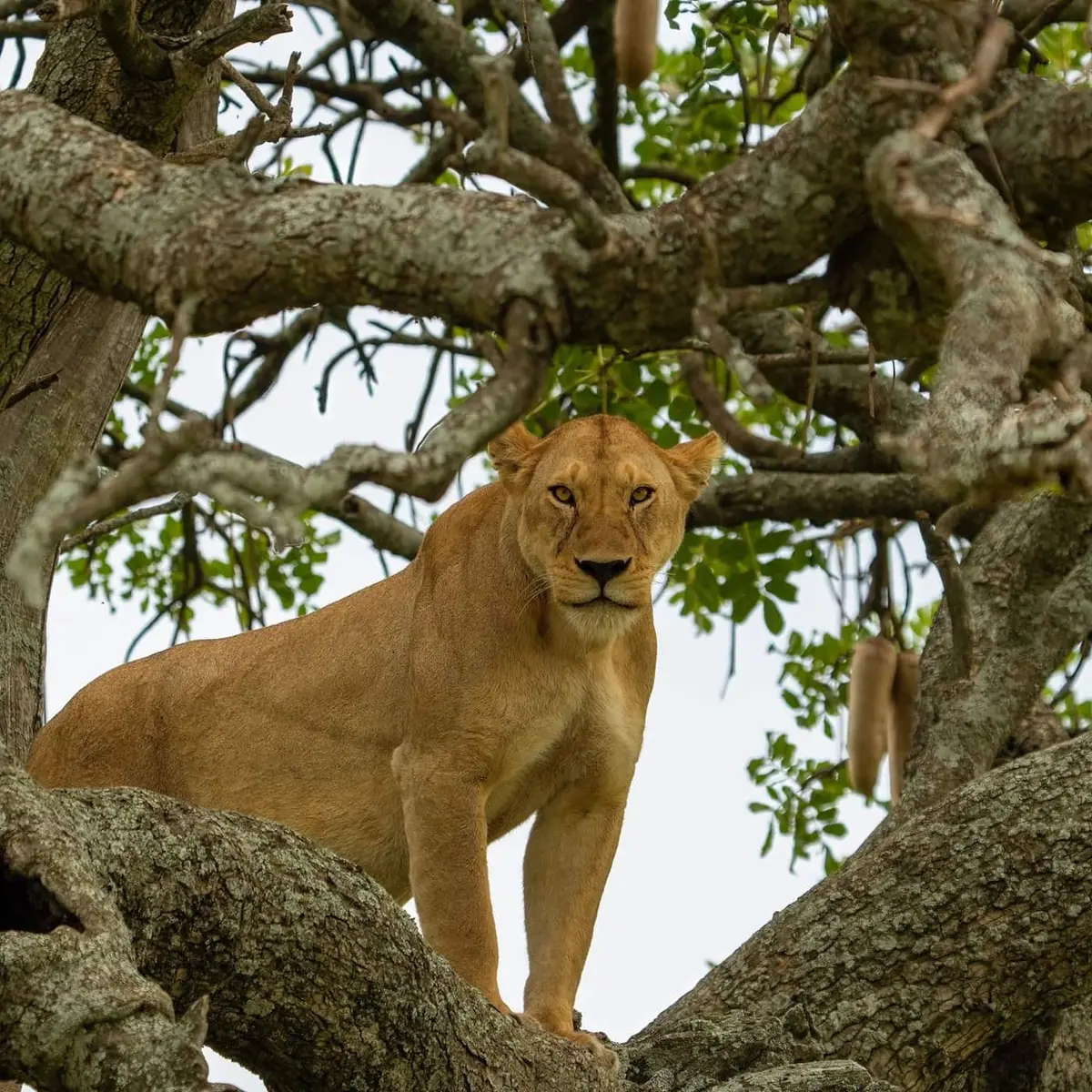
Tree-climbing lioness standing in a fig tree at Lake Manyara National Park, Tanzania

Lake Manyara National Park

Best for: Short itineraries, bird variety, ghost forest

June–March · Year-round possible

This compact park is worth a half day or a full day on most northern circuit routes. Flamingos visit the alkaline lake in varying numbers, and since around 2020 the rising water has flooded the fever tree woodland, leaving a ghost forest of white, dead trees that looks unlike anywhere else on the circuit.

Explore Lake Manyara
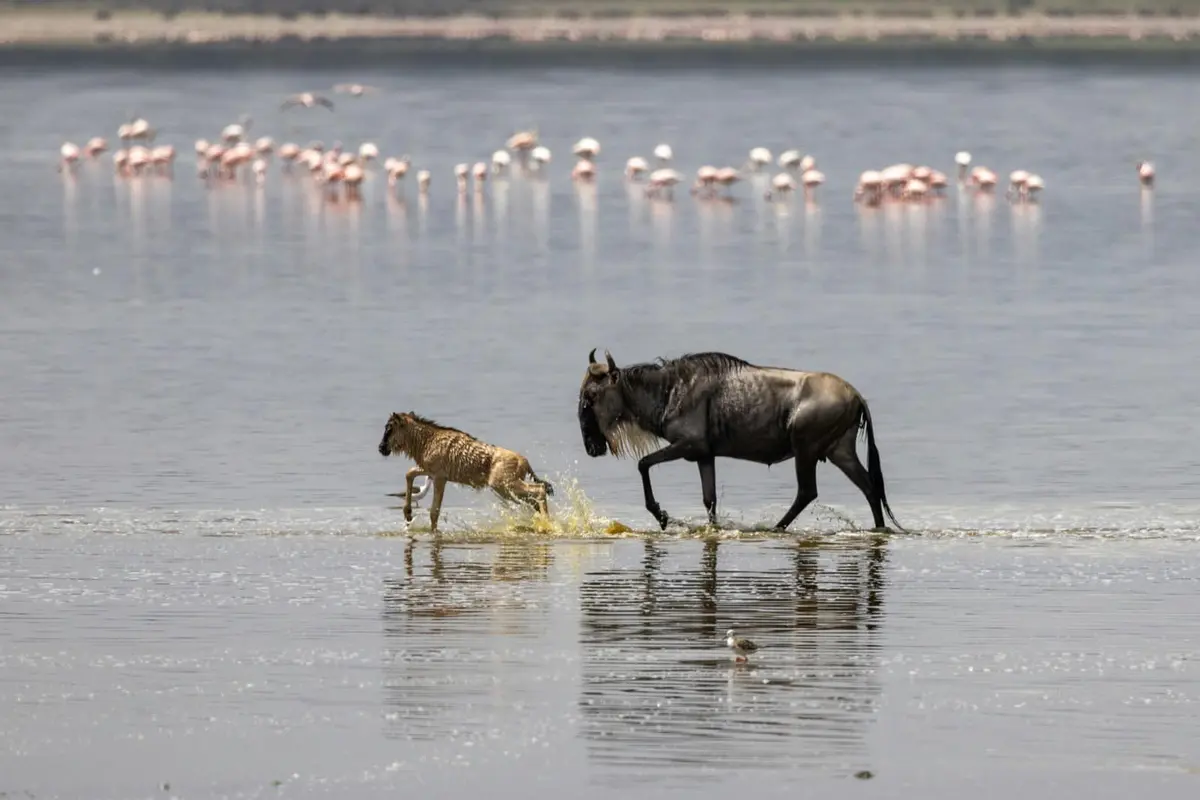
Newborn wildebeest calf running alongside its mother at Ndutu during calving season, Tanzania

Ndutu

Best for: Calving season, predator action

January–March

Ndutu lies inside the Ngorongoro Conservation Area rather than a TANAPA national park, so Ngorongoro Conservation Area fees apply here instead of Serengeti fees. The wildebeest calving peak runs from late January to early March, and the number of predators during this time is exceptional.

Explore Ndutu

Not sure which northern circuit combination is right?

The 5-day northern circuit covers Tarangire, the Serengeti and Ngorongoro, and the 8-day version allows more time in each park at a more relaxed pace. Please send us your dates and we will plan a route that suits you.

Southern Circuit

Southern circuit parks reached by air

Ruaha National Park

Ruaha National Park

Best for: African wild dog, solitude, big game without crowds

June–October

Tanzania's second-largest national park covers 20,226 km², about 1.4 times the size of the Serengeti, and is reached by a flight from Arusha or Dar es Salaam. It has one of Africa's strongest wild dog populations and large elephant herds, and on most game drives you will rarely see another vehicle.

Explore Ruaha

Park Comparison

All fees are for non-resident adults, per day, including VAT. TANAPA and the NCAA publish their tariffs before VAT, so these are the amounts you will actually pay. See full park fee breakdown for current verified rates, or our detailed Serengeti vs Ngorongoro vs Tarangire comparison for the three parks most itineraries build around. If you are deciding between Tanzania and Kenya, our Serengeti vs Maasai Mara guide explains which side of the river suits each month.

ParkAreaBest TimeEntry FeeAccess
Serengeti14,763 km²Year-round · Jun–Oct peak$82.60 peak / $70.80 lowRoad from Arusha · Fly-in available
Ngorongoro (NCA)8,094 km² (NCA)Year-round · Jun–Oct clearest$70.80 + $295.00/vehicle crater descentRoad from Arusha (~3 hrs)
Tarangire2,850 km²Jun–Oct (dry season)$59.00 peak / $53.10 lowRoad from Arusha (~2 hrs)
Lake Manyara648 km²Jun–Mar$59.00 peak / $53.10 lowRoad from Arusha (~2 hrs)
Ndutu (NCA)Part of NCAJan–Mar (calving)NCA rate appliesRoad via Ngorongoro gate
Ruaha20,226 km²Jun–Oct$35.40 year-roundFly-in from Arusha or DSM

Frequently asked questions

How many national parks does Tanzania have?

Tanzania has 21 national parks managed by Tanzania National Parks (TANAPA). The Ngorongoro Conservation Area is managed separately by the Ngorongoro Conservation Area Authority (NCAA) and is classified as a conservation area rather than a national park, and Ndutu is an area within it. Many travel websites give a figure of 22 because they include the NCA, but TANAPA's own count is 21.

What is the best national park in Tanzania?

The Serengeti is the best known and the most versatile, with excellent wildlife all year and more variety than any other single park. However, the best park depends on your priorities. For the Big Five in a single day, the Ngorongoro Crater is more reliable, for elephants and dry-season wildlife Tarangire is hard to beat, and for a safari with very few other vehicles we recommend Ruaha.

What is the most visited national park in Tanzania?

The Serengeti is the most visited park. It is at the centre of every standard northern circuit and is home to the Great Migration, which attracts more visitors than any other wildlife event in Tanzania.

Which is better, Tarangire or Ngorongoro?

The two parks suit different purposes. In Tarangire you spend the day searching for animals across a large area, while the Ngorongoro Crater is compact, with 25,000 animals on the caldera floor that can be seen without much searching. Most itineraries include both. If you have to choose one, Tarangire suits travellers who want a longer, more varied game drive, while Ngorongoro suits first-time visitors who want reliable sightings.

What are the Big Five in Tanzania?

The Big Five are lion, leopard, elephant, Cape buffalo and black rhino, and Tanzania has all five. Black rhino is the hardest to see, and the best place to find them is the Ngorongoro Crater, where the conservation area authority reported more than 50 in 2018. The Serengeti also has rhinos at Moru Kopjes, but seeing them requires a special permit and a ranger escort.

What is the best month to do a safari in Tanzania?

June to October is the dry season across the northern circuit, when wildlife gathers around water, the vegetation thins and game drives are consistently good. July to October is also when the Great Migration is in the northern Serengeti, while January to March is the calving season at Ndutu and the best time for predator activity. April and May bring the long rains, when roads can be difficult but prices drop considerably.

How many days is enough for a Tanzania safari?

We recommend at least five days for a northern circuit safari covering Tarangire, the Serengeti and Ngorongoro. Seven to eight days allows more time in each park at a more relaxed pace, and ten days allows you to add Zanzibar without shortening the safari. Fewer than four nights on safari is unlikely to give you the experience most people have in mind.

Is Kenya or Tanzania better for safari?

Tanzania has far more of the Serengeti ecosystem than Kenya has in the Maasai Mara, roughly 14,763 km² compared with 1,530 km², and there are considerably more vehicles in the Mara in the peak season. Tanzania also has Tarangire, Ngorongoro, Ruaha and Ndutu, which have no equivalent in Kenya. Kenya has better infrastructure and flight connections, but for wildlife we recommend Tanzania.
Not sure which parks to include?

Please send us your dates and what matters most to you, and we will plan the route.

Mohammadali, your safari expert at Saleh Safaris

Plan Your Dream Safari

Free quote · No commitment · Reply within 24h

Adults
2
Children
0

Your enquiry is free and without obligation.