Tanzania in July: Weather, Temperature and Safari Guide
July is the start of the busiest three months for safaris in Tanzania. The long rains ended in May, the grass is short, and animals gather around the shrinking water sources, where they are easy to see. In the northern Serengeti the wildebeest herds are moving towards the Mara River for the first crossings of the season, and in Ngorongoro the crater floor is cold at dawn and clear all day. In Tarangire the elephant numbers are already very high, although they peak in August and September. July is a popular month with experienced safari travellers, and it needs more advance planning than most.
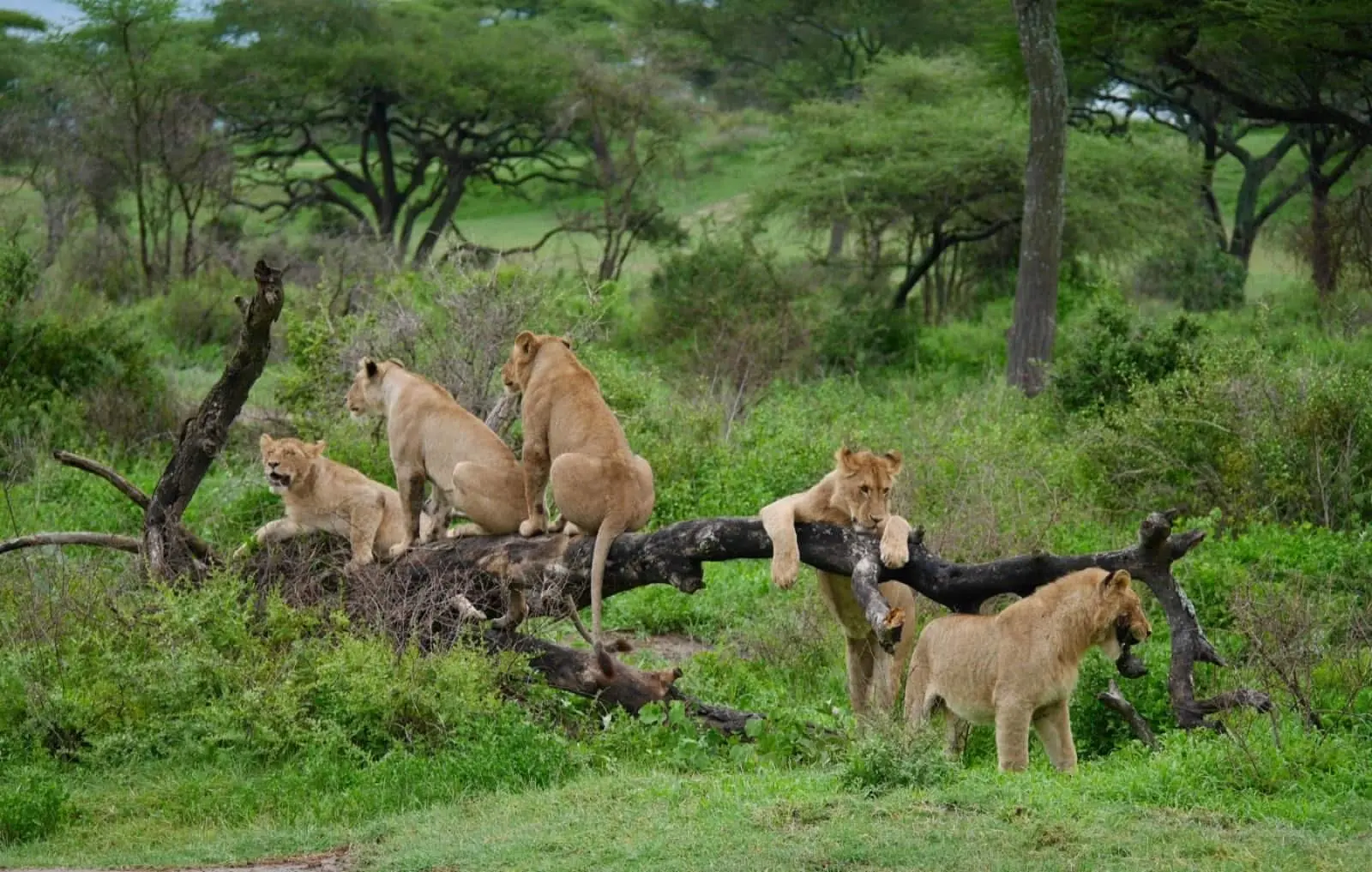
Tanzania in July at a Glance
July is the coolest month of the year in northern Tanzania and one of the driest. Average highs are 22 to 25°C (72 to 78°F) in Arusha and the safari parks, and early mornings average 12 to 14°C (54 to 57°F), falling to 8°C (46°F) on the Ngorongoro Crater rim. The herds are at the Mara River in the northern Serengeti, where the first crossings come in early July in some years and from mid-July in others.
- Daytime temperature
- Highs of 22 to 25°C (72 to 78°F) in Arusha and the parks
- Early mornings
- Lows of 12 to 14°C (54 to 57°F)
- Rain in the parks
- 1 to 33 mm in the month, with some rain on 3 to 8 days, most of it in the northern Serengeti
- Ngorongoro Crater rim
- High of 19°C (65°F), low of 8°C (46°F), 12 mm of rain
- Zanzibar
- High of 29°C (84°F), low of 22°C (72°F), 31 mm of rain on about 4 days
- Migration herds
- At the Mara River in the northern Serengeti. The first crossings come in early July in some years and from mid-July in others
- Lodge rates
- High season, which runs until 31 October at 198 of the 278 safari lodges and camps we book
- Park fees
- Peak entry fees, and the Serengeti overnight fee is on its July to September rate of $70.80 per adult
Weather figures are long-term averages for Arusha, Tarangire, the central Serengeti and the northern Serengeti at Kogatende. The weather table has each place separately.
Wildlife Conditions in July by Park
Northern Serengeti (Kogatende/Lamai)
ExcellentThe wildebeest herds arrive at the Mara River. The start of the crossings varies from year to year, with the first crossings in early July in some years and from mid-July in others. There is a lot of lion and hyena activity at the crossing points, and cheetahs and leopards are active in the Lamai Wedge. This is one of the best places in Africa to see predators and prey in July.
Ngorongoro Crater
ExcellentThe crater is excellent all year and especially clear in July, when the short grass gives open views across the whole 260 km² floor. Black rhino are seen most often at Gorigor Swamp in July, when the floor is dry. Mornings on the rim are cold, with an average low of about 8°C, so please bring a fleece.
Tarangire National Park
ExcellentElephant herds gather along the Tarangire River, the main source of water in the dry months. The baobab landscape looks its best in the dry, golden light, and there are far fewer vehicles than in the Serengeti, with game viewing that can compare with it.
Central Serengeti (Seronera)
GoodThe resident predators are reliable all year, with lions in the kopjes, leopards in the sausage trees along the Seronera River and cheetahs on the open short-grass plains. The migrating herds have moved north, so there are fewer wildebeest, but big cat sightings are consistent.
Ndutu / Southern Serengeti
FairThe calving herds left in March and have moved north. The resident wildlife remains, but the grasslands are quieter, so we recommend Ndutu from January to March rather than in July.
July Week by Week
July 1-7
Best location: Northern Serengeti, Kogatende crossing points
The wildebeest gather on the banks of the Mara River at Kogatende. In some years the first crossings take place in these first days, and in others from mid-July. Some herds are still moving north through the Western Corridor, and there is a lot of predator activity across the north.
July 8-14
Best location: Northern Serengeti, Sand River and main Mara crossings
The crossings become more frequent as more animals arrive at the Mara River from the central Serengeti, with several crossing attempts each day at the main sites and a great deal of lion and crocodile activity.
July 15-21
Best location: Northern Serengeti (Kogatende) and Lamai Wedge
The northern Serengeti is at its peak, with herds crossing in both directions. The main crossing points have the most vehicles this week, and guides who know the north often find quieter crossings downstream.
July 22-31
Best location: Northern Serengeti, both Mara crossing points
Crossings continue through late July, and some of the most dramatic days come in the final week as more animals gather at the river. The crossings continue and increase in August.
| Week | What's Happening | Best Location |
|---|---|---|
| July 1-7 | The wildebeest gather on the banks of the Mara River at Kogatende. In some years the first crossings take place in these first days, and in others from mid-July. Some herds are still moving north through the Western Corridor, and there is a lot of predator activity across the north. | Northern Serengeti, Kogatende crossing points |
| July 8-14 | The crossings become more frequent as more animals arrive at the Mara River from the central Serengeti, with several crossing attempts each day at the main sites and a great deal of lion and crocodile activity. | Northern Serengeti, Sand River and main Mara crossings |
| July 15-21 | The northern Serengeti is at its peak, with herds crossing in both directions. The main crossing points have the most vehicles this week, and guides who know the north often find quieter crossings downstream. | Northern Serengeti (Kogatende) and Lamai Wedge |
| July 22-31 | Crossings continue through late July, and some of the most dramatic days come in the final week as more animals gather at the river. The crossings continue and increase in August. | Northern Serengeti, both Mara crossing points |
Tanzania Weather and Temperature in July
Tanzania weather in July is cool and dry, as July is the coolest month of the year in the north of the country and one of the driest. Average highs are about 22°C (72°F) in Arusha and 24 to 25°C (76 to 78°F) in the parks, and the inland nights are cool. Tarangire averages about 1 mm of rain in July and the central Serengeti 9 mm, while the northern Serengeti around Kogatende is the exception, with about 33 mm spread over around 8 days with some rain. For planning purposes, July weather is about as reliable as the safari year allows.
| Location | Average high | Average low | Rainfall | Rain days |
|---|---|---|---|---|
| Arusha1,350 m above sea level | 22°C72°F | 13°C55°F | 8 mm | 4 |
| Tarangire1,180 m above sea level | 24°C76°F | 14°C57°F | 1 mm | 3 |
| Central Serengeti (Seronera)1,490 m above sea level | 25°C77°F | 13°C55°F | 9 mm | 6 |
| Northern Serengeti (Kogatende)1,510 m above sea level | 25°C78°F | 12°C54°F | 33 mm | 8 |
| Ngorongoro Crater rim2,280 m above sea level | 19°C65°F | 8°C46°F | 12 mm | 6 |
| Zanzibar18 m above sea level | 29°C84°F | 22°C72°F | 31 mm | 4 |
Long-term monthly averages. The mainland figures are 1961 to 1990 averages from the Climatic Research Unit climate grid, because we could not find published averages from a weather station inside the parks. The Zanzibar figures are the official 1991 to 2020 averages for the island's weather station. Rain days count days with at least 0.1 mm of rain on the mainland and at least 1 mm on Zanzibar. Sources are listed at the end of the page. The averages for every month are on our Tanzania weather by month page.
Early mornings and the middle of the day
At dawn in July the average low is about 13°C (55°F) in Arusha and 14°C (57°F) in Tarangire, and in a moving vehicle with the roof open it feels colder still, so we recommend starting the day in a fleece and a windproof jacket. By late morning the jacket comes off, and the afternoons are pleasantly warm, with the temperature rising by around 10°C or more between dawn and early afternoon.
On the Ngorongoro Crater rim
On the Ngorongoro rim July is the coldest month of the year, with an average low of about 8°C (46°F) and an average high of about 19°C (65°F). A descent into the crater at first light is cold until the sun reaches the floor, so please keep a warm layer and a hat in the vehicle.
What to pack for July
For July we recommend a warm fleece or light down jacket, a windproof outer layer, a warm hat and light gloves for the early drives, along with sunscreen and sunglasses for the bright middle of the day. Layers work best, as you will add and remove them several times a day. Zanzibar is pleasantly warm in July, with an average high of about 29°C (84°F), and warm enough for the beach.
How the weather affects game viewing in July
Dry weather in July concentrates wildlife around rivers and permanent water, and the short grass makes predators easy to see. In the northern Serengeti the dry-season showers keep the grass greener than in the south, which is one reason the herds move north to the Mara River at this time of year.
What a July Safari Costs
These are our published prices per person in US dollars, with park fees, lodges, meals on safari and a private vehicle with a guide included. The figures are the Comfort tier from each itinerary's main season column, named in the table. July falls inside the season column shown for each trip.
| Itinerary | 2 sharing | 6 sharing | Season column |
|---|---|---|---|
| Great Migration Safari in Tanzania: Northern Serengeti10 Days | $6,020 | $4,680 | Migration season (July to October) |
| 8-Day Classic Tanzania Safari8 Days | $4,410 | $3,300 | Peak season (June to October) |
| 7-Day Tanzania Safari Itinerary7 Days | $3,975 | $2,980 | Peak season (June-October) |
| 11-Day Tanzania & Zanzibar11 Days | $4,970 | $3,920 | Peak season (June to October) |
Park fees in July
Park entry fees in July are on the peak band, because the low-season entry fee only applies 15 March to 15 May. Per adult, a day in the Serengeti costs $82.60 in entry fees, plus $70.80 for each night inside the park, which is the July to September overnight fee and higher than the $59.00 charged from October to June. A day in the Ngorongoro Conservation Area, which includes Ndutu, costs $70.80, and each descent to the crater floor adds $295.00 per vehicle. Tarangire costs $59.00 a day. All of these are included in the prices above, and our park fees page lists every fee.
What to Expect at the Mara River Crossings
The Mara River crossings are among the most photographed wildlife events in Africa, and they attract many visitors. A busy crossing point near Kogatende can draw many vehicles, as guides across the north share news when a herd starts to cross, and this is to be expected in the July peak season.
The crossings are still a remarkable experience, but it helps to know what to expect. Many attempts end without a crossing, as the herds approach the bank, gather there and then turn back. When they do cross, thousands of wildebeest enter the water at once and the crocodiles move in. The main drawback is the number of other vehicles.
An experienced guide and a well-placed lodge make a real difference. A guide who knows the northern Serengeti will use quieter crossing points downstream, follow the herds' movements the evening before and arrive before vehicles from more distant lodges. A camp in the Lamai area, north of the Mara River, puts you on the north bank before most vehicles arrive from the south.
If you would like July's wildlife without the crowds at the river, we recommend Tarangire, with large elephant herds along the Tarangire River, the baobab landscape at its best and far fewer vehicles. It does not have the migration, but the game viewing is excellent.
How Far in Advance to Book
July is one of the most popular months for a Tanzania safari, and the best properties fill earlier than many travellers expect.
For the small camps in the northern Serengeti, such as Asilia Sayari, Nomad Lamai, Olakira Migration Camp and Serengeti Safari Camp, we recommend booking at least 9 to 12 months ahead for the peak weeks. These camps are small, and the best-placed ones fill first.
For lodges in the central Serengeti, such as Four Seasons Safari Lodge, Serengeti Serena and Lemala Nanyukie, 6 to 8 months is usually enough. These are larger properties with more rooms.
For lodges on the Ngorongoro rim, such as Ngorongoro Serena, Sopa and andBeyond Crater Lodge, 6 months is enough for most dates. The crater is excellent in July and some travellers focused on the Mara crossings overlook it, so availability is usually better than in the northern Serengeti.
For Tarangire, such as Tarangire Treetops, Swala Camp and Oliver's Camp, 4 to 6 months is usually enough for July. Tarangire offers very good value in July and is the easiest park to book at short notice.
If you are planning to travel in July within the next three months, please contact us as soon as possible, as we will need to plan around the remaining availability.
Why a Private Safari Is Worth It in July
At the Mara River in July, a group safari in a shared vehicle and a private safari watch the crossings from the same places. The difference lies in how the rest of the day is planned.
On a group safari, the driver has to plan around guests from different lodges with different schedules. On a private safari, your guide can concentrate on finding the best position for your vehicle and stay for as long as you would like.
At a busy crossing point, a good position can make the difference between a clear view and another vehicle in your photographs of a crossing you may have waited several days to see.
In July, with cold mornings and long game drives, flexible timing is especially useful. A private vehicle leaves when you are ready, stays at a lion kill for as long as you wish, and can take you back to the lodge to rest at midday and out again at 4pm. A private safari costs more in July, but we believe the extra flexibility is worth it for most travellers.
July Itineraries
Great Migration Safari
From $4,680 pp10 Days / 9 Nights
Northern Serengeti · Serengeti · Ngorongoro
Four nights at Kogatende in the northern Serengeti for the Mara River crossings, which start in July, followed by the central Serengeti and a full day on the Ngorongoro Crater floor on the way back. This route is planned around the migration.
View Full Itinerary8-Day Classic Tanzania Safari
From $2,625 pp8 Days / 7 Nights
Tarangire · Serengeti · Ngorongoro
A good choice for travellers booking late or with less time, with two nights in Tarangire, three in the central Serengeti and two at Ngorongoro. As July is the peak of the dry season, the resident wildlife is easy to find even without the crossings.
View Full ItineraryPlanning a July Trip
- Great Migration month by month: where the herds are in every month
- Tarangire National Park: elephants and baobabs in the dry season
- Ngorongoro Crater guide: the crater floor, the rim and the gates
- What to pack for a safari: warm layers for the July mornings
- Tanzania weather by month: the averages for every month and park
- Best time to visit Zanzibar: the weather on the island month by month
- How many days for a safari: how long to plan for each route
- Safari in June: the start of the dry season
- Safari in August: the crossings at their most frequent
Questions About a Tanzania Safari in July
What is the temperature in Tanzania in July?
In July the average high is 22°C (72°F) in Arusha, 24°C (76°F) in Tarangire, 25°C (77°F) in the central Serengeti and 25°C (78°F) in the northern Serengeti, with early-morning lows of 12 to 14°C (54 to 57°F). The Ngorongoro Crater rim is the coldest stop on a safari, at 19°C (65°F) by day and 8°C (46°F) at night, and Zanzibar is warm, with highs of 29°C (84°F) and lows of 22°C (72°F).
Is July the coldest month in Tanzania?
In the north of the country, where the safari parks are, yes. In the long-term averages in our weather table, July has the lowest average high and the lowest average low of the year in Arusha, Tarangire, the central and northern Serengeti and on the Ngorongoro Crater rim. On Zanzibar July is the coolest month by day, while the coolest nights come in August and September, at about 21°C (70°F).
Is July a good time for a Tanzania safari?
July is one of the three best months for a safari in Tanzania, together with August and October. The dry season is established, the grass is short and animals gather around water, so wildlife is as easy to see as at any time of year. The migration is at the Mara River in the northern Serengeti, Tarangire's elephant herds are building towards their peak, and Ngorongoro is clear and cold. The drawbacks are the cost and availability, as July is peak season and lodges fill months in advance.
Where is the wildebeest migration in July?
In July most of the wildebeest have moved north through the Western Corridor and are arriving at the Mara River near Kogatende in the northern Serengeti. The start of the crossings varies from year to year, with the first crossings in early July in some years and from mid-July in others, and they usually increase through the month towards a peak in August. By mid-July the area around Kogatende and the Lamai Wedge has the largest number of animals.
How cold is Tanzania in July?
It depends on where you are. On the Ngorongoro Crater rim the average low in July is 8°C (46°F), so you will need a fleece, a hat and a windproof jacket. In the central Serengeti and Tarangire, mornings average 13 to 14°C (55 to 57°F), warming to 24 to 25°C (76 to 77°F) in the afternoon. It is only cold in the early morning, and the afternoons are warm everywhere, so we recommend packing layers.
What should I pack for a Tanzania safari in July?
A fleece or a light down jacket is essential, especially for Ngorongoro and early game drives, along with a windproof layer for the open roof of the vehicle on cold mornings. For game drives we recommend neutral colours such as khaki, olive, tan and grey, as bright colours can disturb animals. Please also bring sunscreen of SPF 50 or higher, binoculars (8x42 or 10x42), closed shoes for the stop on the crater floor and a universal adapter, as Tanzania uses Type G plugs, the UK standard.
Is July peak season in Tanzania?
Yes. July to October is the peak season, and July and August are the busiest months. Lodges charge high-season rates, availability is limited and the northern Serengeti has more vehicles than at any other time of year. Across the lodges we book, the standard double rate in November is a median 24 percent lower than in July, while in January 105 of the 222 lodges with seasonal rates charge the same as in July. For most travellers the wildlife viewing in July is worth the higher rates.
Which parks are best for a safari in July?
We recommend the northern Serengeti around Kogatende for the migration and the Mara River crossings, and the Ngorongoro Crater, which is good all year and especially clear in July, with plenty of wildlife and good rhino sightings. Tarangire is excellent for elephants and baobab landscapes, with far fewer vehicles than the Serengeti, and the central Serengeti around Seronera has reliable resident predators. Ndutu and the southern Serengeti are the weakest choice in July, as the herds have moved north.
How far in advance should I book a July Tanzania safari?
For the small camps near the Mara River in the northern Serengeti, we recommend at least 9 to 12 months, as these camps have 8 to 16 tents and are often full for July by October of the previous year. For mid-range lodges in the central Serengeti and Ngorongoro, 6 to 8 months is usually enough, and for Tarangire 4 to 6 months. If your July dates are less than three months away, please contact us as soon as possible, as the choice of lodges becomes limited.
Is it crowded at the Mara River in July?
The main crossing points can be busy when a herd starts to cross. An experienced guide in the northern Serengeti will use quieter crossing points downstream, follow the herds' movements from the evening before and arrive before vehicles from more distant lodges. Your choice of lodge also helps, as a camp in the Lamai area north of the river avoids the main routes from the south.
What is the weather like in Tanzania in July?
July is reliably dry across the northern safari parks, with about 1 mm of rain in Tarangire, 9 mm in the central Serengeti and 33 mm in the far north around Kogatende. Afternoons are warm, at 24 to 25°C (76 to 78°F) in the parks, and mornings are cold at altitude, with an average low of 8°C (46°F) on the Ngorongoro Crater rim. The central Serengeti averages 13°C (55°F) in the early morning. The main thing to plan for in July is the cold mornings.
How much does a July safari cost?
In July our 10-day Great Migration Safari costs $6,020 per person for 2 sharing and $4,680 for 6 sharing, and the 8-day Classic costs $4,410 and $3,300, in the Comfort tier with park fees, lodges and a private vehicle included. Park entry fees are on the peak band in July, and the Serengeti overnight fee is $70.80 per adult from July to September, against $59.00 from October to June.
Can I see the Big Five in Tanzania in July?
Yes. In the Ngorongoro Crater, lions, elephants and buffalo are reliable, leopards are possible in the Lerai Forest, and black rhino are present and seen most often at Gorigor Swamp in July, when the floor is driest. In the Serengeti, lions, leopards and cheetahs are seen regularly in the Seronera Valley, with elephants and buffalo in the north and west. Tarangire has lions, leopards, elephants and buffalo, but no rhino. For the best chance of the Big Five in a single day, we recommend the Ngorongoro Crater.
Sources and Maintenance
Where these figures come from
The temperatures and rainfall in the weather table are long-term averages, and a single year can be wetter, drier, warmer or cooler. We could not find published long-term averages from a weather station inside the northern parks, so the park figures come from the Climatic Research Unit's global climate grid, which builds each grid cell of about 18 km from nearby station records and allows for altitude. The Zanzibar figures are the official 1991 to 2020 averages for the island's weather station. As a check, the official 1991 to 2020 averages for Kilimanjaro International Airport are about 1 to 2°C warmer by day than the grid figures for the same area, so please treat the daytime highs as slightly conservative.
- Climatic Research Unit, University of East Anglia: CRU CL v2.0 global climatology, 10-minute grid (New et al. 2002) (1961-1990 averages for the grid cells covering Arusha, Tarangire, Seronera, Ndutu, Kogatende, the Western Corridor and the Ngorongoro Crater rim and floor, read 24 November 2026)
- World Meteorological Organization 1991-2020 climate normals, Zanzibar station 63870 (published by NOAA NCEI) (average high, low, rainfall and days with 1 mm or more, read 24 November 2026)
- World Meteorological Organization 1991-2020 climate normals, Kilimanjaro International Airport station 63791 (published by NOAA NCEI) (used to cross-check the Arusha grid figures, read 24 November 2026)
Sources and Maintenance
Where these figures come from
Visa fees, health requirements and the inbound insurance rule can change at short notice, so please check them before you travel. The public holidays fall on the same dates every year.
- TANAPA and NCAA park fee tariffs, including VAT (the peak entry band and the July to September Serengeti overnight fee, read 27 October 2026)