Lake Manyara National Park
An alkaline lake below the Rift Valley escarpment, with groundwater forest, 624 recorded bird species and the new Ghost Forest.
Plan a Safari HereSee it on the Northern Circuit map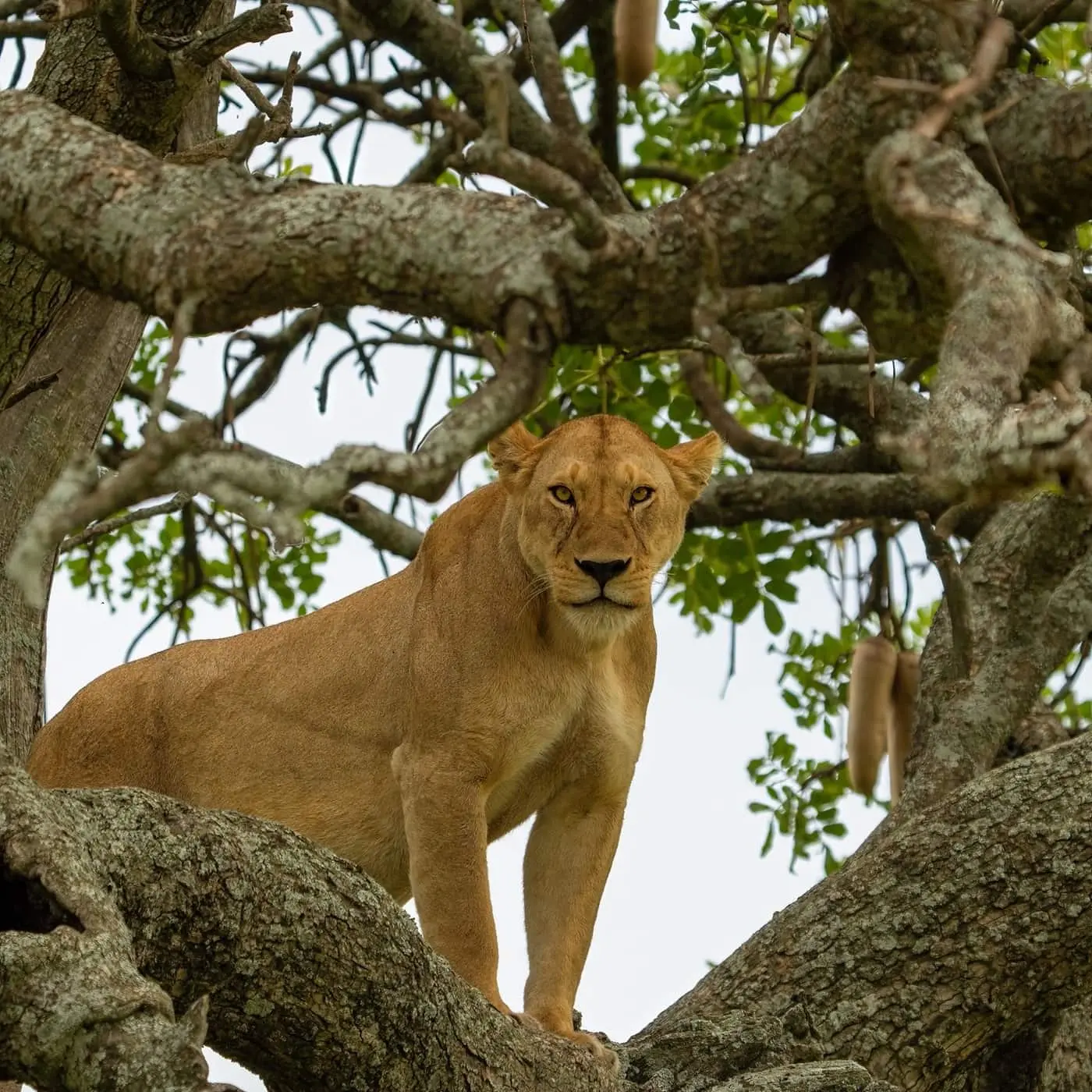
About Lake Manyara National Park
The Rift Valley escarpment rises 600 metres above Lake Manyara in an almost vertical wall, and it shapes the whole park. Water from the highland forest above seeps down through the rock and emerges as springs at the foot of the cliff, feeding a strip of groundwater forest that could not grow here on rainfall alone. Figs, mahogany and sausage trees form a canopy over blue monkeys and troops of olive baboons numbering in the hundreds, while the lower layer gives cover to elephant, buffalo and leopard. The road from the gate passes through this forest before opening onto the lakeshore, and it is well worth taking slowly rather than treating it as the start of the drive.
Lake Manyara is best known for its tree-climbing lions, but sightings are not reliable. The behaviour is real, and certain prides rest in fever acacias and sycamore figs, particularly in the heat of the day. However, in 2024 and 2025 those prides could not be found consistently, and the behaviour is reported less often than in earlier decades. It is also not unique to Manyara, as Ishasha in Uganda's Queen Elizabeth National Park may now be more reliable. If you see lions in the trees here, it will be a highlight of the trip, but it is more likely that you will not, so we do not recommend visiting Manyara for the tree-climbing lions alone.
Since approximately 2020, the water level of Lake Manyara has been rising. This is caused by above-average rainfall in the highland catchment, together with the volcanic groundwater system beneath the Rift Valley floor, which is bringing more water into the basin than evaporation removes. The rising lake has flooded the fever tree woodland at the southern end of the park, and the trees have died where they stand. The result is the Ghost Forest, an area of white-grey trunks standing in shallow alkaline water, with flamingos often on the lake beyond. The Ghost Forest is currently one of the most photogenic places in northern Tanzania, and since it only appeared after 2020, many older descriptions of the park do not mention it.
Ernest Hemingway visited in 1933 and, in Green Hills of Africa, described Lake Manyara as 'the loveliest I had seen in Africa.' Many lodges and safari websites say that he called it 'Africa's Eden', but there is no source for this phrase. Hemingway was not given to easy praise of places, and he used Manyara as a benchmark, so the real quote is the better compliment. What he saw was the escarpment, the forest, the lake and the flamingos, as the Ghost Forest did not yet exist.
Wildlife in Lake Manyara
Birds (624 species)
624-626 species have been recorded (Avibase 2025), well above the figure of 400+ used on many other websites. On the lake you can see lesser and greater flamingos, large breeding colonies of pink-backed pelicans, African fish eagles, saddle-billed storks and grey crowned cranes, while the groundwater forest holds Schalow's turaco, trumpeter hornbill and brown-headed parrot. The Manyara list is one of the highest of any park under 2,000 km² in Africa.
Flamingo
Lesser flamingos are the main species, and greater flamingos are also present. Because Manyara is an alkaline lake, flamingo numbers follow the cycle of the cyanobacteria they feed on and vary widely. In years with the right water level and salinity, tens of thousands of birds gather along the southern and eastern shore, while in other years there may be a few hundred or none. When the flamingos are present, the Ghost Forest on the southern shore is one of the best places to photograph them, with the dead trees in front of the pink lake.
Hippo
Hippos are seen reliably all year in the permanent pools at the river mouths and along the lakeshore. The Maji Moto Hot Springs in the south of the park have a hippo pool next to geothermal vents that produce warm, sulphurous water, and most guides include them on a full-day circuit.
Elephant
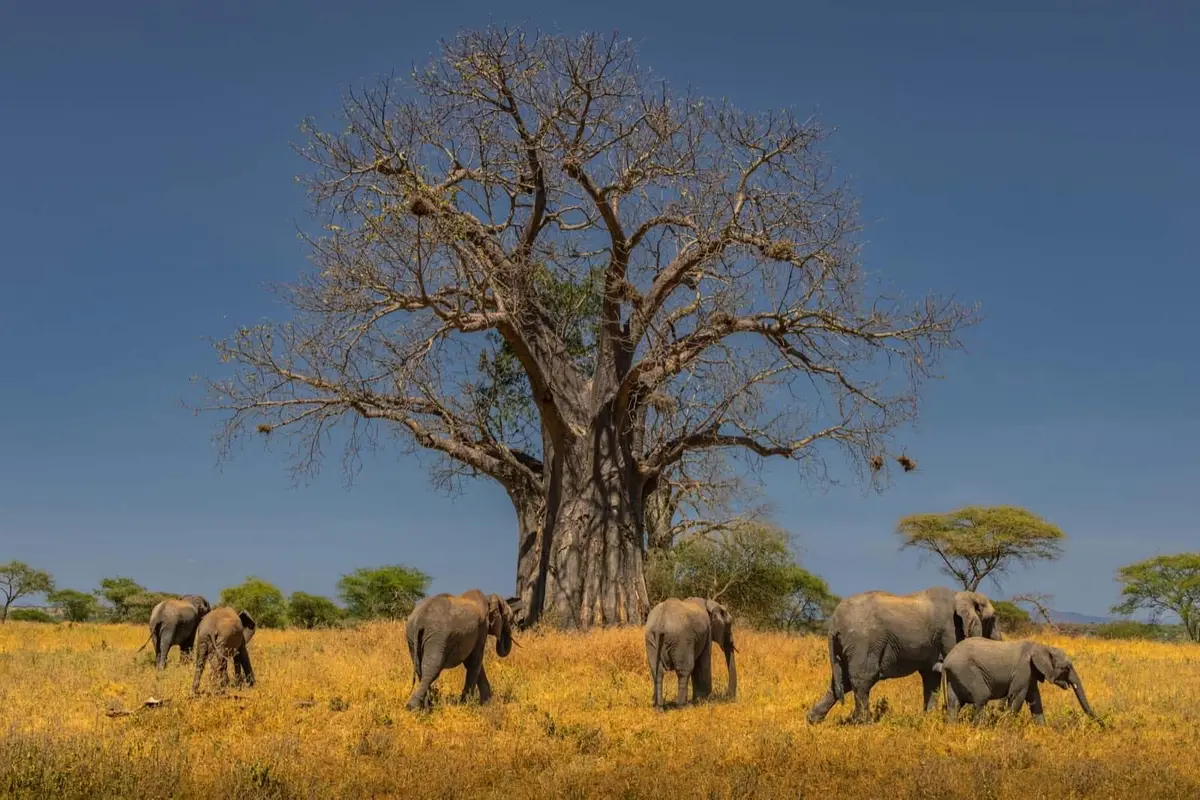
Resident elephants move between the groundwater forest and the open grassland along the lakeshore, and family groups are often found in the forest near the park entrance and along the foot of the escarpment. There are fewer than in Tarangire, but meeting elephants in the forest is a very different experience from seeing them in open country.
Blue Monkey and Olive Baboon
The groundwater forest is the most reliable place in northern Tanzania to see blue monkeys and olive baboons in the same habitat. Troops of 50-100 baboons are common near the forest entrance, while the blue monkeys move through the upper canopy, and both species are present all year.
Lion (tree-climbing, variable)
Tree-climbing behaviour has been recorded in certain Manyara prides. In 2024 and 2025, however, sightings could not be predicted reliably, and the behaviour seems to have become less frequent than in earlier decades. We do not recommend planning a visit around it, and if you do see lions in the trees, it is a bonus on a day that has plenty else to offer.
Where Lake Manyara Is in Tanzania
Lake Manyara is a shallow alkaline lake in northern Tanzania, in a branch of the East African Rift south-west of Arusha. The national park takes in the north-western part of the lake and the strip of land between the water and the Rift Valley escarpment, and it lies within the Lake Manyara Biosphere Reserve, which UNESCO designated in 1981. The main gate is next to the town of Mto wa Mbu, about 125 km from Arusha by road, a drive of 1.5 to 2 hours on tarmac all the way.
Because the park lies on the main road from Arusha to Karatu, the Ngorongoro Crater and the Serengeti, it is usually the first or the last park on a northern circuit safari. Tarangire is About 1 hour 15 minutes to 1.5 hours away by road, and Karatu, where many travellers stay before the crater, is 45 minutes to 1 hour up the escarpment from the gate. Drive times are estimates for a safari vehicle without game-viewing stops.
The Ghost Forest
Since approximately 2020, the southern end of the land area of Lake Manyara National Park has been changing, and this is not yet widely reflected in safari descriptions of the park.
The water level of the lake has been rising, because of increased rainfall in the highland catchment and the volcanic groundwater system beneath the Rift Valley floor, which brings more water into the basin than evaporation removes. The rising alkaline water has flooded an area of fever acacia woodland at the edge of the lake.
The fever trees have died where they stand, leaving white-grey trunks with their roots under shallow alkaline water and the open lake beyond. In the low light of early morning the scene looks quite unlike anywhere else in northern Tanzania.
Because the Ghost Forest only appeared after 2020, many operator pages, lodge websites and booking platforms still describe the park as it was before. Guides who visit regularly know it well, but guests often arrive expecting the park described in those older pages.
For photographers, the combination of dead trees, alkaline water and flamingos in the foreground has no equivalent in any other park on the northern circuit.
Canopy Walkway and Escarpment Viewpoints
Lake Manyara has a canopy walkway in the groundwater forest. The walkway is suspended at approximately 3.5 metres above the ground and lets visitors walk through the upper level of the forest among the birds and monkeys that live there. Sightings of Schalow's turaco and blue monkeys from the walkway are among the closest wildlife encounters available in a park where you otherwise stay in the vehicle.
The walkway has not always been open, so before including it in a Manyara day we confirm that it is accessible. When it is open, we recommend the walkway in the morning, when the forest monkeys are most active, followed by the game drive.
The top of the Rift Valley escarpment can be seen from everywhere in the park, although it cannot be reached from inside. Mto wa Mbu, the town at the foot of the escarpment just outside the gate, is where the road begins its climb to Karatu and on to Ngorongoro. Guides often say the view of the lake from this road gives a better overview than anything inside the park.
A Lake Manyara Safari on a Northern Circuit Route
Most travellers see Lake Manyara as one stop on a longer northern circuit safari, together with Tarangire, the Ngorongoro Crater and the Serengeti. On our 5-day northern circuit, Lake Manyara is the last park, visited on the drive back to Arusha after the morning on the crater floor. On the 8-day classic safari it can be added as an overnight, which extends the trip to nine days.
A half day in the park suits most first-time visitors, while birders and photographers who would like to reach the Ghost Forest and the hot springs in the south should allow a full day, as explained below. Mto wa Mbu, the town at the park gate, is described below.
Mto wa Mbu Village
Mto wa Mbu is the town at the foot of the Rift Valley escarpment next to the Lake Manyara gate, in the Monduli District of the Arusha Region. Its name is usually translated from Swahili as river of mosquitoes. Every vehicle driving from Arusha to Karatu, the Ngorongoro Crater and the Serengeti passes through the town, including on our routes, and bananas are the main crop on the farms around it.
The town is best known for the Mto wa Mbu Cultural Tourism Programme, a community enterprise which says it has operated since 1996. In its listing with the UN Development Programme's Equator Initiative, the programme offers village walks, bicycle tours, visits to a Maasai boma, traditional meals cooked by local women's groups and crafts made by young people from the town, and it states that more than 120 ethnic groups live in Mto wa Mbu. The same listing says the programme pays half the salaries of the game scouts who protect the Jangwani wildlife corridor next to the national park, and Lake Manyara National Park pays the other half.
We arrange a guided village walk in Mto wa Mbu for guests who would like to see the town, its farms and its market. Because the town is on the road between Arusha and Karatu, a walk can fit into the same day as a Lake Manyara game drive.
Is Lake Manyara Worth Visiting?
Lake Manyara is usually visited as a half-day stop on the drive between Arusha and Ngorongoro, and it is often the first park that visitors see. This works well, although it does not show the park at its best.
A half-day allows time for a drive through the groundwater forest and along the lakeshore, with a reasonable chance of elephant, hippo, baboons and, when conditions are right, flamingos. It does not allow time for the Ghost Forest or the Maji Moto Hot Springs in the south, which both need a full-day circuit, and tree-climbing lions cannot be expected.
For a first visit to the northern circuit, a half-day stop on a Ngorongoro and Serengeti itinerary is usually enough, provided you know what to expect. Manyara is one of Africa's best birding parks, with a wide variety of habitats in a small area, rather than a big-game park. For keen birders, or for photographers who want to visit the Ghost Forest, we recommend a full day.
Repeat visitors often say that the park is small, and most guests feel they have seen the main circuit in four to five hours. This is a fair comment, as the land area is compact, and the park's appeal lies in its birds, the forest and the southern end of the lake.
Entry Fees (2026)
| Fee Item | Amount | Notes |
|---|---|---|
| Non-resident adult entry (peak, 16 May - 14 Mar) | $59.00 (VAT incl.) | TANAPA 2023/24 tariff, including 18% VAT. |
| Non-resident adult entry (low, 15 Mar - 15 May) | $53.10 (VAT incl.) | Including 18% VAT. |
| Child age 5-15 | $17.70 (VAT incl.) | Both seasons. |
| Under 5 | Free | |
| Vehicle fee (TZ-registered Land Cruiser) | ~TZS 41,300 (~$17-20) | Paid at the gate in Tanzanian shillings. |
| Canopy Walkway | USD 20 per person | Inside the park. Please check current availability, as it has not always been open. |
| VAT | 18% | Applied to all fees at the GePG payment gateway. |
| Payment method | Card only | No cash at any TANAPA gate. Re-verify fees after July 1, 2026. |
How these fees are counted on a real trip: Tanzania park fees 2026. All fees are included in Saleh Safaris package prices.
Best Time to Visit Lake Manyara
| Months | Weather | Wildlife | Crowds |
|---|---|---|---|
| Jun-Oct | Dry season, with cool, clear days and frequent morning mist on the escarpment. | The best time for land wildlife, with elephant in the forest, hippo, lion and buffalo. Tree-climbing lions are most often reported on hot afternoons in the dry season, and bird variety is steady all year. | Moderate, busier than Tarangire and quieter than the Serengeti. |
| Nov-Mar | The short rains fall in November and December, followed by a drier spell in January and February before the long rains. | Bird variety peaks with the migrants, and flamingo numbers are most likely to be high if the water and salinity are right. This is a good time for green-season photography, and the Ghost Forest is at its most dramatic under a stormy sky. | Low to moderate, with good availability. |
| Apr-May | The long rains, when some tracks can become muddy and impassable. | The park is lush and green and the full range of birds is present, but some areas are harder to reach and flamingo numbers vary. | Very low |
Where to Stay
Our guides to lodges and camps for Lake Manyara National Park. Every lodge we work with is in the lodge directory.
Frequently Asked Questions
Where is Lake Manyara in Tanzania?
Lake Manyara is in northern Tanzania, south-west of Arusha, at the foot of the Rift Valley escarpment. The park gate is next to the town of Mto wa Mbu, 1.5 to 2 hours from Arusha by road, and the park lies on the main road to Karatu, the Ngorongoro Crater and the Serengeti, so it fits easily into a northern circuit safari.
What is there to do in Mto wa Mbu village?
The Mto wa Mbu Cultural Tourism Programme offers village walks and bicycle tours of two to three hours through the banana plantations and farms to the local market, as well as visits to a Maasai boma, traditional meals cooked by local women's groups and local crafts. The town is next to the Lake Manyara gate, on the main road from Arusha to Karatu.
What is Lake Manyara National Park famous for?
Lake Manyara has long been famous for its tree-climbing lions. In practice, as of 2024 and 2025, its main attractions are its birds, with 624-626 recorded species, one of the highest counts of any enclosed park in Africa, its groundwater forest fed by springs from the Rift Valley escarpment, and the Ghost Forest, an area of flooded fever tree woodland on the lakeshore that has formed since approximately 2020. The tree-climbing lions are real, but sightings can no longer be predicted reliably.
Do lions really climb trees in Lake Manyara?
Yes, although less predictably than many websites suggest. Certain Manyara prides rest in trees, and the behaviour has been recorded for decades, but as of 2024 and 2025 sightings vary too much to plan a visit around them. The behaviour is also found elsewhere, and Ishasha in Uganda's Queen Elizabeth National Park may now be more reliable. If you see lions in the trees at Manyara, it is a real highlight, and if you do not, the birdlife, the groundwater forest, the hippos and the Ghost Forest still make the day worthwhile.
Did Hemingway really call Lake Manyara 'Africa's Eden'?
No, the phrase does not appear in Hemingway's writing. In Green Hills of Africa (1935) he described Manyara as 'the loveliest I had seen in Africa.' 'Africa's Eden' has been repeated across safari websites without any primary source. The real quote is a considerable compliment from a writer who was not given to easy sentimentality.
How many bird species are in Lake Manyara?
624-626 species have been recorded (Avibase 2025). Most operator websites give a figure of 400+, which understates the total considerably. The variety comes from several different habitats in a small area, namely the groundwater forest, acacia woodland, open grassland along the lakeshore, the alkaline lake and the edge of the escarpment. Notable species include lesser flamingo, pink-backed pelican, African fish eagle, grey crowned crane, Schalow's turaco and saddle-billed stork, and the total is one of the highest for any enclosed park of this size in Africa.
What is the Ghost Forest at Lake Manyara?
The Ghost Forest is an area of fever acacia woodland on the southern lakeshore that has been killed by the rising water of Lake Manyara since approximately 2020. The alkaline water flooded the roots of the fever trees, and the dead white-grey trunks now stand in shallow water with the open lake, and often flamingos, behind them. It is an unusual subject for photography with no equivalent on the northern circuit.
Are flamingos reliable at Lake Manyara?
No. Flamingo numbers at Manyara vary widely and follow the cyanobacteria bloom in the alkaline lake, which is their main food. In years with the right water level and salinity, tens of thousands of lesser flamingos gather along the southern and eastern shore, while in other years there may be a few hundred or none at all. For this reason we do not recommend planning a visit around the flamingos at Manyara. Lake Magadi on the floor of the Ngorongoro Crater is more predictable, although numbers there vary too.
How far is Lake Manyara from Arusha?
The park entrance is approximately 125 km from Arusha, a drive of about 1.5 to 2 hours. The road runs from Arusha through Makuyuni and then descends the Rift Valley escarpment to Mto wa Mbu, the town next to the park gate. Lake Manyara Airstrip, 1 km from the gate, is served from Arusha by Coastal Aviation, Auric Air and Air Excel, with a flight time of approximately 20 to 30 minutes, and it is the usual arrival point for guests continuing to Ngorongoro and the Serengeti by charter flight.
Is Lake Manyara worth visiting?
Yes, provided you know what to expect. Lake Manyara is a compact park with a wide range of habitats rather than a big-game park. It has one of the highest bird counts in Africa, a groundwater forest unlike anything else on the northern circuit, reliable hippo, elephant and baboons, and the Ghost Forest, which has formed in recent years. A half-day stop on a Ngorongoro and Serengeti circuit suits most first-time visitors, while birders and photographers will find a full day worthwhile. Tree-climbing lions cannot be expected, but the rest of the park is well worth the visit.
What is the canopy walkway at Lake Manyara?
The canopy walkway is suspended in the groundwater forest at approximately 3.5 metres above the ground and lets visitors walk through the forest canopy among the monkeys and birds. Sightings of blue monkeys and Schalow's turaco from the walkway are closer than any from a vehicle in the same habitat. The walkway has not always been open, so we confirm that it is accessible before the day. When it is open, we recommend the walkway in the morning, followed by the lakeshore circuit at midday.
How does Lake Manyara compare to Tarangire?
The two parks are close to each other but very different in character. Tarangire is large, has a great deal of wildlife in the dry season and is best known for its elephants, while Lake Manyara is compact and is best known for its birds, its forest and the scenery along the lakeshore. Most northern circuit itineraries include both, with Tarangire at the beginning or end for game viewing and Manyara as a shorter stop on the way to Ngorongoro. If you have to choose one, Tarangire offers more of the classic safari wildlife in the dry season, while Manyara is the better choice if birds or forest habitats are your priority.
Can you see the Big Five in Lake Manyara?
No. Buffalo are present, although not reliably in large numbers, lions are present, leopards are present but rarely seen, and elephants are reliable in the groundwater forest, but there are no rhinos. Lake Manyara's strength is a different kind of variety, with its birdlife, the monkeys and baboons in the forest, and a combination of habitats in a small area that cannot be found in a single day anywhere else on the northern circuit.
Safari Itineraries Including Lake Manyara