8 Days
8-Day Classic Tanzania Safari
Tarangire, the central Serengeti and a full day in the Ngorongoro Crater. The Serengeti nights move with the season, so you see the migration wherever it is at the time.
From $2,625 per person
View ItineraryA Tanzania safari usually means the northern circuit, starting in Arusha and visiting Tarangire, the Ngorongoro Crater and the Serengeti, where the Great Migration spends most of the year. We plan private safaris on this circuit from our base in Arusha.
This page covers the real costs, the best time to travel, what each park is like and how a private safari differs from a group tour.
Every safari below is a private tour, with your own vehicle and guide, starting and ending in Arusha, and each one can be changed to suit your dates.
Tarangire, the central Serengeti and a full day in the Ngorongoro Crater. The Serengeti nights move with the season, so you see the migration wherever it is at the time.
From $2,625 per person
View Itinerary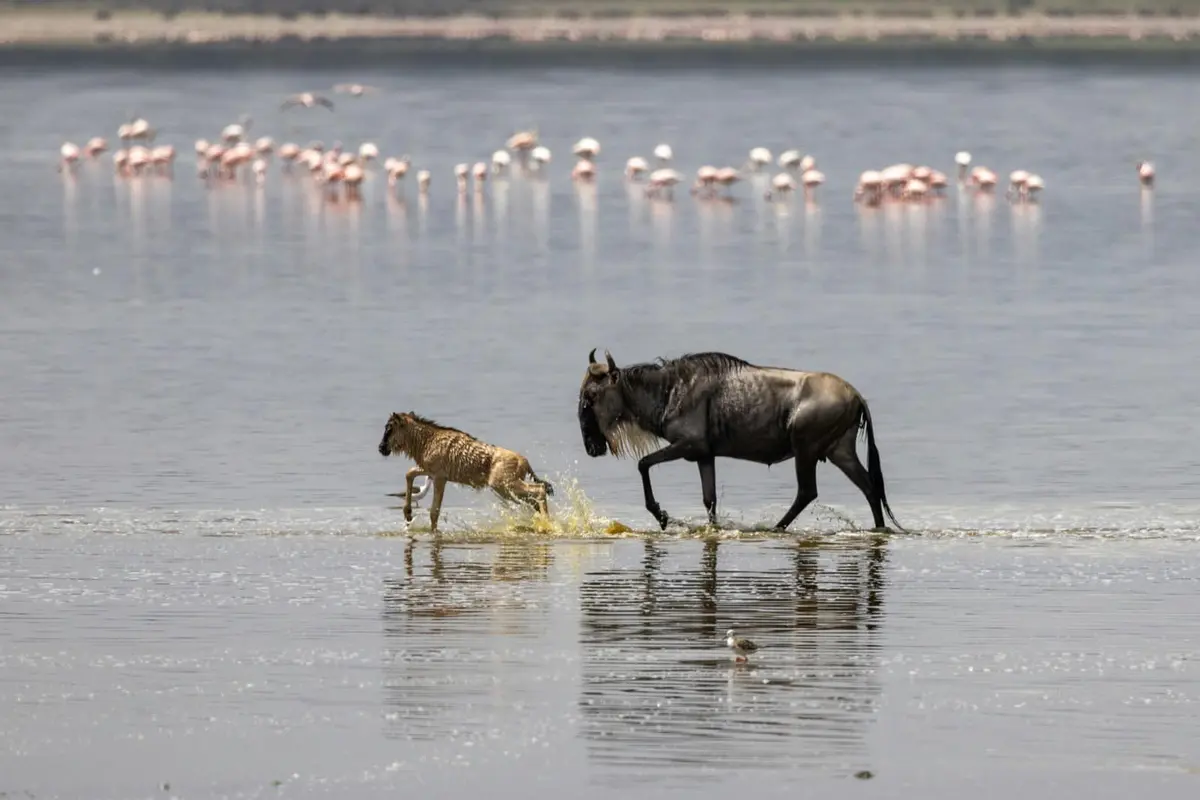
January and February at Ndutu, where 500,000 calves are born within about six weeks.
From $2,640 per person
View Itinerary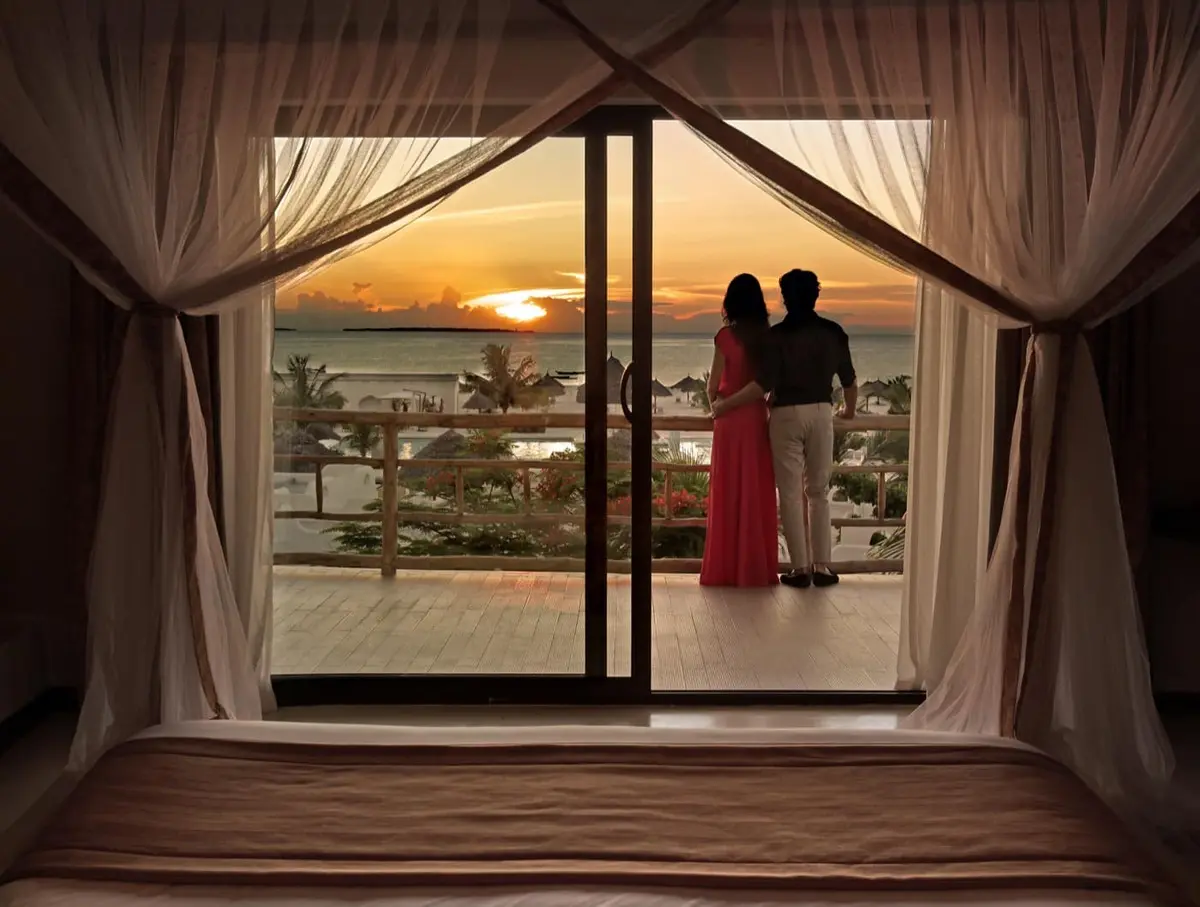
Four nights on safari in the northern circuit followed by a week on the Zanzibar coast, with a private vehicle throughout and upgraded lodges at the key stops.
From $5,510 per person
View ItineraryTHE DESTINATION
Around 38% of Tanzania is protected as national park or conservation area, more than any other country in Africa, and this is the main reason the country has so much wildlife.
The Great Migration is the largest overland movement of mammals in the world, with 1.5 million wildebeest and 500,000 zebra following the rains in a continuous loop through the Serengeti and into Kenya's Maasai Mara. Because the herds are always on the move, there is no single month for the migration, and where you see them depends on when you travel.
The Ngorongoro Crater has roughly 50 black rhinos, out of only about 700 in the whole of Tanzania. The crater floor covers 260 square kilometres and is enclosed by the caldera walls, and its predators and prey have lived there for generations, so it is possible to see lion, leopard, cheetah, elephant, hippo and rhino in a single day.
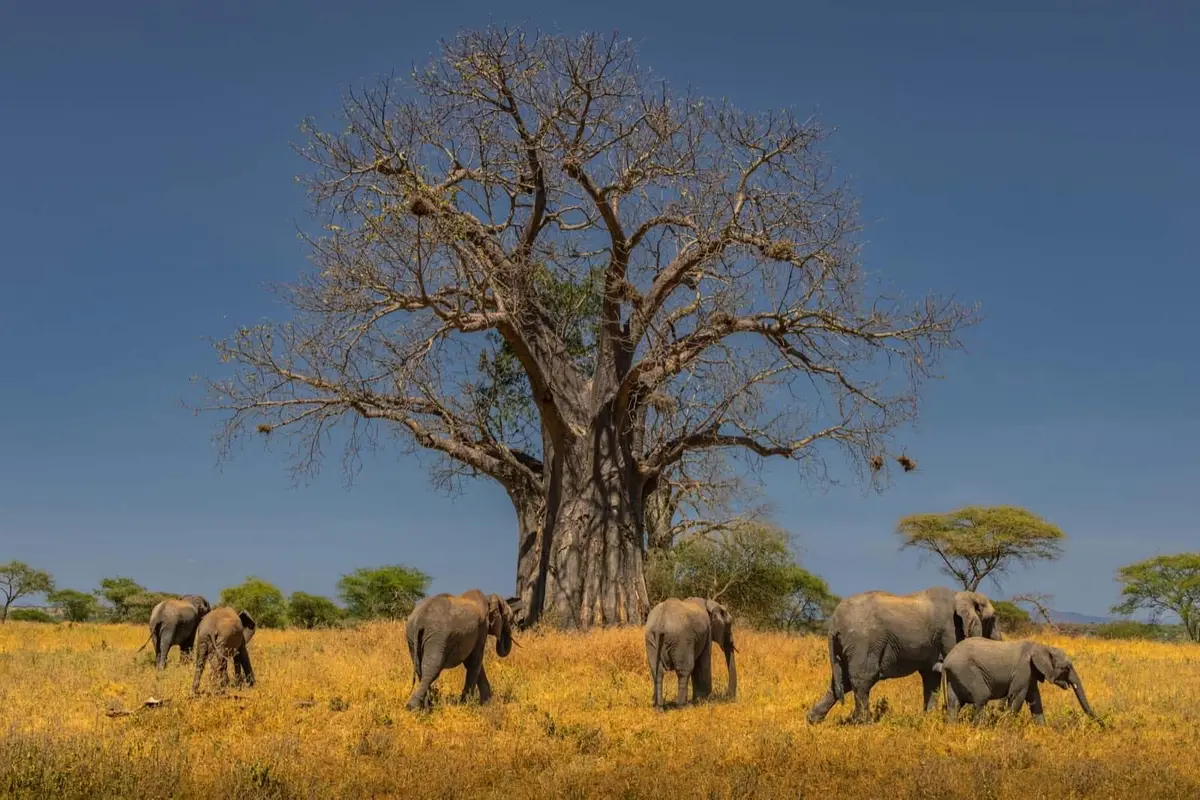
In the dry season Tarangire has the largest concentration of elephants in East Africa. The Tarangire River is the only permanent water for hundreds of kilometres, so from July to October the animals of the surrounding area gather along it, and in August herds of 200 elephants can be seen moving past the ancient baobabs.
The northern circuit, which covers Tarangire, Lake Manyara, the Ngorongoro Conservation Area and the Serengeti, is reached from Arusha, and the first game drive is usually within a few hours of landing at Kilimanjaro International Airport.
WHAT IT COSTS
Safari quotes do not always show the full cost, so this section sets out what is included and what to budget for separately.
Prices are per person per day, sharing a vehicle. The cost per person falls as the group grows, because the cost of the vehicle and guide is shared between more people.
Comfort
$466–$551
per person / per day, two sharing
Mobile tented camps inside the parks and a simple lodge near the crater. The tents have their own bathrooms and the food is simple, which suits travellers who care more about time in the parks than about where they sleep.
Premium
$590–$722
per person / per day, two sharing
Permanent lodges with en-suite tents or cottages, hot water and full kitchens. Most couples and families choose this tier, and the wildlife experience is the same as on the luxury tier, with the extra cost going towards the accommodation.
Luxury
$1,053
per person / per day, two sharing
Small-footprint camps that limit guests to 12–20 at a time, in prime positions inside the parks, and a lodge on the crater rim. Better food, a higher staff-to-guest ratio and more personal service.
Considering the top tier? The luxury Tanzania safari guide names the camps, gives their nightly rates and explains what the extra cost includes.
Ngorongoro Crater vehicle fee: $295.00
The fee is charged per vehicle for each descent and is paid on the day. Many quoted prices do not include it, and on an 8-day itinerary for two people it adds $147.50 per person.
Hot air balloon: $659 per person
The sunrise balloon flight over the Serengeti is spectacular and worth the price if it fits your budget. It is optional and always quoted separately.
Tipping: $25/day guide, $5 to $7/day lodge staff
Tipping is not included in any price, and on an 8-day safari it comes to more than $200 per person.
Agent markup: 30–300% above operator rate
International booking platforms and agents add a significant margin. If you book directly with an operator in Arusha, that money can go towards a better lodge or a longer stay.
TIMING
Tanzania is a year-round safari destination, and the best time depends on what you would like to see. The guide below explains what happens in the parks through the year.
January – February
Calving Season
This is the wildebeest calving season at Ndutu, in the southern Serengeti ecosystem, when thousands of calves are born a day at the peak and predator activity is intense. It is also one of the best times of year for photography, with open plains, newborn animals, and lions and cheetahs hunting in daylight, and prices are slightly lower than in the peak dry season.
March – May
Long Rains
The parks are quiet, prices drop by 20–30% and the landscape turns green. Wildlife is harder to spot in the tall grass, some roads flood and a few lodges close for maintenance, but if you travel at a relaxed pace and do not mind some rain, this is excellent value. April is usually the wettest month.
June – July
Dry Season Begins
The grass dries out and the animals gather around permanent water, while the wildebeest move north through the central and western Serengeti and the crossings of the Grumeti River begin. Game viewing is good in all the parks, and Tarangire builds towards its peak.
August – October
Peak Season
The Mara River crossings take place in the northern Serengeti, as thousands of wildebeest gather on the bank and then cross in groups, with Nile crocodiles waiting in the water. This is the most photographed event in African wildlife, and the elephant herds in Tarangire are at their largest. These are the most expensive months, and we recommend booking six to twelve months ahead.
November
Short Rains
The short rains usually last three to four weeks, the migration begins moving south again and prices fall from their peak. November is a good month for value, with excellent wildlife viewing, particularly in Ngorongoro and Tarangire.
December
Green Season
The short rains usually end by early December, and wildebeest begin to fill the southern Serengeti on their way to Ndutu for the calving. Prices are mid-range. The festive season from 20 December to 5 January is popular and books early, while the rest of December is often overlooked.
THE NORTHERN CIRCUIT
Each of the four parks has a different character, and the descriptions below include the practical details that brochures often leave out.
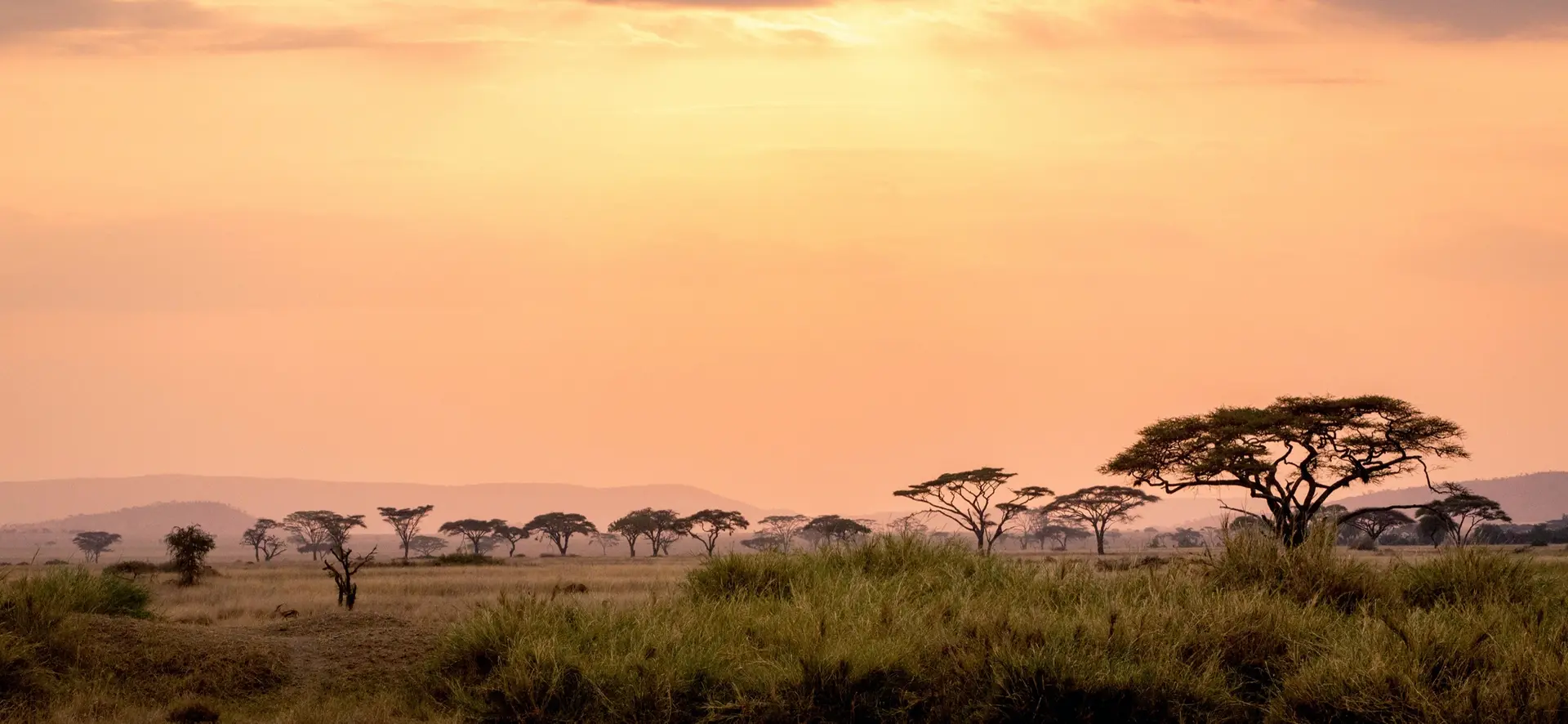
The Serengeti is divided into zones, and the zone you visit decides what you see. The central Seronera valley has resident leopards and lions all year, as well as the scavengers that follow their kills. The southern plains around Ndutu are calving habitat from December through March. The western corridor sees wildebeest river crossings at the Grumeti River in June and July. The northern Serengeti, near the Mara River, is where the famous Mara crossings happen in August through October.
A standard 8-day itinerary usually covers Seronera and either the south or the north of the park. If you would like to see the Mara crossings, please tell us when planning your trip, so that we can build the route around them.
Most Serengeti roads can be driven all year in a 4WD vehicle, although the southern plains become muddy in March and April and some tracks close. The northern Serengeti has the roughest roads of any zone, which is one reason fewer vehicles go there.
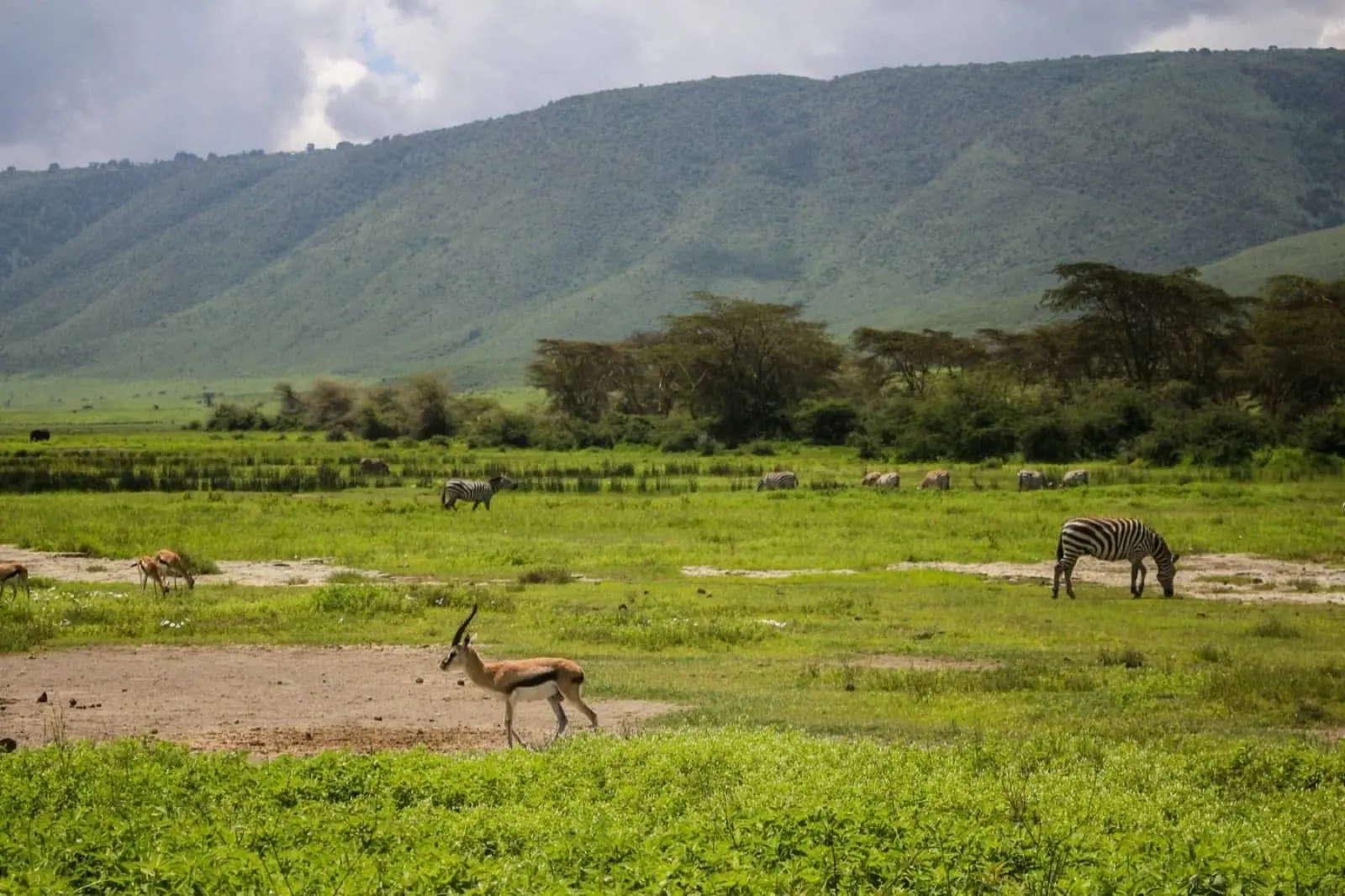
Ngorongoro is a collapsed volcanic caldera with its rim at 2,300 metres and its floor 600 metres below. The drive down takes about 45 minutes on a winding dirt road. The crater walls keep most animals inside, which is why the density of wildlife is higher here than anywhere else on the circuit.
Many keen wildlife watchers come for the black rhinos, of which about 50 live on the crater floor out of roughly 700 in Tanzania, and seeing one in open grassland is very different from tracking them in dense bush. Lake Magadi in the centre of the crater attracts flamingos in the wet season, and the Lerai Forest at the western edge is where elephants and buffalo shelter in the heat of the day.
There are no giraffes in the crater, because they cannot descend the steep walls. The $295.00 vehicle fee for each descent is charged on entry and is not included in your quoted itinerary price, so please budget for it separately.
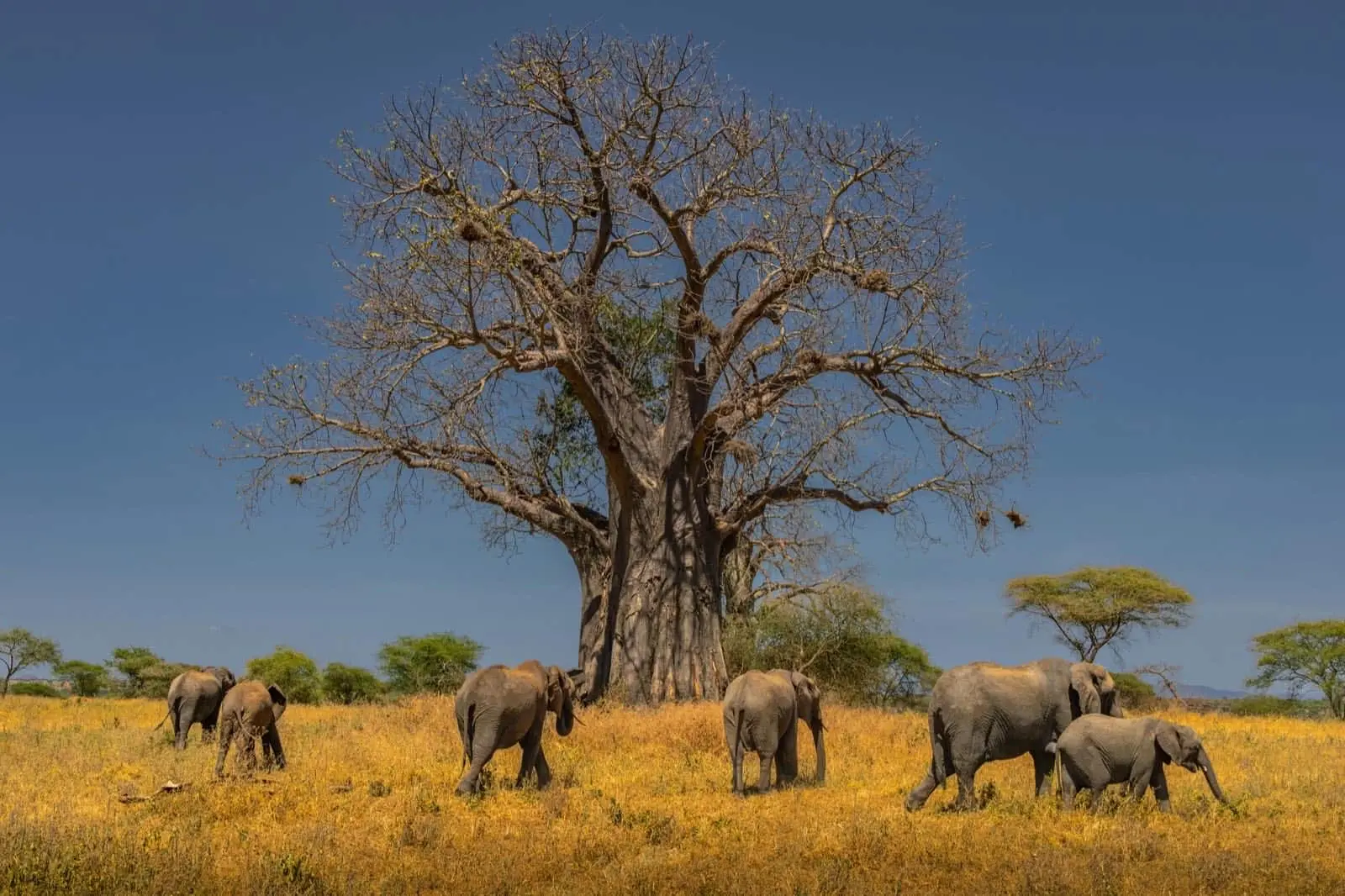
Tarangire is the most underrated park on the northern circuit, and many itineraries give it only a single day on the way to the Serengeti. In the dry season, particularly from July to October, it has the highest elephant density in East Africa, as the Tarangire River is the only permanent water in the area and elephants come from up to a hundred kilometres away to drink. For this reason we recommend more than one day here.
Some of the baobabs in the central and southern sections are over 2,000 years old, with trunks so wide that three people holding hands cannot reach around them. The Silale Swamp in the south of the park holds water all year, so predators gather there even in the wet season, when the river is less important.
Tarangire also has two species that most other parks lack, the fringe-eared oryx and the gerenuk, which stands on its hind legs to reach acacia leaves, so if you have not seen them before, an extra morning in Tarangire is worthwhile.
Lake Manyara is the smallest park on the northern circuit, and most itineraries include it as a half-day stop. It is worth including for the groundwater forest along the foot of the escarpment, where the dense canopy offers a very different wildlife experience from the open plains of the Serengeti, and buffalo herds move through the forest in the morning.
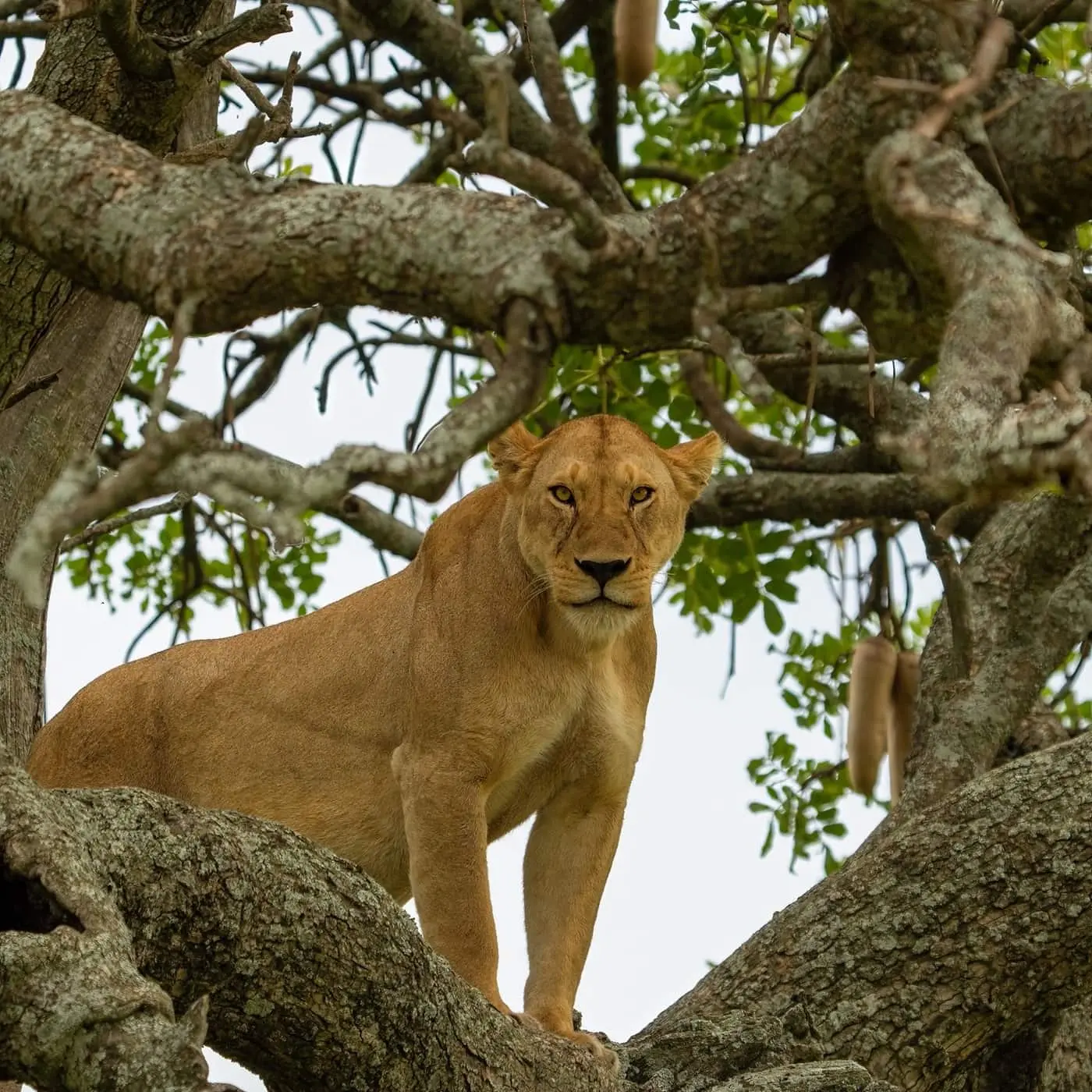
The tree-climbing lions are real, although sightings are not guaranteed. A pride began resting in the fig and acacia trees along the forest edge decades ago, and the behaviour has been passed down through the generations. The chances are better in the dry season, when there is less shade on the ground.
When the water level is right, several thousand flamingos gather on the lake shore at a time. The south of the lake has few visitors and is worth the drive if you have time.
All of the Big Five, lion, leopard, elephant, buffalo and black rhino, live on the northern circuit. The Ngorongoro Crater is the most reliable place for black rhino, with more than 50 in the conservation area, and the Serengeti is known for its lions, its leopards along the Seronera River and the Great Migration. Tarangire has some of the largest elephant herds in Tanzania in the dry season.
Beyond the Big Five, a first safari usually brings cheetah, hyena, giraffe, zebra, wildebeest, hippo and a long list of birds. Which animals you see most of depends on the parks and the month, and our Big Five guide explains where each of them is easiest to find.
Safaris on the northern circuit start in Arusha. International flights land at Kilimanjaro International Airport, which is about 50 km from Arusha, and the drive takes about 1 hour. Most itineraries begin with a night in Arusha and drive to Tarangire, the closest of the big parks, the next morning. Our flights to Tanzania page lists the airlines that fly into Kilimanjaro, and the Arusha guide covers the first night.
Most visitors need a visa, which can be applied for online on the official portal, visa.immigration.go.tz, and Tanzania also requires an inbound travel insurance policy. Our visa guide explains both.
Most first safaris stay in the north, where the parks are closest together. Southern Tanzania has quieter, wilder parks for a second visit, including Ruaha National Park, Tanzania's second-largest national park, which is reached by air and receives far fewer visitors than the Serengeti. Closer to Arusha, the Olduvai Gorge museum and Lake Natron add something different to a northern safari.
WHAT TO EXPECT
The day begins with a wake-up call at 5:45am and tea or coffee at camp, and the vehicle leaves at 6:30.
The first two hours are usually the best of the day, as the predators are still active, the light is soft and the air is cold enough for a jacket. Lions finish their night hunts in the early morning, and leopards can be seen before the heat sends them into the shade. Your guide will have been up since 5am, listening to radio calls from other vehicles and from the rangers.
By 10–11am the animals are resting and game viewing slows down, so you return to camp for a full breakfast and a few hours to read, sleep or talk over the morning's sightings. Most camps have comfortable outdoor seating in the shade.
The afternoon drive leaves at around 3:30pm and continues until after dark, with a sundowner at a viewpoint when the evening allows, and dinner at camp is usually at around 7:30–8pm.
On a private safari this schedule is entirely flexible, so you can stay longer at a sighting or skip an afternoon drive and relax at camp. The only fixed limit is the park closing time, which is 6–7pm for vehicles in most parks.
PRACTICAL
Clothing in neutral colours
We recommend khaki, olive, beige and tan, and avoiding white, which shows the dust, and bright colours, which stand out on the plains.
Layers for the morning cold
Dry-season mornings in the Serengeti and on the Ngorongoro rim fall to 5–12°C, so we recommend a fleece and a light windproof jacket. By 10am it is usually 28–35°C, warm enough for a T-shirt.
Binoculars of 8x42 or more
Your guide will spot animals at a distance that are hard to see with the naked eye, and binoculars let you see them properly. 8x42 is the usual choice, and 10x42 gives you more reach.
Dust protection for electronics
In the dry season the Serengeti produces a fine red dust that gets into everything, so we recommend a dry bag or a zip-lock bag for your camera, phone and lenses.
Power bank
Charging facilities vary between lodges, and bush camps often run on solar power with limited capacity. A 20,000mAh power bank will keep a phone and a camera battery charged for about three days.
PRIVATE OR GROUP
Many travellers ask whether a private safari is worth the extra cost. We believe it is, and the difference in cost is smaller than most people expect.
On a group tour, six to eight travellers who do not know each other share one vehicle and one guide, and the schedule is fixed before anyone leaves home. When a leopard climbs a tree and you would like to stay, the decision is made by the group or by the operator's timetable, and at popular sightings your vehicle may wait among 12–15 others.
On a private safari the vehicle is yours, and your guide plans the day around what you would like to see. You can stay at a sighting as long as you wish, even if that means three hours waiting for a leopard to come down from a tree.
Some travellers find the extra cost of a private safari significant, while others feel that after a ten-hour flight it is the one thing they do not want to compromise on, and both views are reasonable.
If you are travelling alone, a private safari costs more per person, because you cover the cost of the vehicle yourself. One solution is to share the vehicle with another traveller on the same dates, and we can help to arrange this.
Most Tanzania safaris booked from outside Africa pass through at least one intermediary before they reach the company that runs the trip. For example, a UK travel agent may book through a Nairobi company, which in turn contracts a Tanzanian operator, and as each adds its own margin, the price you are quoted can be 30–300% above the operator's rate.
Booking with a local operator removes these extra layers, so the person who quotes your trip is also the person who chooses your lodges, briefs your guide and answers your WhatsApp message at 9pm the night before you leave.
If something goes wrong on safari, such as bad weather, difficult roads or a problem at a lodge, a local operator can usually resolve it within hours, which is much harder for a booking platform in London.
The UK government advises using only reputable tour operators and never buying a safari from touts in the street, so we recommend booking before you travel and asking every operator the questions on the right.
Saleh Safaris is run from Arusha by Mohammadali Saleh, who grew up here. He knows the guides and has stayed at the lodges, and he answers your messages himself.
Each of these guides covers one part of planning in more detail, from the weather and the migration to the town where most safaris begin.
Best time to visit Tanzania
Every month compared for the migration, weather, prices and crowds.
Tanzania weather by month
Temperatures and rainfall in Arusha, the parks and Zanzibar.
The Great Migration by month
Where the herds are in every month, with a map.
Serengeti vs Maasai Mara
Which side of the river suits your month and trip length.
Tanzania safari cost
What a private safari costs per day, and what is included.
How many days you need
What fits into five, seven and ten days.
Arusha
The airports, the drive times and a spare day in the safari town.
Zanzibar
Where it is, how to get there and when to go after a safari.
National parks overview
Every park on the northern circuit and beyond, side by side.
Serengeti vs Ngorongoro vs Tarangire
What each park is best for and how many nights to give it.
Tanzania park fees
Entry, camping and vehicle fees for each park, with sources.
Ngorongoro Crater fees
The entry fee, the crater vehicle fee and the resident rates.
Mandatory travel insurance
Who needs the inbound policy, where to buy it and what it covers.
Hot air balloon safari
Where the balloons fly in the Serengeti and how the morning works.
Night safari in Tanzania
Where night drives are allowed and what you can see after dark.
Airport VIP lounges
Fast-track and lounge options at Kilimanjaro International Airport.
FREQUENTLY ASKED QUESTIONS
Our private 8-day Classic for two people costs $466–$551 per person per day on the Comfort tier, depending on the season, $590–$722 on Premium and $1,053 on Luxury. That covers the private vehicle and guide, every park fee and full-board lodges. For the whole trip, a couple pays $3,730–$4,410 per person on Comfort and up to $8,425 per person on Luxury.
Three costs are often missed. The first is the Ngorongoro Crater vehicle fee of $295.00 per vehicle, which is paid on the day, the second is the Serengeti hot air balloon at $659 per person if you add it, and the third is tipping, which is not included in any quoted price. We suggest budgeting $25 per day for your guide and $5 to $7 per person per day for lodge staff, paid into the communal tip box, which comes to more than $200 per person on an 8-day safari. International booking agents also add 30–300% to the operator's price, and booking directly with an operator in Arusha avoids this markup.
June to October is the dry season, when the grass is short, animals gather around water and the Great Migration crosses the Mara River in the north. This is the peak season, and prices are at their highest. January and February are just as good if you would like to see the calving season at Ndutu, where the wildebeest give birth. March to May brings the long rains, fewer visitors and prices 20–30% lower, and while the parks are green and photogenic, some roads flood. November and December are good for value, as the short rains end in November and prices are lower than in the dry-season peak.
We recommend at least six days to see the northern circuit without rushing, and eight days if possible, which allows two nights in Tarangire, three in the Serengeti and a full day in the Ngorongoro Crater with time to rest between drives. Ten to twelve days allows you to add a second area of the Serengeti, a beach stay in Zanzibar, or a slower pace throughout. We also recommend not trying to fit in too many parks, as more parks does not mean better wildlife viewing.
Yes. Tanzania has been one of Africa's most stable safari destinations for decades, the national parks are well managed, the roads can be driven in a 4WD vehicle and the tourism industry is well established. Crime in the parks is very rare. In Arusha, as in any city, the usual precautions apply, and your guide knows the area well and will advise you.
The Serengeti covers 14,763 square kilometres of open plain and acacia woodland and is home to the Great Migration, in which the wildebeest move in a rough clockwise loop throughout the year, so planning your visit around their position means you can see them wherever they are. The Ngorongoro Crater is a collapsed volcanic caldera with a floor of 260 square kilometres and its own resident population of about 60 lions, more than 50 black rhinos and around 25,000 large animals in total, which do not leave the crater. There are no giraffes, as the walls are too steep for them. Most itineraries of seven to eight days include both.
We recommend a private safari. On a group tour you share a vehicle with six to eight other travellers and follow a fixed schedule, so when a leopard is resting in a tree, someone else decides when you leave. On a private safari your guide stays as long as you wish, and you choose when to start the day, where to have lunch and how long to spend at each sighting. A private safari costs more, but the vehicle is a fixed cost, so the difference becomes smaller with every person who joins.
We recommend clothing in neutral colours such as khaki, olive, tan and beige, and avoiding white, which shows the dust, and bright colours, which can disturb the animals. Layers are important, as mornings in the Serengeti and on the crater rim are cold, at 5–12°C in the dry season, while by midday it is 28–35°C, so a fleece and a light jacket for the early drive and shorts and a T-shirt by 10am work well. Binoculars of at least 8x42 are essential, as your guide will point out animals that are hard to see without them. Please also bring SPF 50 sunscreen, a wide-brimmed hat and a small dry bag to protect your camera from the Serengeti dust.
The day usually begins with a wake-up call at 5:45–6am and tea and a light snack at camp, and the vehicle leaves at 6:30 for the morning drive, when the predators are still active, the light is soft and the air is cool. By 10–11am most animals are resting in the shade and game viewing slows down, so you return to camp for a full breakfast and a few hours to rest. The afternoon drive leaves at around 3:30pm and continues until after sunset, followed by dinner at camp. Most days include six to eight hours in the vehicle, and on a private safari you can stay longer at a sighting when something is happening.
Yes, and the two combine well. The usual combination is five to seven days on safari in the northern circuit followed by four to seven nights on Zanzibar. The scheduled flight from Arusha to Zanzibar takes about 1 hour 10 minutes nonstop, or about 1.5 hours with a stop, and the flight from Seronera in the central Serengeti takes about 1 hour 40 minutes. Zanzibar's Stone Town is a UNESCO World Heritage Site, and the best beaches are on the northern and eastern coasts. Most travellers go on safari first and finish at the beach, and while the reverse is possible, the logistics are more complicated.
Neutral colours such as khaki, olive, tan and grey work best on game drives, and layers are essential, as early mornings in an open vehicle are cold while the middle of the day is warm. A fleece or light jacket, a hat, sunglasses and comfortable closed shoes cover most days. Away from the lodges, and especially on Zanzibar, modest dress that covers the shoulders and knees is appreciated.
Most safaris in northern Tanzania start in Arusha. International flights land at Kilimanjaro International Airport, about an hour's drive from the city, and the first night is usually spent in Arusha before the drive west to Tarangire, the closest of the big parks. Scheduled flights to the Serengeti and Zanzibar leave from Arusha Airport on the western side of the city.
The northern circuit covers Tarangire, Lake Manyara, the Ngorongoro Crater and the Serengeti, with Ndutu on the southern Serengeti plains during the calving season. Most first safaris of five to eight days include Tarangire, the Serengeti and the Ngorongoro Crater. Ruaha and Nyerere in the south are quieter alternatives for a second visit.
Please send your dates, the size of your group and what you would most like to see. Mohammadali replies personally, usually within a few hours.