Tarangire National Park
In the dry season, the wildlife of a 20,000 km² area gathers along the Tarangire River.
Plan a Safari HereSee it on the Northern Circuit map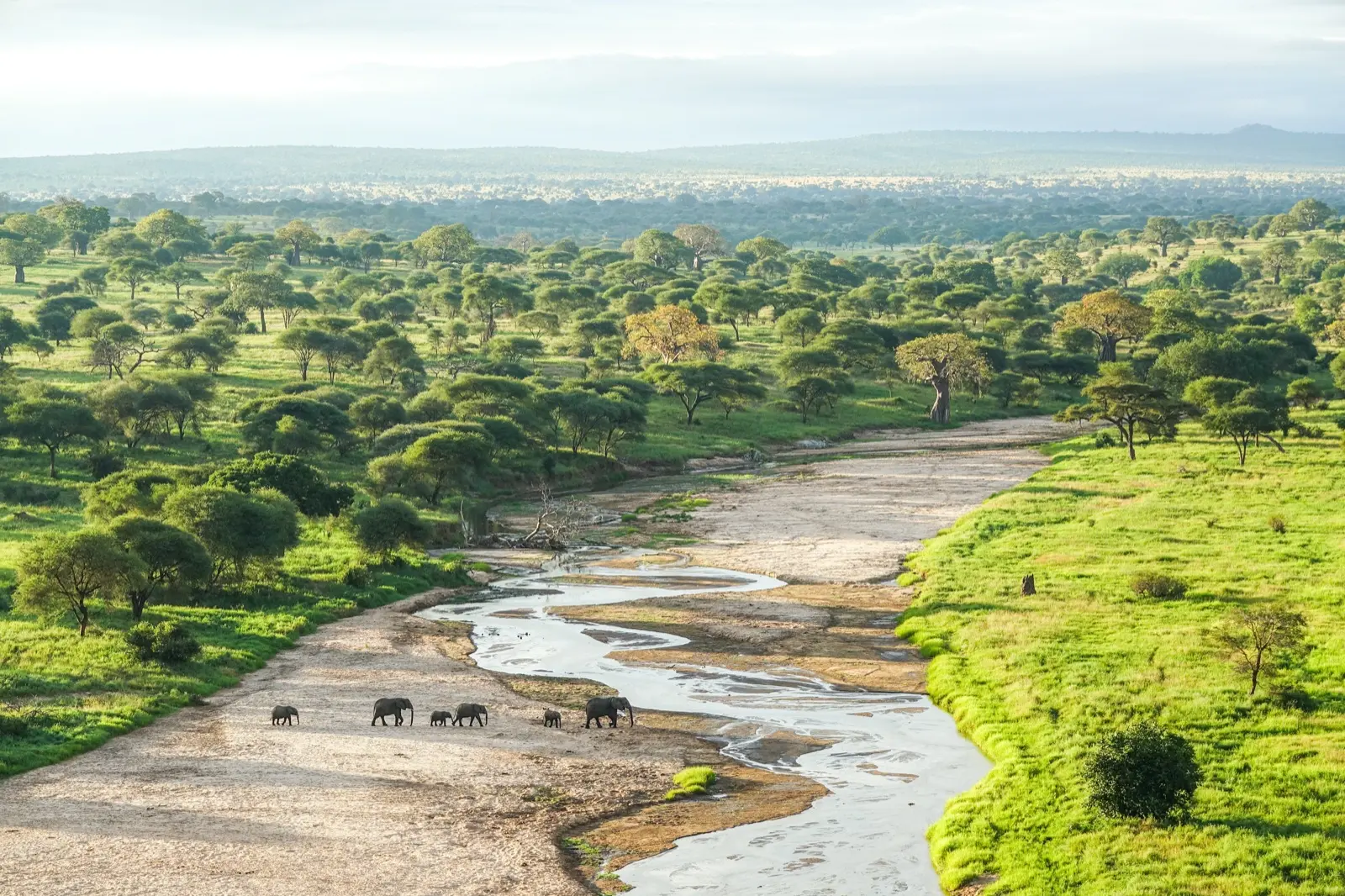
About Tarangire National Park
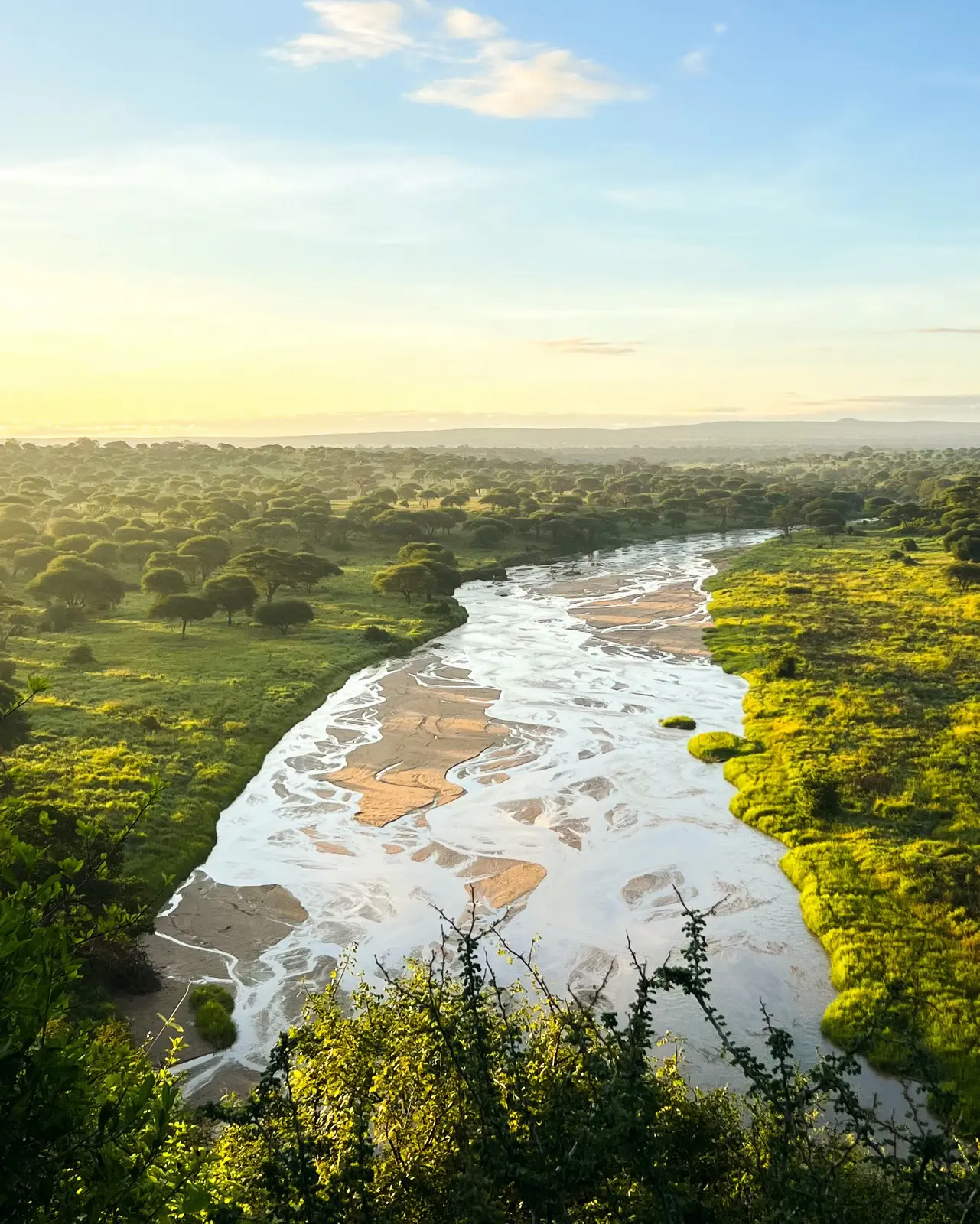
The Tarangire River is the key to understanding this park. From roughly November to April, rain falls across a 20,000 km² area to the north and east, water collects on the Simanjiro Plains, and wildebeest, zebra and eland spread out across those plains to follow the fresh grass, leaving the park much emptier. Many safari brochures suggest that the animals migrate into Tarangire during the rains, but in fact this is when they leave. When the dry season arrives around June and the surface water dries up, the animals return to the Tarangire River, which flows all year.
The best-known dry-season sight is elephants on the river. Family groups that have spread over hundreds of kilometres during the wet months return as the water disappears, and herds of 50, 100 or more come down to the banks to drink and dig in the sand, with the calves kept in the middle. The Tarangire Elephant Research Project has followed these elephants individually since 1993 and has mapped family trees for hundreds of identified animals. No current TAWIRI census counts the elephants inside the park boundary on their own, as the population is measured across the wider range. However, no other park on the northern circuit offers as many elephants in one accessible area during the dry months.
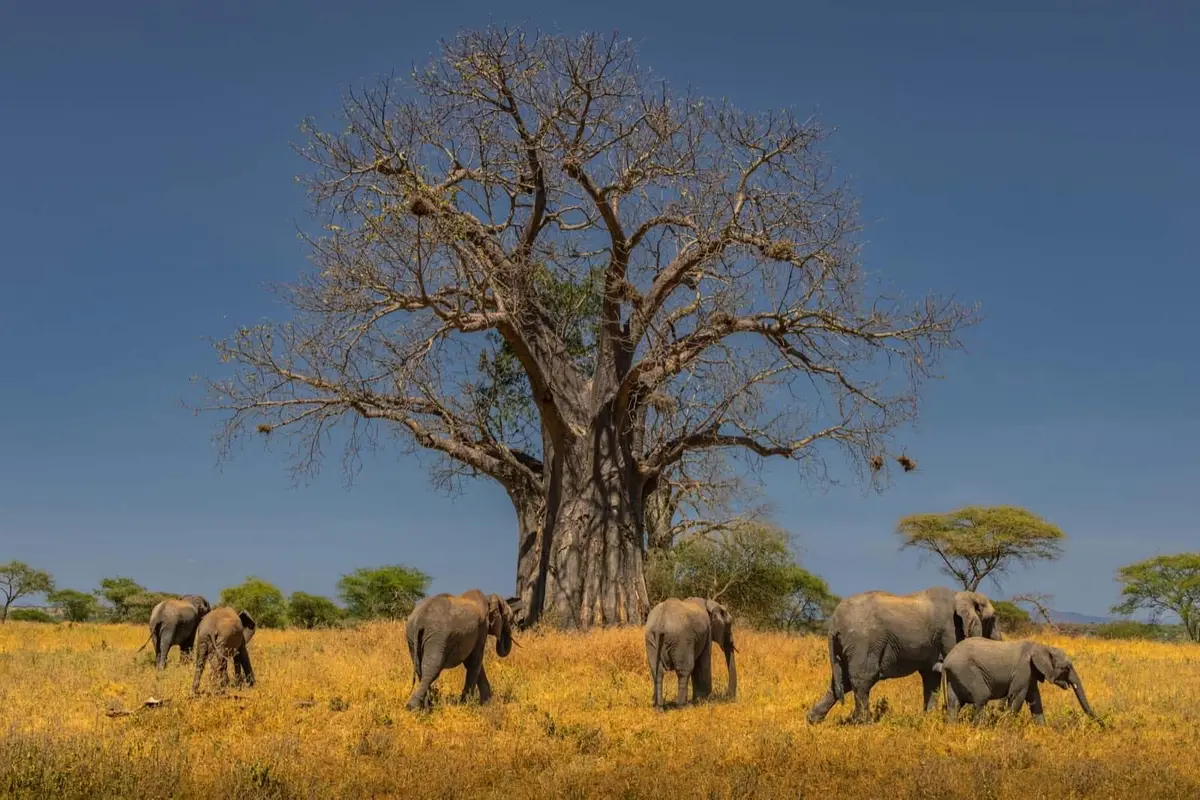
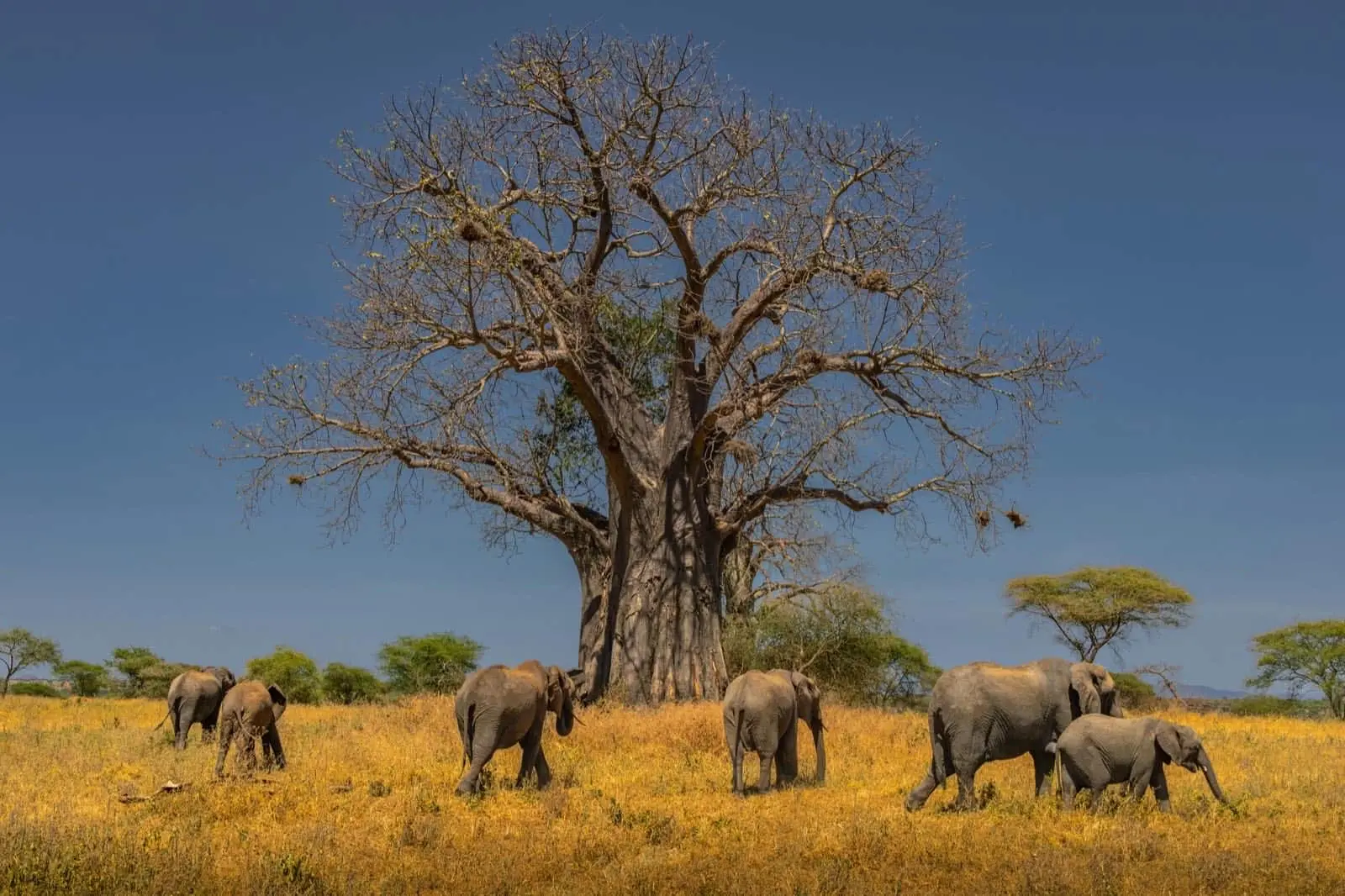
Many safari websites describe Tarangire's baobabs as 1,000 years old. This is plausible, as baobabs are among the longest-lived trees in the world and radiocarbon dating of other African populations has confirmed trees older than 1,000 years, but no individual tree in Tarangire has been dated. What is certain is that Tarangire has the highest density of baobabs in Tanzania, and the huge silver-grey trunks against the red soil look quite unlike anywhere else on the northern circuit.
Two species make Tarangire worth more than a stop on the way to the Serengeti. Fringe-eared oryx, which have black tufts of hair at the tips of their ears, live on Tarangire's open flats and are rarely seen elsewhere on the circuit. Greater kudu, with spiralling horns over a metre long, live in the southern Lemiyon woodland, which most itineraries do not reach. Rock pythons use hollow baobabs for shelter and as ambush sites, behaviour that the field literature associates with Tarangire and that is not seen in the Serengeti. The park also has 588 recorded bird species (Avibase 2025), one of the highest totals for any park in Africa.
Wildlife in Tarangire
Elephant
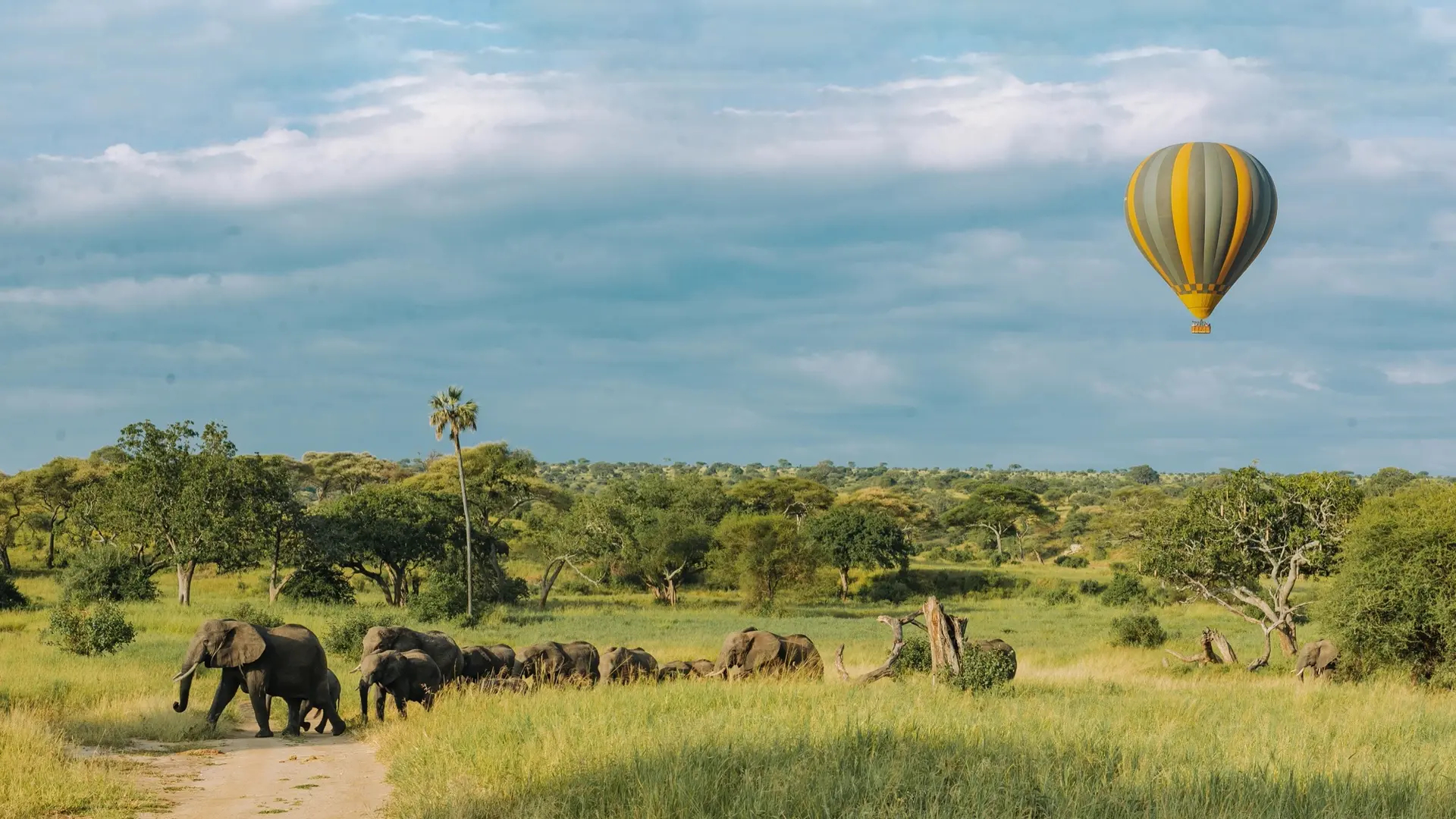
Elephants are the park's best-known species. The Tarangire Elephant Research Project has followed the herds since 1993 and identified hundreds of individual animals. In the dry season, from June to October, the elephant numbers along the Tarangire River are the highest on the northern circuit, and family groups of 50 to 100 or more are common at the peak.
Fringe-Eared Oryx
This subspecies of East African oryx is named for the black tufts at the tips of its ears. Small groups live on the open grassland all year and are seen on most dry-season game drives, while they are almost absent from the other northern circuit parks.
Rock Python
Rock pythons have been recorded using hollow baobab trunks for shelter and as ambush points, coiling in the cavities or on low branches, which is unusual behaviour. Sightings are not routine, although they are not rare either, and Tarangire is the park where guides look for them.
Lion
Resident prides hold territories along the Tarangire River and around Silale Swamp. The large numbers of prey in the dry season keep the prides active and well fed. The population is smaller and less studied than the Serengeti Lion Project prides, but lions are seen reliably during a dry-season stay.
Buffalo
Herds of several hundred gather on the river plains in the dry season. Like the elephants, they spread across the wider area in the wet season and return to the river when the water elsewhere dries up.
Birds (588 species)
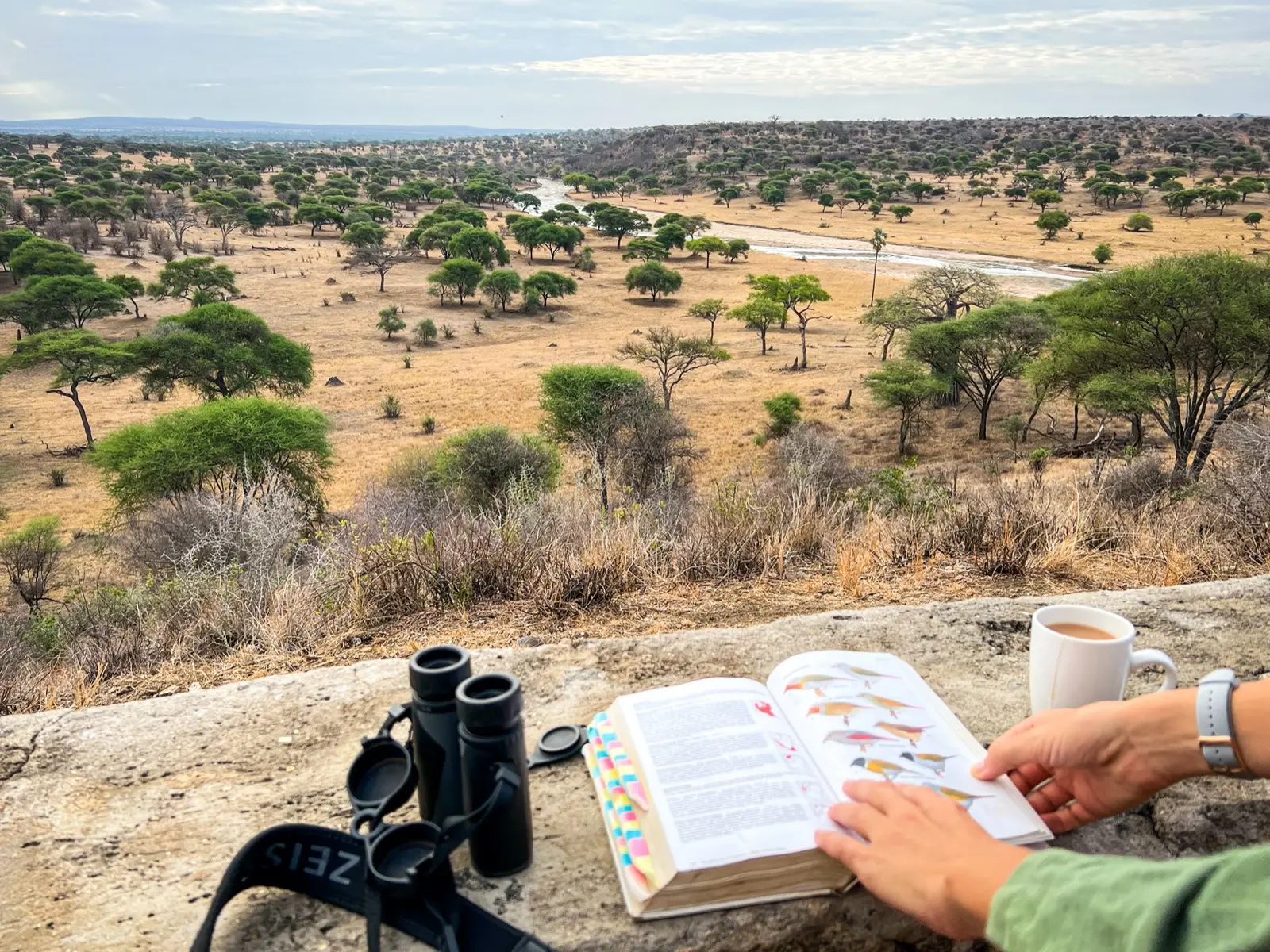
588 species have been recorded (Avibase 2025), one of the highest totals for any single national park in Africa. Species to look for include the ashy starling, which is endemic to north-central Tanzania and reliable in the baobab woodland, as well as the yellow-collared lovebird, rufous-tailed weaver, Von der Decken's hornbill and martial eagle. Silale Swamp has the greatest variety of waterbirds, including large numbers of open-billed, saddle-billed and yellow-billed storks.
Tarangire's Mini-Migration
Most safari brochures mention a migration in Tarangire, and many describe it the wrong way round.
During the wet season, from November to April, rain falls across a 20,000 km² area around the park. Water collects on the Simanjiro Plains to the east, the Maasai Steppe to the south and the Manyara Ranch corridor to the north, and fresh grass grows. The wildebeest, zebra and eland leave Tarangire and spread into that wider area to follow it. During this period the park holds its resident elephants, predators and oryx, but the large herds of grazers are elsewhere.
When the dry season arrives around June, those water sources dry up. The Tarangire River, which is fed by springs in the Ngorongoro highlands, keeps flowing, so the wildebeest and zebra return and the predators follow them.
The rains therefore take the animals out of the park, and the dry season brings them back. If you visit in November, you should not expect the concentrations of the dry season, whereas in August you will see the river at its busiest.
Park Zones: Where to Go and When
The northern zone, from the main gate down to the bend in the Tarangire River, is where most one-day and two-day itineraries spend their time. Elephant herds gather here in the dry season and move between both banks, and lions follow them and are found reliably along this stretch.
Silale Swamp, in the centre of the park, is the best birding area in Tarangire. This permanent marsh holds hippo, crocodile and large numbers of waterbirds all year, including saddle-billed, yellow-billed and open-billed storks and spoonbills. In the dry season the acacia woodland around it also attracts lion, buffalo and elephant, and a morning at Silale usually produces more species than anywhere else in the park.
The southern part of the park is rarely visited, because reaching it requires either an extra half-day or a night inside the park. It offers greater kudu in mixed miombo woodland, far fewer vehicles, and scenery that is quite different from the baobab plains of the Lemiyon area in the north.
The concession land to the east, outside the national park boundary, holds Oliver's Camp (Asilia) and Sanctuary Swala. These areas are excellent, although they do not reliably offer the same elephant numbers as the river at the height of the dry season.
Park gates and the new entrances (updated November 2026)
Most visitors enter Tarangire through the main gate in the north of the park, which is reached from the Arusha to Dodoma road at Kwakuchinja village. This is the gate used on almost every northern circuit itinerary, as it is about two hours from Arusha and close to the Tarangire River, where the elephant herds gather in the dry season.
Two new gates opened in 2026. Tanzania National Parks (TANAPA) completed the Mamire Gate in April 2026. It gives an alternative entrance for visitors coming from Babati, Dodoma, Singida and the rest of the Manyara region, including guests who arrive in Dodoma on the new Standard Gauge Railway. For travellers starting in Arusha, the main gate remains the more convenient entrance.
The Lemiyoni Gate opened later in the year and is used by lodges just outside the park boundary. Elewana reports that it shortens the drive from Tarangire Treetops to the park from about 20 km to 13 km, and Nimali Tarangire says it is about 15 minutes from their lodge, compared with about 45 minutes to the Boundary Hill Gate they used before. For guests at these lodges this means more time on game drives in the early morning and late afternoon. Please note that the new route crosses black cotton soil, which can become difficult after heavy rain, so in the wettest weeks guides may still use the original route. Standard park gate hours and permit requirements apply.
Sources: Elewana Collection newsletter (October 2026), Nimali Tarangire update published by ATTA (22 October 2026), The Citizen (24 April 2026).
Tsetse Flies in Tarangire
Tarangire has tsetse flies, which operators mention less often than they should. The flies live in the dense bush and riverine woodland throughout the year and are most active in the early morning and late afternoon, which is when most game drives take place.
Tsetse bites are painful and draw blood, and in rare cases they can transmit sleeping sickness (African trypanosomiasis), although transmission to tourists is extremely uncommon. For most visitors the flies are a matter of comfort rather than health.
The precautions are simple and effective. Avoid dark blue and black clothing, which attracts tsetse, wear light-coloured long sleeves on morning drives and apply a DEET-based repellent to exposed skin. Guides carry repellent and can position the vehicle away from the worst areas. The flies should be taken seriously, but they are not a reason to leave Tarangire out of your safari.
Entry Fees (2026)
| Fee Item | Amount | Notes |
|---|---|---|
| Non-resident adult entry (peak, 16 May - 14 Mar) | $59.00 (VAT incl.) | TANAPA 2023/24 tariff, including 18% VAT. |
| Non-resident adult entry (low, 15 Mar - 15 May) | $53.10 (VAT incl.) | Including 18% VAT. |
| Child age 5-15 | $17.70 (VAT incl.) | Both seasons. |
| Under 5 | Free | |
| Vehicle fee (TZ-registered Land Cruiser) | ~TZS 41,300 (~$17-20) | Paid at the gate in Tanzanian shillings. |
| VAT | 18% | Applied to all fees at the GePG payment gateway. |
| Payment method | Card only | No cash at any TANAPA gate. Re-verify fees after July 1, 2026. |
How these fees are counted on a real trip: Tanzania park fees 2026. All fees are included in Saleh Safaris package prices.
Best Time to Visit Tarangire
| Months | Weather | Wildlife | Crowds |
|---|---|---|---|
| Jun-Jul | The dry season begins, with cool mornings of approximately 14°C, warm afternoons of approximately 27°C and falling river levels. | Excellent and improving, as the herds return from the Simanjiro Plains, elephant and buffalo gather and the lions are active. | Moderate, and less crowded than the Serengeti in peak season. |
| Aug-Oct | Dry and warm, with dust near the river and no rain. Daytime temperatures reach 30-32°C by October. | This is the peak, with the most elephant and buffalo on the river, the most predator activity and reliable sightings of fringe-eared oryx on the open flats. | Moderate to high, although there are still far fewer vehicles than in the Serengeti in August. |
| Nov-Dec | The short rains usually begin around mid-November, and the landscape turns green quickly. | The wildlife begins to spread out as water returns across the wider area, and migratory birds arrive. This is a good time for green-season photography, and python sightings can increase as the vegetation provides cover. | Low, and rates drop at most lodges. |
| Jan-May | Wet season. The long rains from March to May can make some tracks difficult. | The migrating grazers have left for the Simanjiro Plains, but the resident elephants, predators and fringe-eared oryx stay. Bird variety is at its highest with the migrants, and the plains and gates are quiet. | Very low, and some camps close in April and May. |
Where to Stay
Our guides to lodges and camps for Tarangire National Park. Every lodge we work with is in the lodge directory.
- Baobab Tented CampInside Tarangire National Park
- Elephants LairInside Tarangire National Park, 27 km from the main gate
- Conserve Safari TarangireInside Tarangire National Park, by the Tarangire River
- Siringit Tarangire CampInside Tarangire National Park, south of Kuro airstrip
- Nyikani Tarangire CampInside Tarangire National Park, near Kuro airstrip
- Tarangire Elephant SpringsInside Tarangire National Park, 15 minutes from Kuro airstrip
Frequently Asked Questions
What is Tarangire National Park known for?
Tarangire is known for three things that set it apart from the rest of the northern circuit. The first is the dry-season elephant concentration, as from June to October the Tarangire River is the last permanent water in a 20,000 km² area and the elephant herds from across that range gather along it. The second is its baobabs, as the park has the highest density of baobab trees in Tanzania, with trunks up to 10 metres in diameter and ages that may exceed 1,000 years, although no individual tree has been radiocarbon-dated. The third is its species that are not found elsewhere on the northern circuit, including fringe-eared oryx, greater kudu in the southern section and rock pythons in baobab hollows.
When is the best time to visit Tarangire?
June to October is the best time for wildlife. August and September are the peak months, with the most elephant and buffalo on the river, active predators and reliable sightings of fringe-eared oryx on the open flats, while June and July offer a good balance of wildlife and fewer vehicles. November to March is the green season, when the migrating grazers have spread across the wider area but the resident wildlife remains, and birdlife is at its most varied with the arrival of European and Asian migrants. We do not recommend April and May for a vehicle-based itinerary, as the long rains make some tracks difficult and several camps close.
How many elephants are in Tarangire?
No current published TAWIRI census counts the elephants inside the Tarangire National Park boundary on their own, because the elephants move across a wider area during the year and the population is measured at that level. What is well documented is that in the dry season, herds of 50 to several hundred animals are regularly seen together along the Tarangire River. The Tarangire Elephant Research Project has identified and followed hundreds of individual elephants across this range since 1993.
Are there tree-climbing pythons in Tarangire?
Yes. Rock pythons using hollow baobab trunks for shelter and as ambush sites is documented behaviour associated with Tarangire. The pythons coil inside the cavities or on the outside of the trunks, which is not typical python behaviour elsewhere on the northern circuit. Sightings cannot be guaranteed on any single game drive, but guides look for them, and the area around Kuro Airstrip and the northern river circuit are where they are most often seen. This is a recorded field observation and not a tour operator's story.
How many bird species does Tarangire have?
588 species have been recorded in Tarangire National Park (Avibase 2025), considerably more than the figure of 550 used on most operator websites. Notable species include the ashy starling, which is endemic to north-central Tanzania and reliable in Tarangire's baobab woodland, as well as the yellow-collared lovebird, rufous-tailed weaver, Von der Decken's hornbill and martial eagle. Silale Swamp in the centre of the park has the greatest variety, with large numbers of waterbirds all year, including saddle-billed and open-billed storks and spoonbills.
Is Tarangire worth visiting or just a day stop?
If you are travelling in the dry season, from June to October, Tarangire is worth a stay of two to three nights rather than a day on the way to the Serengeti. The dry-season elephant concentration, with large family groups gathered on a single river, is very different from anything in the Serengeti. One day gives you a good game drive, while two nights allow time at Silale Swamp, time on the river at different hours of the day and a realistic chance of finding lions on a kill or a python in a baobab. The Lemiyon area in the south needs a third day and suits guests who particularly want to see greater kudu and different scenery.
How far is Tarangire from Arusha?
The main gate is approximately 118 km from Arusha, a drive of about 2 hours depending on the traffic through Makuyuni, on tarmac apart from the last 7 km or so of gravel to the gate. Tarangire is the first park on the standard northern circuit and the closest major park to Arusha by road, so it is usually the first stop on most itineraries. Coastal Aviation and Auric Air also fly from Arusha to Kuro Airstrip inside the park, a flight of approximately 30 to 40 minutes.
Which gate do you use to enter Tarangire?
Most safaris from Arusha use the main gate in the north of the park, near Kwakuchinja village on the Arusha to Dodoma road. Since 2026 there are two further options. The Mamire Gate, opened by TANAPA in April 2026, serves visitors coming from Babati, Dodoma and Singida. The Lemiyoni Gate gives lodges just outside the park, such as Tarangire Treetops and Nimali Tarangire, a much shorter route into the park, although guides may use the older route after heavy rain because the new road crosses black cotton soil.
Can you do a night game drive in Tarangire?
Yes. Tarangire is one of two national parks on the northern circuit where Tanzania National Parks allows night game drives, the other being Lake Manyara. The drives are run by camps inside the park, such as Baobab Tented Camp and Nyikani Tarangire Camp, usually after dinner for two to three hours, with a guide and a spotter. TANAPA charges a night game drive fee for each guest on top of the camp's charge, and the camps we use take guests aged 12 and over.
Can you see the Big Five in Tarangire?
Not reliably. Lion, leopard, elephant and buffalo are all present and seen fairly reliably in the dry season, but there is no active rhino population in Tarangire, so in practice it is not a Big Five park. Instead, Tarangire offers excellent elephant viewing, unusual scenery and species such as fringe-eared oryx, greater kudu and rock python that add to your Tanzania sightings.
Is Tarangire safe from tsetse flies?
There are tsetse flies in Tarangire, particularly in the dense riverine bush, and their bites are painful, although the health risk to tourists is extremely low and sleeping sickness transmission in the tourist areas of northern Tanzania is rare. The main precautions are to avoid dark blue or black clothing, which strongly attracts tsetse, to wear light-coloured long sleeves and to apply DEET repellent to exposed skin. With these precautions the flies are a minor discomfort and no reason to avoid the park.
What is the difference between Tarangire and the Serengeti?
The two parks suit different purposes. The Serengeti offers the Great Migration, 14,763 km² of varied country and the most studied lion population in the world. Tarangire offers a more concentrated dry-season experience in a smaller area, with far fewer vehicles than the Serengeti in peak season, and it adds fringe-eared oryx and greater kudu, which are not found in the Serengeti. Most northern circuit itineraries include both parks. If you have to choose between them on a short trip, we recommend the Serengeti, although the two complement each other rather than compete.
What is the fringe-eared oryx?
The fringe-eared oryx is a subspecies of the East African oryx with black tufts of hair at the tips of its ears. It is a large, pale antelope with long straight horns of 75-90 cm. Tarangire and the surrounding area are among the most accessible places in the world to see them, as they are absent from the Serengeti, Ngorongoro and Ruaha, and small groups are seen on the open grassland in the north of the park on most dry-season game drives.
Safari Itineraries Including Tarangire