Ndutu
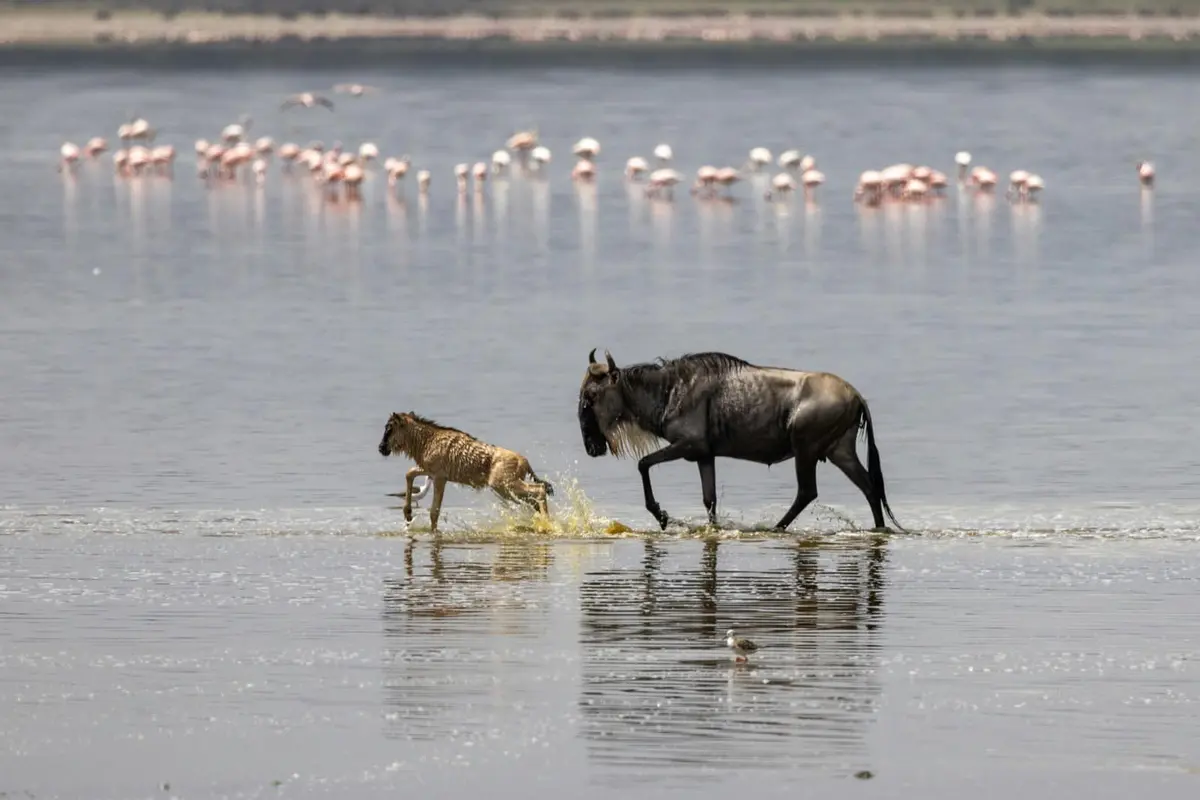
More than 400,000 wildebeest calves are born here between January and March, and the predators of the southern plains follow them.
Plan a Safari HereSee it on the Northern Circuit map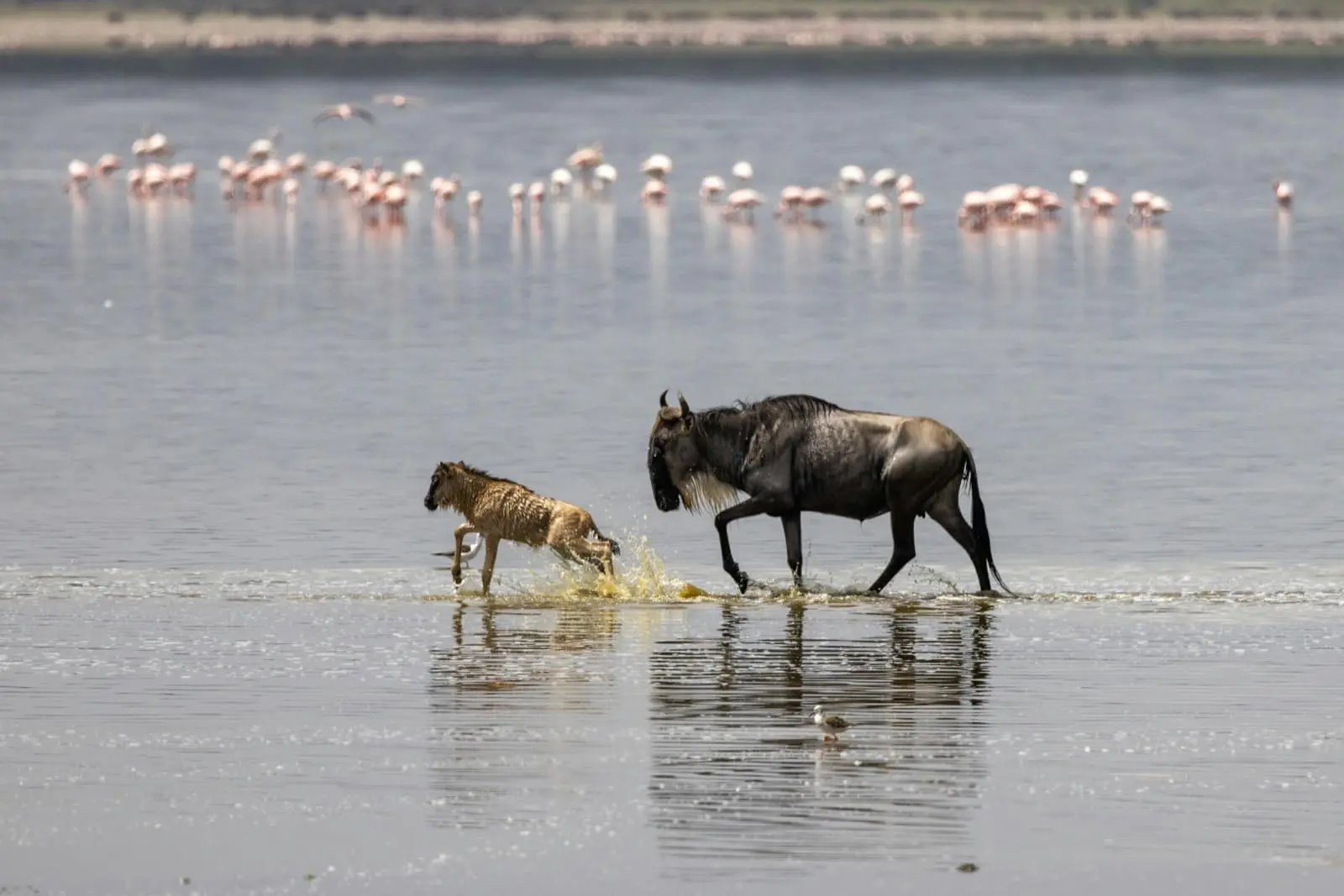
About Ndutu
Ndutu sits at the southern edge of the Serengeti ecosystem, but administratively it falls inside the Ngorongoro Conservation Area (NCA), which is managed by the Ngorongoro Conservation Area Authority rather than Tanzania National Parks. The boundary with Serengeti National Park runs through the wider Ndutu area and is unfenced, so wildlife moves freely between the two.
Between January and March, when the herds are on the short-grass plains, the lions, cheetahs and hyenas of the south hunt across open ground, often in good light, which makes Ndutu one of the best places in Tanzania to watch predators. Because Ndutu lies inside the conservation area, nights here are charged Ngorongoro Conservation Area fees rather than Serengeti fees.
The timing of the calving follows the rains. The short rains of October to December leave phosphorus and calcium in the volcanic short-grass plains around Lake Ndutu and Lake Masek, and these are the nutrients that lactating cows and young calves need. The herds usually arrive by late December, the first calves are born from late December, and the peak runs from late January to early March. The Greater Serengeti Conservation Society puts the total at more than 400,000 calves born within a few weeks, with thousands a day at the peak. Calves stand within three to five minutes of birth, walk within 15 minutes and can run with the herd within a few hours.
The calving draws in every predator in the area. Lion prides move towards the calving grounds, spotted hyena clans of 33 to 72 animals hunt on the plains, and cheetahs on the open short grass succeed in close to 50 percent of their hunts during calving, compared with around 30 percent at other times. Black-backed jackals take newborn calves, and a dozen can often be seen around a single birth. Because all of these predators are active at the same time and in open country, kills can happen at any time of day. At the Mara River much of the day is spent waiting for a crossing, whereas at Ndutu in February the activity usually continues from early morning until the evening.
Outside the calving season Ndutu is much quieter. From April to mid-December the herds have moved north and the mobile camps have closed, but Ndutu Safari Lodge stays open all year and the resident predators remain. These include named cheetah coalitions with territories around the Big Marsh and the Causeway, the Masek Pride, whose lions climb acacia trees around Lake Masek (behaviour more usually associated with Lake Manyara), and the Twin Hill pride, whose cubs the guides follow from season to season. Some wildlife photographers who have visited in February come back in the off-season for this reason, as there are fewer vehicles at each sighting and the animals are familiar to the guides.
Wildlife in Ndutu
Wildebeest
Around 1.5 million wildebeest live in the Serengeti-Mara ecosystem, and more than 400,000 calves are born in the Ndutu area over roughly six weeks between January and March.
Cheetah
The open short-grass plains offer some of the best cheetah photography in Africa. Named resident coalitions hold territories around the Big Marsh all year, and their hunting success is close to 50 percent during calving.
Lion
Several prides move onto the calving grounds between January and March. The Lake Masek Pride has been recorded climbing trees in the acacia woodland around the lake, and Long Gully is the best place to find coalition males at first light.
Spotted Hyena
Clans here number 33 to 72 animals. The hyenas are active hunters and, together with the lion prides, account for a large share of the kills on the calving plains.
Leopard
Leopards live in the acacia woodland around Lake Masek all year. They are harder to see than in the Serengeti, but they are present in every season.
Bat-Eared Fox
Bat-eared foxes are common on the short-grass plains all year and are easy to overlook. Serval, civet and caracal also live here, and these smaller predators are one of the reasons photographers return in the off-season.
Key Locations in Ndutu
Guides at Ndutu return to a number of specific places, and it helps to know them before you arrive so that you can ask for them.
Long Gully is a seasonal stream whose still water produces reflection photographs that have appeared in wildlife photography awards. Coalition males are often photographed crossing it at first light, when the sun reaches the water before the plain, and wildlife photographers mention Long Gully more than any other single location at Ndutu.
Hidden Valley is a water source where local guides expect large herds to come and drink in the late morning, so nervous antelope can often be seen approaching the water with predators nearby. It is less well known than the main plains and has less vehicle traffic.
The Big Marsh and the Causeway are the territories of Ndutu's resident cheetah coalitions throughout the year. From April to mid-December, after the migration has moved north, this is where most of the cheetahs are found.
The acacia woodland around Lake Masek is good for leopards in the afternoon and is the home range of the Masek Pride, the lions recorded climbing trees in some seasons. Tree-climbing lions are usually associated with Lake Manyara, so an afternoon at Lake Masek is worth including in a Ndutu itinerary.
The grounds of Ndutu Safari Lodge are also good for wildlife. The lodge has used camera traps on its property for over 25 years, and its own records show lions, leopards and cheetahs passing the dining room.
Ndutu vs Mara River Crossings
Many repeat visitors ask whether they should come for the calving at Ndutu or for the river crossings in the north, and the answer depends on what you most want to see.
The Mara River crossings take place between July and October in the northern Serengeti and the Maasai Mara, and they are the most dramatic wildlife event in Africa. Thousands of wildebeest at a time jump from steep banks into water where Nile crocodiles are waiting. The best-known crossing images of 2023 and 2024 were all taken at the Mara, and if a crossing photograph is your main goal, Ndutu cannot offer anything comparable.
For predator viewing, however, Ndutu is the better choice. A crossing is a single event in which the animals enter the water, the crocodiles attack and the survivors climb out. Between crossings there can be a wait of several hours, and some days have no crossing at all, so the predator activity at the river is intense but brief and the rest of the day is ordinary game viewing.
At Ndutu in February the predators are active throughout the day. Kills often happen before breakfast, lions are active through the morning, cheetahs hunt on open ground in good light and the hyena clans are busy in the afternoon. Because the herds stay in one area, the predators do not need to travel far.
Wildlife photographers who work in both places generally rate the Mara higher for spectacle and Ndutu higher for photographs of predators at work.
Ndutu Park Fees
Your daily park fees at Ndutu depend on which side of the boundary between the Ngorongoro Conservation Area and Serengeti National Park your camp is on.
The NCA conservation fee is $70.80 per person per day, and the Serengeti National Park entry fee is $82.60 per person per day. Because the boundary is unfenced and the best calving areas lie on both sides of it, game drives near Ndutu often cross from one area into the other, in which case both fees apply, a total of $153.40 per person per day.
Some operators include these fees in their package price without explanation, and some do not. Before booking, we recommend asking which side of the boundary the camp is on and whether the daily game drives are likely to cross into the other area.
Best Time to Visit Ndutu
| Months | Weather | Wildlife | Crowds |
|---|---|---|---|
| Dec 1-19 | The short rains are ending, the plains are turning green and the herds are arriving. | The first births begin and predator numbers start to rise. Lemala Ndutu charges $330 per night at this time, its lowest rate of the season. | Low |
| Dec 20 – Jan | A warm, dry spell between the two rains, when the grass is ankle height. | Calving is under way and predator numbers are rising, with the first serious activity on the plains. | Moderate, and late January brings wildlife close to the peak with fewer vehicles than February. |
| Feb | Warm and generally dry, with the best short-grass conditions of the year. | Calving peaks, with thousands of calves born a day at the height, and all the major predators are active at the same time. This is the month most operators recommend. | High for Ndutu, although still far below the Mara in August. Mid-February is the busiest period, so we recommend booking six to nine months ahead. |
| Mar | The long rains are approaching, and the tracks soften by late March. | Calving is ending and the herds begin to move northwest. Early March is still good, while late March is less predictable. | Low to moderate, with good availability. |
| Apr-Nov | The long rains fall in April and May, followed by the dry season. The mobile camps have closed. | Ndutu Safari Lodge stays open all year, and the resident predators, including named cheetah coalitions, the Masek Pride and the Twin Hill lions, can be seen without the migration crowds. Photographers who come in the off-season rate this period highly. | Very low |
Where to Stay
Our guides to lodges and camps for Ndutu. Every lodge we work with is in the lodge directory.
Frequently Asked Questions
Is Ndutu in the Serengeti?
Ndutu is part of the Serengeti ecosystem, both geographically and ecologically, but administratively it lies inside the Ngorongoro Conservation Area, which is managed by the Ngorongoro Conservation Area Authority (NCAA) rather than Tanzania National Parks. It borders Serengeti National Park along an unfenced boundary. The difference mainly affects fees, as the NCA charges $70.80 per person per day and the Serengeti $82.60, and you may pay both if your game drives cross the boundary.
When exactly is calving season and when is peak?
The calving peak runs from late January to early March. The Greater Serengeti Conservation Society records more than 400,000 calves born in roughly six weeks each year, with thousands a day at the peak. The start can shift by up to two weeks, depending on the previous year's short rains. December is a good time to arrive, with lower rates and fewer vehicles, and early March is quieter while the herds are still present. We recommend late January, at the start of the peak, when there are far fewer vehicles than in February.
Is Ndutu better than the Mara River for predator viewing?
For predator viewing, yes. The Mara River crossings between July and October are the most dramatic single wildlife event in Africa and produce the best-known migration photographs. However, the predator activity at the river is intense and brief, with long waits between crossings. At Ndutu in February the predators are active throughout the day, with kills before breakfast, cheetahs hunting on open ground in good light, and hyena clans active through the afternoon. Wildlife photographers who work in both places generally rate Ndutu above the Mara for predator photography, and the two are best seen as different stages of the same migration.
What are the best camps at Ndutu?
Ndutu Safari Lodge is the original property in the area. It is open all year, has 34 stone-and-thatch cottages on Lake Ndutu, is mid-range in price, and has been a base for professional wildlife photographers and filmmakers for decades. Lemala Ndutu operates from 1 December to 31 March, with nine luxury tents beside a permanent marsh, and its rates range from $330 per person per night in early December to $1,178 from 20 December to March. Asilia Olakira and Kimondo Migration Camp both run mobile tented camps at Ndutu from December to March before moving to the northern Serengeti for July to October. In February every property books out six to nine months ahead.
How do you get to Ndutu?
By air from Arusha, Coastal Aviation, Auric Air and Air Excel all fly to Ndutu Airstrip during the calving season. The flight takes approximately 1.5 hours and often stops at one or two other airstrips on the way. Fares are roughly $270 to $440 per person one way, depending on the airline, with Coastal Aviation the most frequently used and Auric Air usually the least expensive. By road, the drive from Arusha takes approximately six to seven hours via Karatu and the Ngorongoro Conservation Area. It is a long day, although the route through the Ngorongoro highlands is scenic, and flying saves a full day in each direction.
Are there tsetse flies at Ndutu?
There are relatively few tsetse flies at Ndutu, because they prefer denser bush and woodland to the open short-grass plains of the calving area. The western Serengeti corridor and parts of Tarangire have more of them. Light-coloured clothing and an ordinary insect repellent are enough at Ndutu. The main health precaution is malaria prophylaxis, which applies throughout Tanzania.
Can you visit Ndutu outside calving season?
Yes, and some photographers prefer it. Ndutu Safari Lodge is open all year. From April to mid-December the mobile camps have closed, but the resident predators remain, including named cheetah coalitions around the Big Marsh, the Lake Masek Pride, which is known for climbing trees in some seasons, and the Twin Hill pride. Without the migration there are fewer vehicles at each sighting, and the experience is different from the calving season but just as rewarding.
Can you combine Ndutu with the Ngorongoro Crater?
Yes, and the two combine easily, as Ndutu lies inside the NCA approximately two hours by road from the crater rim. Our Calving Season Safari spends several days at Ndutu followed by a half-day crater descent before returning to Arusha. The crater's wildlife is resident all year, wherever the migration is, so the combination works in any month of the calving season.
Safari Itineraries Including Ndutu