Tanzania Safari in April
April is the wettest month of the year in northern Tanzania, and some camps and roads close while charter flights run a reduced schedule. If this is likely to be your only safari, we usually recommend another month. However, for repeat visitors, photographers and travellers who value a lower price over predictable weather, April offers lodge rates 25 to 50 percent below the peak, very quiet parks and a green Serengeti, with the herds passing through Seronera on their way north.
Wildlife Conditions in April by Park
Central Serengeti (Seronera)
GoodLong lines of wildebeest move north through Moru Kopjes and the Seronera Valley, and the rut begins. The resident big cats are as reliable as ever, and serval and caracal are often seen in the green grass. Heavy rain makes some black-cotton tracks impassable, especially towards the south and the Western Corridor.
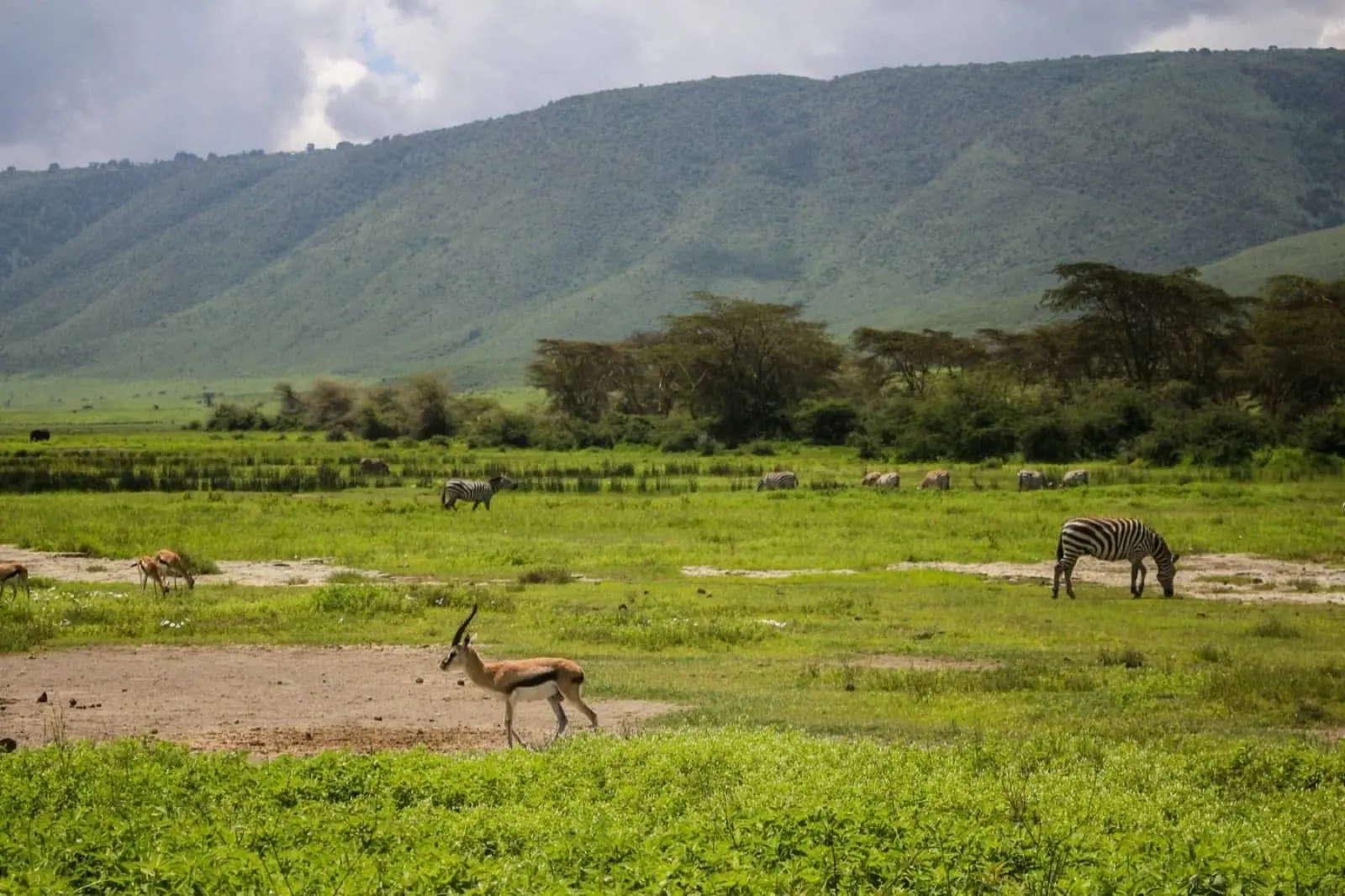
Ngorongoro Crater
GoodThe crater is green and at its quietest of the year. The resident wildlife stays, including the rhino, and the only drawback is that the longer grass makes some animals harder to see. There is mist on the rim most mornings.
Tarangire National Park
FairWildlife is widely spread in the wet season, as the elephants move out to the seasonal wetlands, so the park is better for birdwatching and quiet game drives than for large herds.
Lake Manyara
FairThick undergrowth hides much of the game, but the lake and its birdlife are at their best, with flamingos when the water level suits them.
Ndutu / Southern Serengeti
FairThe herds have moved north, most mobile camps have closed and the black-cotton tracks are largely impassable, so only the resident plains game remains. Ndutu is best visited again from December.
April Week by Week
April 1-7
Best location: Moru Kopjes / Seronera
The main herds are between Moru Kopjes and Seronera, moving in long columns, as the long rains build towards their peak.
April 8-14
Best location: Seronera Valley
Large columns move through the Seronera Valley as the rut begins, with good predator viewing around the herds.
April 15-21
Best location: Central Serengeti / Mbalageti
The herds spread through the central Serengeti, and the first groups move towards the Mbalageti and the Western Corridor. This is usually the wettest part of the year.
April 22-30
Best location: Western Corridor fringe
The leading herds reach the western approaches as the rut intensifies, and the columns stretch across half the park.
| Week | What's Happening | Best Location |
|---|---|---|
| April 1-7 | The main herds are between Moru Kopjes and Seronera, moving in long columns, as the long rains build towards their peak. | Moru Kopjes / Seronera |
| April 8-14 | Large columns move through the Seronera Valley as the rut begins, with good predator viewing around the herds. | Seronera Valley |
| April 15-21 | The herds spread through the central Serengeti, and the first groups move towards the Mbalageti and the Western Corridor. This is usually the wettest part of the year. | Central Serengeti / Mbalageti |
| April 22-30 | The leading herds reach the western approaches as the rut intensifies, and the columns stretch across half the park. | Western Corridor fringe |
Tanzania Weather in April
April is the wettest month of the year in northern Tanzania. In the long-term averages Arusha receives about 281 mm of rain in April, more than in any other month, and every location in the table below has some rain on between 18 and 22 days. Temperatures are a little lower than in March because of the cloud, with average highs of 26 to 27°C in the parks, and the nights are the warmest of the year. Tanzania in April is green, quiet and good value, and the weather is the main thing to plan around.
| Location | Average high | Average low | Rainfall | Rain days |
|---|---|---|---|---|
| Arusha1,350 m above sea level | 26°C78°F | 17°C62°F | 281 mm | 20 |
| Tarangire1,180 m above sea level | 27°C81°F | 18°C64°F | 187 mm | 19 |
| Central Serengeti (Seronera)1,490 m above sea level | 26°C80°F | 16°C60°F | 137 mm | 21 |
| Ngorongoro Crater floor1,800 m above sea level | 24°C75°F | 14°C57°F | 171 mm | 21 |
| Ngorongoro Crater rim2,280 m above sea level | 21°C69°F | 11°C52°F | 212 mm | 22 |
| Zanzibar18 m above sea level | 31°C87°F | 25°C76°F | 409 mm | 18 |
Long-term monthly averages. The mainland figures are 1961 to 1990 averages from the Climatic Research Unit climate grid, because we could not find published averages from a weather station inside the parks. The Zanzibar figures are the official 1991 to 2020 averages for the island's weather station. Rain days count days with at least 0.1 mm of rain on the mainland and at least 1 mm on Zanzibar. Sources are listed at the end of the page. The averages for every month are on our Tanzania weather by month page.
Early mornings and the middle of the day
Because of the cloud cover, April mornings are mild, with average lows of about 16°C at Seronera and 18°C in Tarangire, and the days are warm without being hot. Arusha has sunshine for only about half of the daylight hours on average. A typical April day can bring both dry spells and a heavy downpour, and the timing varies, so we recommend keeping game drives flexible and making the most of the dry hours whenever they come.
On the Ngorongoro Crater rim
The Ngorongoro rim is the wettest stop on most April routes, with about 212 mm of rain on average, and the dirt roads in the conservation area can be slippery. The crater floor is drier and warmer, with an average high of about 24°C, and the crater stays open through the rains, so a descent is usually possible in April.
What to pack for April
For April we recommend a proper waterproof jacket, quick-drying trousers, a fleece, insect repellent and footwear that can cope with mud at lodges and airstrips. Please keep a waterproof cover or bag for cameras and electronics in the vehicle, as the roof is often open when a storm arrives. Zanzibar has its heaviest rain of the year in April, with about 409 mm on average, so we recommend a mainland safari this month and a beach stay from late June onwards.
How the weather affects game viewing in April
The April rain keeps the Serengeti green and the herds moving through the central plains towards the Western Corridor, so the resident predators around Seronera have plenty of prey. Some tracks become impassable for a time after heavy rain and several camps close for the season, so an April route is planned around the lodges that stay open and the all-weather roads. Fewer vehicles and the clear light on green grass after rain make April a rewarding month for photographers.
Which Camps Close in April
Below is the current list of camps that close for the long rains. Closure dates vary slightly from year to year, so we confirm them again when you book. Closed for April and May are Asilia Sayari, Asilia Olakira, Asilia Ubuntu (from mid-March), Nomad Lamai, Serengeti Bushtops and Kusini. Singita Mara River closes from January 15 to May 31, and Lemala Ndutu closes from April to November once the calving season is over.
The permanent lodges, including Serena, Sopa, Four Seasons Serengeti and Ngorongoro Crater Lodge, are open all year, as are several good tented camps such as andBeyond Serengeti Under Canvas, Asilia Namiri Plains and Asilia Dunia, and an April safari is planned around these properties. This means you have fewer camps to choose from, but prices are lower and the camps that stay open have the parks almost to themselves.
What to Expect From the Weather in April
In most years the rain comes as an afternoon thunderstorm that falls heavily for an hour or two and then clears. Mornings are often dry, and the clear light on the green grass after rain is very different from the dry season, which is why some photographers choose April.
However, some years are much wetter, with roads closing, very muddy tracks in the Western Corridor and fewer charter flights. It is not possible to know in advance what the weather will be like. Please also note that park fees do not drop, so the saving of 25 to 50 percent applies to accommodation only, and the southern parks of Ruaha and Nyerere are not accessible by road in April. An April safari works best with flexible plans.
April Itineraries
8-Day Classic Tanzania Safari
From $2,625 pp8 Days / 7 Nights
Tarangire · Serengeti · Ngorongoro
In April this route is at its lowest price of the year, planned around all-weather lodges and the central Serengeti, where the herds usually are.
View Full Itinerary5-Day Northern Circuit
From $1,815 pp5 Days / 4 Nights
Tarangire · Serengeti · Ngorongoro
A shorter route built around the Ngorongoro Crater, which is good in any weather, and the least expensive way to see the northern circuit.
View Full ItineraryQuestions About a Tanzania Safari in April
Is a Tanzania safari worth it in April?
It depends on what you are looking for. April is the wettest month, with afternoon downpours on most days, some camp and road closures and wildlife spread more widely. If this is your first safari and you would like predictable conditions, we recommend another month. For repeat visitors, photographers and travellers looking for value, April offers lodge rates 25 to 50 percent lower, very quiet parks, green landscapes and the migration passing through Seronera.
Which safari camps are open in April?
The permanent lodges, including Serena, Sopa, Four Seasons Serengeti and Ngorongoro Crater Lodge, stay open all year, along with andBeyond Serengeti Under Canvas, Asilia Namiri Plains and Asilia Dunia. The camps closed in April include Asilia Sayari, Olakira and Ubuntu, Nomad Lamai, Serengeti Bushtops, Kusini, Singita Mara River and Lemala Ndutu. As the dates change each year, we confirm them for each property when you book.
How much can I save on an April safari?
Lodge rates are 25 to 50 percent lower than in the peak season from July to October, which is the largest discount of the year. Please note that park fees are set by the government and are only slightly lower in the low season from March 15 to May 15, so most of the saving comes from accommodation. On a full itinerary for a couple, this can still amount to a difference of several thousand dollars.
Where are the wildebeest in April?
In April the herds are moving north through the central Serengeti, between Moru Kopjes and the Seronera Valley, and the leading groups head towards the Western Corridor, while the southern calving plains are empty. We recommend staying in the central Serengeti, where the resident big cats around Seronera provide good game viewing wherever the herds are.
Does it rain all day in April?
Usually not. The usual pattern is a dry morning, a heavy afternoon thunderstorm that clears within an hour or two, and a clear evening. Morning game drives are mostly unaffected, and the light after rain is excellent. However, some years are much wetter than average, roads can close and there are fewer charter flights, so we recommend packing waterproofs and keeping your plans flexible.
Is Zanzibar worth visiting in April?
We do not recommend it. April is the wettest month on the island, with rough seas and poor visibility for diving. If a beach stay is important to you, you could take the safari in April for the value and visit the coast from late June onwards, or move the whole trip to a drier month.
How much does it rain in Tanzania in April?
April is the wettest month in northern Tanzania. In the long-term averages Arusha receives about 281 mm of rain, the central Serengeti about 137 mm and the Ngorongoro rim about 212 mm, with some rain on 19 to 22 days of the month. Zanzibar receives about 409 mm, its heaviest rain of the year. Temperatures stay mild, with highs of 26 to 27°C in the parks.
Sources and Maintenance
Where these figures come from
The temperatures and rainfall in the weather table are long-term averages, and a single year can be wetter, drier, warmer or cooler. We could not find published long-term averages from a weather station inside the northern parks, so the park figures come from the Climatic Research Unit's global climate grid, which builds each grid cell of about 18 km from nearby station records and allows for altitude. The Zanzibar figures are the official 1991 to 2020 averages for the island's weather station. As a check, the official 1991 to 2020 averages for Kilimanjaro International Airport are about 1 to 2°C warmer by day than the grid figures for the same area, so please treat the daytime highs as slightly conservative.
- Climatic Research Unit, University of East Anglia: CRU CL v2.0 global climatology, 10-minute grid (New et al. 2002) (1961-1990 averages for the grid cells covering Arusha, Tarangire, Seronera, Ndutu, Kogatende, the Western Corridor and the Ngorongoro Crater rim and floor, read 24 November 2026)
- World Meteorological Organization 1991-2020 climate normals, Zanzibar station 63870 (published by NOAA NCEI) (average high, low, rainfall and days with 1 mm or more, read 24 November 2026)
- World Meteorological Organization 1991-2020 climate normals, Kilimanjaro International Airport station 63791 (published by NOAA NCEI) (used to cross-check the Arusha grid figures, read 24 November 2026)