Tanzania Safari in May
On June 1, lodge rates across northern Tanzania rise by about a third, although the wildlife changes very little from one week to the next. In the last ten days of May the rains are easing, the wildebeest are moving northwest towards the Grumeti in columns that can stretch for 40 kilometres, the rut is at its height, and a lion sighting may draw five vehicles compared with forty in August. For these reasons we consider late May one of the best-value times of the year for a safari.
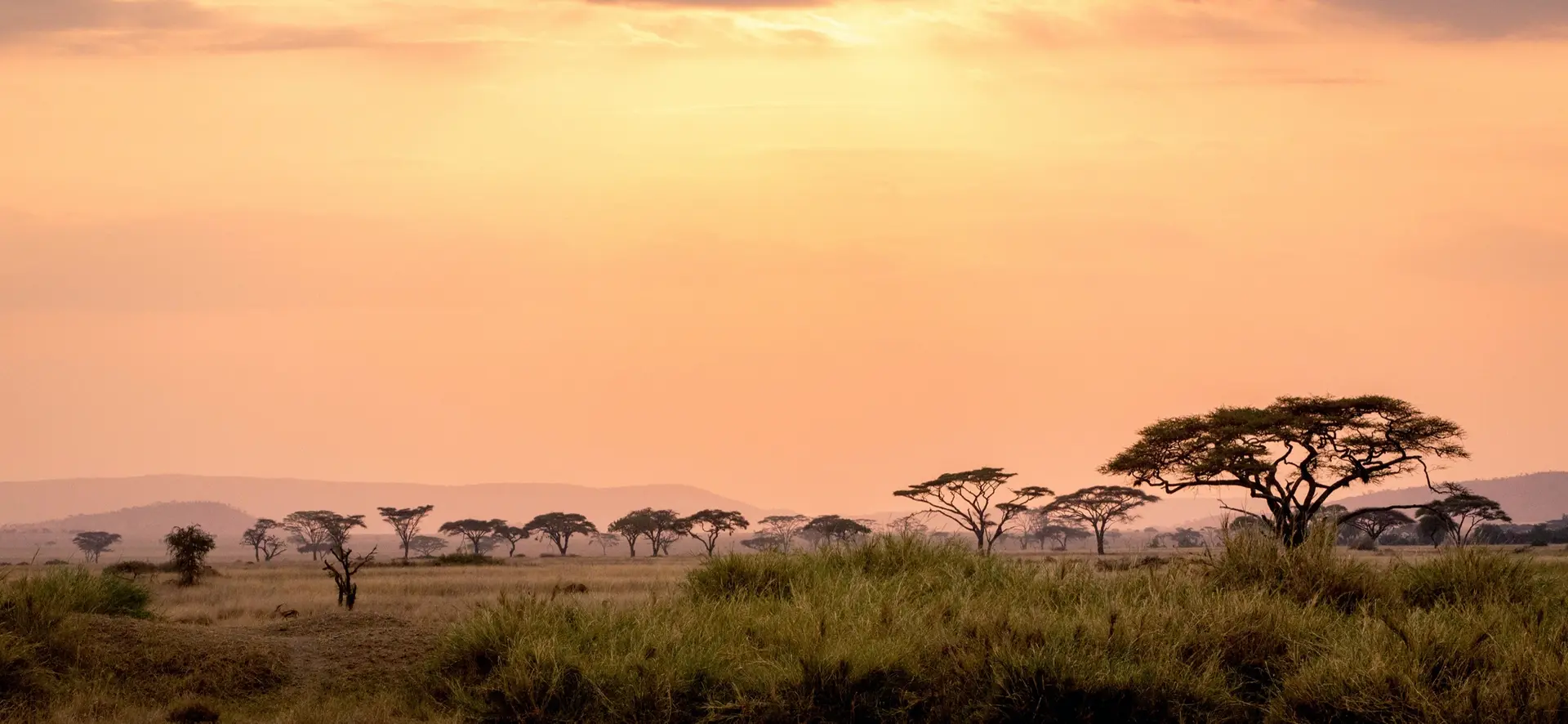
Wildlife Conditions in May by Park
Serengeti: Central, then Western Corridor
GoodLarge columns of rutting wildebeest move through Seronera towards the Grumeti during the month, and the resident big cats in the centre are reliable. By the final week, the leading herds reach the south bank of the Grumeti and the first crossing attempts are possible. The black-cotton stretches in the corridor stay difficult until late in the month.
Ngorongoro Crater
ExcellentIn the quiet season the crater is at its best, with all the resident lion, elephant, hippo and black rhino, wildflowers after the rains and very few vehicles on the floor. May is one of the most underrated months for a visit.
Lake Manyara
GoodGame viewing improves through the month as the rains ease and the tracks become easier, and birdwatching is still excellent, as in April.
Tarangire National Park
FairWildlife is still spread out, but the first elephants return to the river as the seasonal swamps recede, and birdwatching is at its best. Game numbers along the river build further in June.
Ndutu / Southern Serengeti
FairThe migration has left, the camps are closed and the tracks reopen late in the month, so only the resident game remains.
May Week by Week
May 1-7
Best location: Central Serengeti / Seronera
Large columns move northwest through the central Serengeti. The rains continue, although they are already lighter than in April.
May 8-14
Best location: Western Corridor (Mbalageti)
The main herds enter the Western Corridor in columns up to forty kilometres long, with the rut in full swing and bulls fighting along the way.
May 15-21
Best location: Kirawira / Sabora
The herds fill the country between Kirawira and the south bank of the Grumeti, and the rut is at its height, so you often hear the herds before you see them.
May 22-31
Best location: Grumeti south bank
The leading herds reach the south bank of the Grumeti, the crocodiles become active and the first crossing attempts are possible. This is the last week of lower rates before June 1.
| Week | What's Happening | Best Location |
|---|---|---|
| May 1-7 | Large columns move northwest through the central Serengeti. The rains continue, although they are already lighter than in April. | Central Serengeti / Seronera |
| May 8-14 | The main herds enter the Western Corridor in columns up to forty kilometres long, with the rut in full swing and bulls fighting along the way. | Western Corridor (Mbalageti) |
| May 15-21 | The herds fill the country between Kirawira and the south bank of the Grumeti, and the rut is at its height, so you often hear the herds before you see them. | Kirawira / Sabora |
| May 22-31 | The leading herds reach the south bank of the Grumeti, the crocodiles become active and the first crossing attempts are possible. This is the last week of lower rates before June 1. | Grumeti south bank |
Tanzania Weather in May
Tanzania in May is at the end of the long rains, and the weather improves through the month. Average rainfall drops by almost three quarters from April in Tarangire and by half in the central Serengeti, and the last ten days of May are usually much drier than the first. May is also the start of the cooler months, with average highs of about 24 to 26°C in Arusha, Tarangire and Seronera and about 20°C on the Ngorongoro rim. The weather in Tanzania in May therefore suits travellers who would like green landscapes and lower rates with fewer wet days than in April.
| Location | Average high | Average low | Rainfall | Rain days |
|---|---|---|---|---|
| Arusha1,350 m above sea level | 24°C74°F | 15°C60°F | 106 mm | 14 |
| Tarangire1,180 m above sea level | 25°C77°F | 17°C62°F | 50 mm | 13 |
| Central Serengeti (Seronera)1,490 m above sea level | 26°C78°F | 15°C59°F | 68 mm | 16 |
| Western Corridor (Grumeti)1,190 m above sea level | 28°C82°F | 17°C63°F | 87 mm | 16 |
| Ngorongoro Crater rim2,280 m above sea level | 20°C67°F | 10°C50°F | 100 mm | 15 |
| Zanzibar18 m above sea level | 30°C85°F | 24°C75°F | 298 mm | 14 |
Long-term monthly averages. The mainland figures are 1961 to 1990 averages from the Climatic Research Unit climate grid, because we could not find published averages from a weather station inside the parks. The Zanzibar figures are the official 1991 to 2020 averages for the island's weather station. Rain days count days with at least 0.1 mm of rain on the mainland and at least 1 mm on Zanzibar. Sources are listed at the end of the page. The averages for every month are on our Tanzania weather by month page.
Early mornings and the middle of the day
Mornings start to feel cooler in May, with average lows of about 15°C at Seronera and 10°C on the crater rim, and the damp air left by the rains makes early drives feel fresh. Arusha is at its cloudiest in May, with sunshine for less than half of the daylight hours on average, while the Serengeti is clearly sunnier. Middays are comfortable for a full day out with a picnic lunch.
On the Ngorongoro Crater rim
On the Ngorongoro rim May still brings about 100 mm of rain on average, with some rain on around 15 days, and dawn temperatures are close to 10°C. The crater floor is drier and warmer, with an average high of about 22°C, and the floor is green after the long rains.
What to pack for May
For May we recommend layers, with a fleece or light down jacket for the mornings, a waterproof jacket for the showers that still fall early in the month, and light clothing for the warmer middle of the day. On Zanzibar May is still very wet, with about 298 mm of rain on average, so if the coast is part of your plans we usually suggest June or later for the beach.
How the weather affects game viewing in May
As the rain eases, the wildebeest gather in long columns and move north-west through the central Serengeti towards the Western Corridor, and the rut is under way. The grass is still long in places after the rains, so some animals take longer to find than in the dry season, although the landscape is green and the parks are quiet. The black-cotton sections in the Western Corridor stay soft for longest, and your driver-guide will plan the day around them.
Why Late May Offers Good Value
Most safari lodges move from green-season to high-season rates on June 1, and at many properties the increase is roughly a third. The wildlife does not change overnight, so a safari starting on May 26 and one starting on June 5 will usually see the same corridor, the same columns, the same rut and the same drying plains, although the later one costs about a third more per night.
In the last ten days of May the rains are easing, the black-cotton soil is drying out, the camps are reopening, the herds are gathering towards the Grumeti and the first crossing attempts are possible on the south bank. This period is mainly known to repeat travellers and guides, and we recommend it to anyone whose dates can move by a week or so.
The Wildebeest Rut in May
The wildebeest rut reaches its peak as the herds move through the Western Corridor, and you hear it as much as you see it. Hundreds of thousands of animals are on the move, and the bulls grunt and call day and night, fighting along the way and herding females. The columns can stretch for 40 kilometres, and predators follow the herds, as bulls exhausted by the rut are easy prey for lions.
The rut is very different from the river crossings. It is less famous and lasts longer, and far fewer people see it. A lion sighting in May may draw five or ten vehicles, compared with forty or fifty in August. If quiet game drives matter to you, May offers better value than any month except April, with better weather than April.
May Itineraries
8-Day Classic Tanzania Safari
From $2,625 pp8 Days / 7 Nights
Tarangire · Serengeti · Ngorongoro
Planned for May, with the Serengeti nights in the centre and west near the moving herds, and the Ngorongoro Crater, which is good in any weather.
View Full Itinerary5-Day Northern Circuit
From $1,815 pp5 Days / 4 Nights
Tarangire · Serengeti · Ngorongoro
At May rates this is the least expensive full northern circuit of the year, on a short and quiet route.
View Full ItineraryQuestions About a Tanzania Safari in May
Is a May safari worth it?
May is one of the best-value months of the year, with low prices, very quiet parks, green landscapes and the migration moving through the western Serengeti in columns that can stretch for 40 kilometres. The rains ease through the month, and the last ten days are often dry. The main drawbacks are that some premium camps stay closed until June and that a 4x4 is essential on the tracks in the corridor.
Where are the wildebeest in May, and can I still see the migration?
In May the herds move from the central Serengeti into the Western Corridor, towards the Grumeti River. The calving season is over, but the long columns and the rut are very impressive, and late May can bring the first small crossing attempts at the Grumeti. As the herds are on the move, a guide with up-to-date information is more useful than a fixed route.
How much cheaper is May than peak season?
Lodge rates are roughly 30 to 50 percent below July to September, and they rise on June 1, when most camps move to high-season rates that are about a third higher. Park entry fees are also slightly lower until May 15. Our 5-day Northern Circuit from $1,815 per person and 8-day Classic from $2,625 per person are both at their lowest price of the year in May.
Is May too rainy for safari?
Early May still has the end of the long rains. By the middle and later part of the month, mornings are usually clear with occasional afternoon showers, and the last week is often dry. The black-cotton sections in the corridor stay soft the longest, and your guide plans the route around them each day.
Which camps are open in May?
Nomad Lamai, Asilia Sayari, Olakira and Ubuntu, Serengeti Bushtops and Singita Mara River are closed through May, and most reopen on June 1. The permanent lodges are open, as are camps in the central Serengeti such as Asilia Dunia and Kubu Kubu. There are fewer camps to choose from, but those that are open are well placed for the moving herds.
How does May wildlife compare to the dry season?
It is different rather than worse. Instead of the dry season's short grass and animals gathered at water, May offers green landscapes, the rut, the moving columns, excellent birdwatching and quiet game drives, with five to ten vehicles at a major sighting rather than forty or fifty in August. What you miss are the Mara River crossings, which take place from July to September.
Should I add Zanzibar in May?
We do not usually recommend it, as the coast stays wet into late May and the sea is rough. If a beach stay is important to you, we suggest late June onwards, or a separate beach trip in the dry season. If you are interested in the south, boat safaris in Nyerere (Selous) are better in May, when the water is high.
What is the weather like in Tanzania in May?
May is the end of the long rains. Rainfall drops sharply from April, to about 50 mm in Tarangire and 68 mm in the central Serengeti on average, and the second half of the month is usually much drier than the first. Average highs are about 24 to 26°C in the parks and 20°C on the Ngorongoro rim, and mornings start to feel cool.
Sources and Maintenance
Where these figures come from
The temperatures and rainfall in the weather table are long-term averages, and a single year can be wetter, drier, warmer or cooler. We could not find published long-term averages from a weather station inside the northern parks, so the park figures come from the Climatic Research Unit's global climate grid, which builds each grid cell of about 18 km from nearby station records and allows for altitude. The Zanzibar figures are the official 1991 to 2020 averages for the island's weather station. As a check, the official 1991 to 2020 averages for Kilimanjaro International Airport are about 1 to 2°C warmer by day than the grid figures for the same area, so please treat the daytime highs as slightly conservative.
- Climatic Research Unit, University of East Anglia: CRU CL v2.0 global climatology, 10-minute grid (New et al. 2002) (1961-1990 averages for the grid cells covering Arusha, Tarangire, Seronera, Ndutu, Kogatende, the Western Corridor and the Ngorongoro Crater rim and floor, read 24 November 2026)
- World Meteorological Organization 1991-2020 climate normals, Zanzibar station 63870 (published by NOAA NCEI) (average high, low, rainfall and days with 1 mm or more, read 24 November 2026)
- World Meteorological Organization 1991-2020 climate normals, Kilimanjaro International Airport station 63791 (published by NOAA NCEI) (used to cross-check the Arusha grid figures, read 24 November 2026)