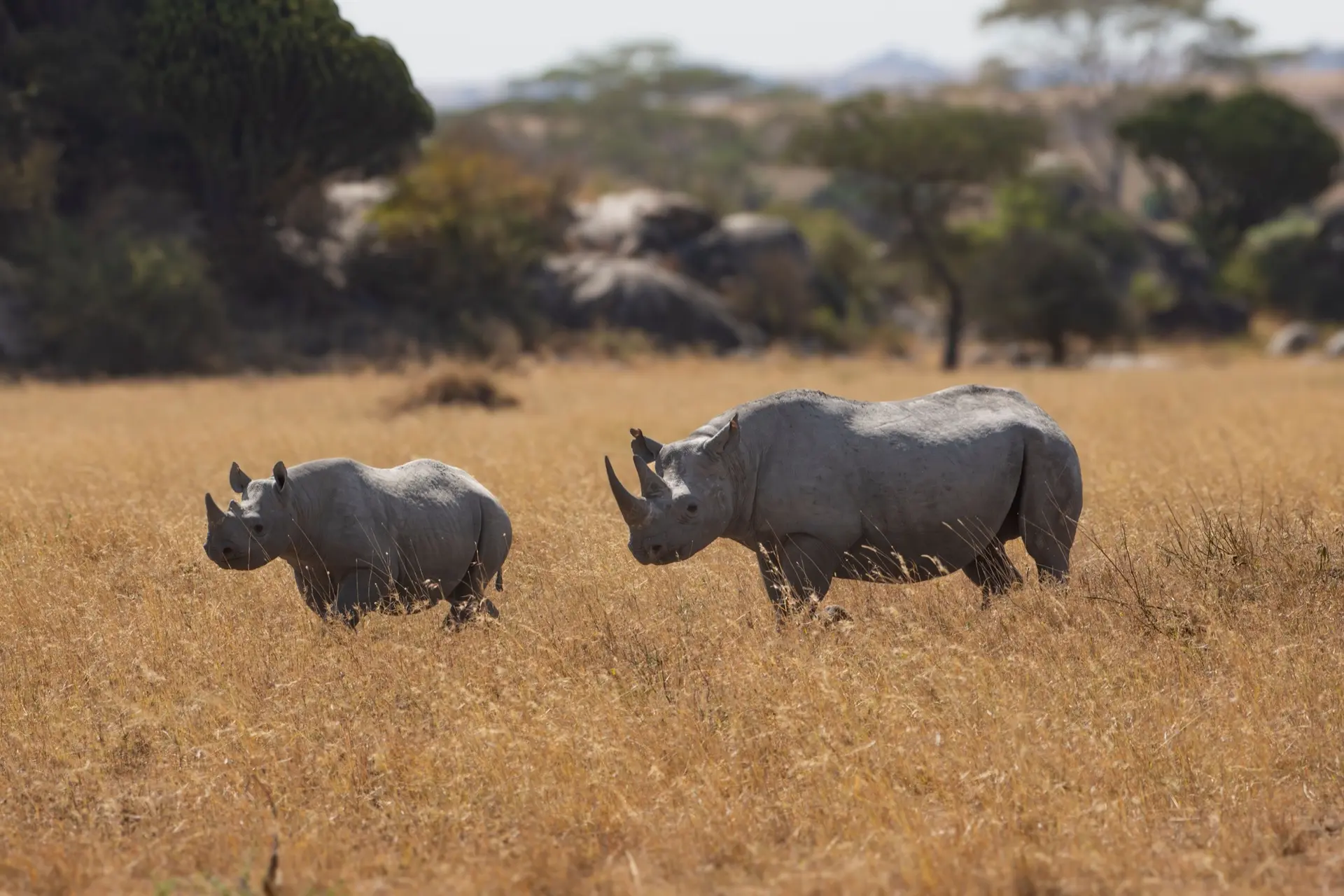
The Big Five and where to see them in Tanzania
Africa's Big Five are the lion, leopard, elephant, African buffalo and rhinoceros. The name was coined by big-game hunters in the late 1800s for the five animals they considered the most difficult and dangerous to hunt on foot, and it has since become the best-known wildlife list on a safari. All five live in northern Tanzania, and this page explains where each one is most reliably seen and how we plan an itinerary around them.
The Big Five on the northern circuit
No single park in Tanzania is the best for all five animals, so a Big Five safari usually combines three. Tarangire is the best park for elephants, the central Serengeti is the best for lions and leopards, and the Ngorongoro Crater is the most reliable place for black rhino. The Ngorongoro Conservation Area Authority describes the crater as probably the best site in Tanzania to see the Big Five, and it is home to more than 25,000 animals.
The table below gives our own assessment of how likely each animal is on a seven or eight-day itinerary that includes all three parks. Wildlife moves and no sighting can be guaranteed, and of the five the black rhino is the hardest to find.
| Animal | Where on the northern circuit | Likelihood on a 7 to 8-day safari |
|---|---|---|
| Lion | Central Serengeti and the Ngorongoro Crater | Very likely |
| Leopard | Central Serengeti around the Seronera River, also Tarangire | Possible, as it needs time and some luck |
| Elephant | Tarangire, especially from June to October, also the Serengeti and the crater | Very likely |
| Buffalo | Ngorongoro Crater, the Serengeti and Tarangire | Very likely |
| Black rhino | Ngorongoro Crater | The hardest of the five, usually seen at a distance |
Where to see each of the Big Five in Tanzania
Lion
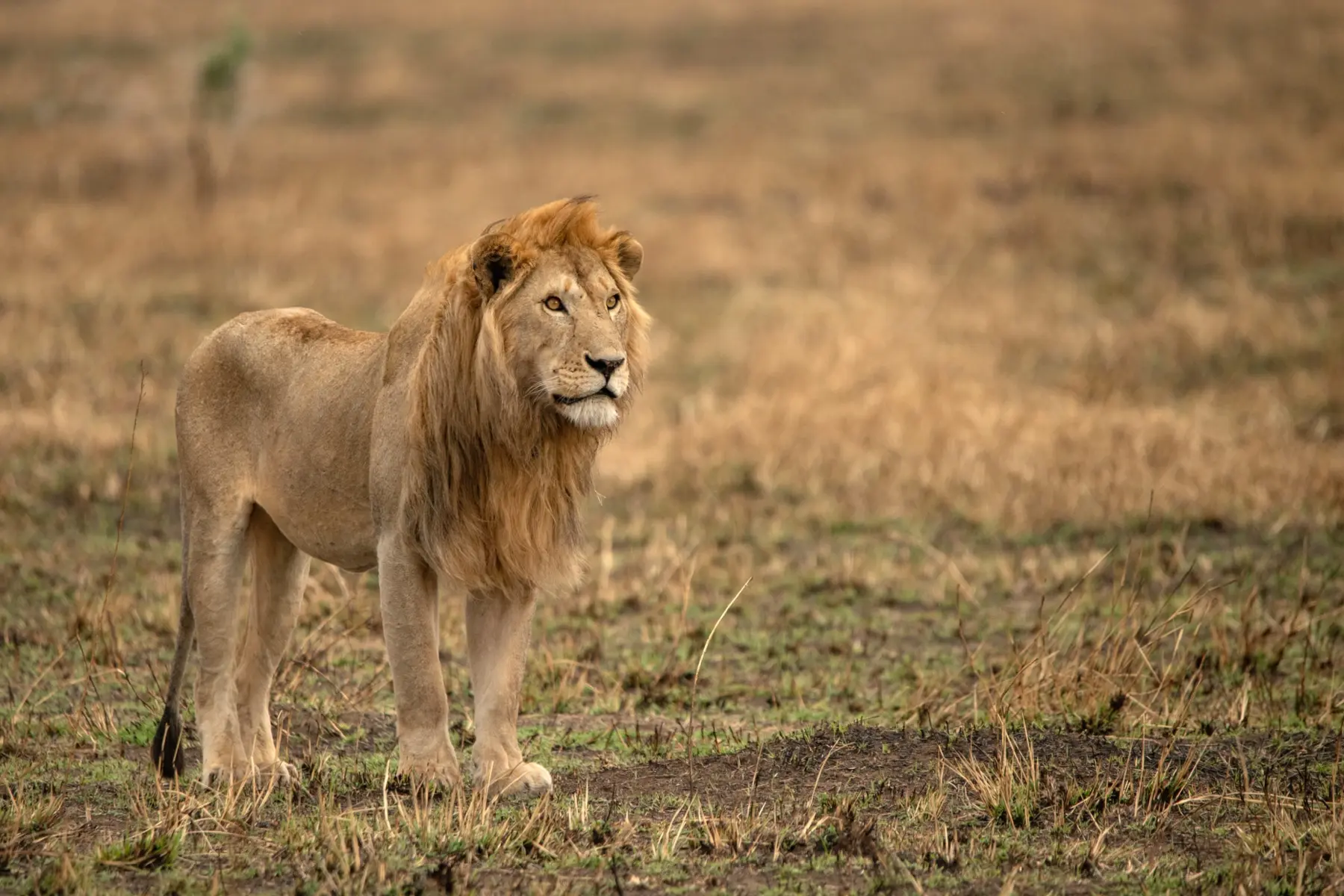
The Serengeti is the best park in Tanzania for lions. The Serengeti lions are among the most closely studied wild animals in the world, as continuous monitoring of the prides began in 1966 and has continued ever since. The central Serengeti around the Seronera Valley has resident prides all year, which is one of the reasons most of our itineraries spend their Serengeti nights there.
The Ngorongoro Crater has its own lions, a small population that researchers describe as naturally isolated from the Serengeti prides. Because the crater floor is mostly open grassland, a full day there gives a second good chance of lions on most itineraries.
Leopard
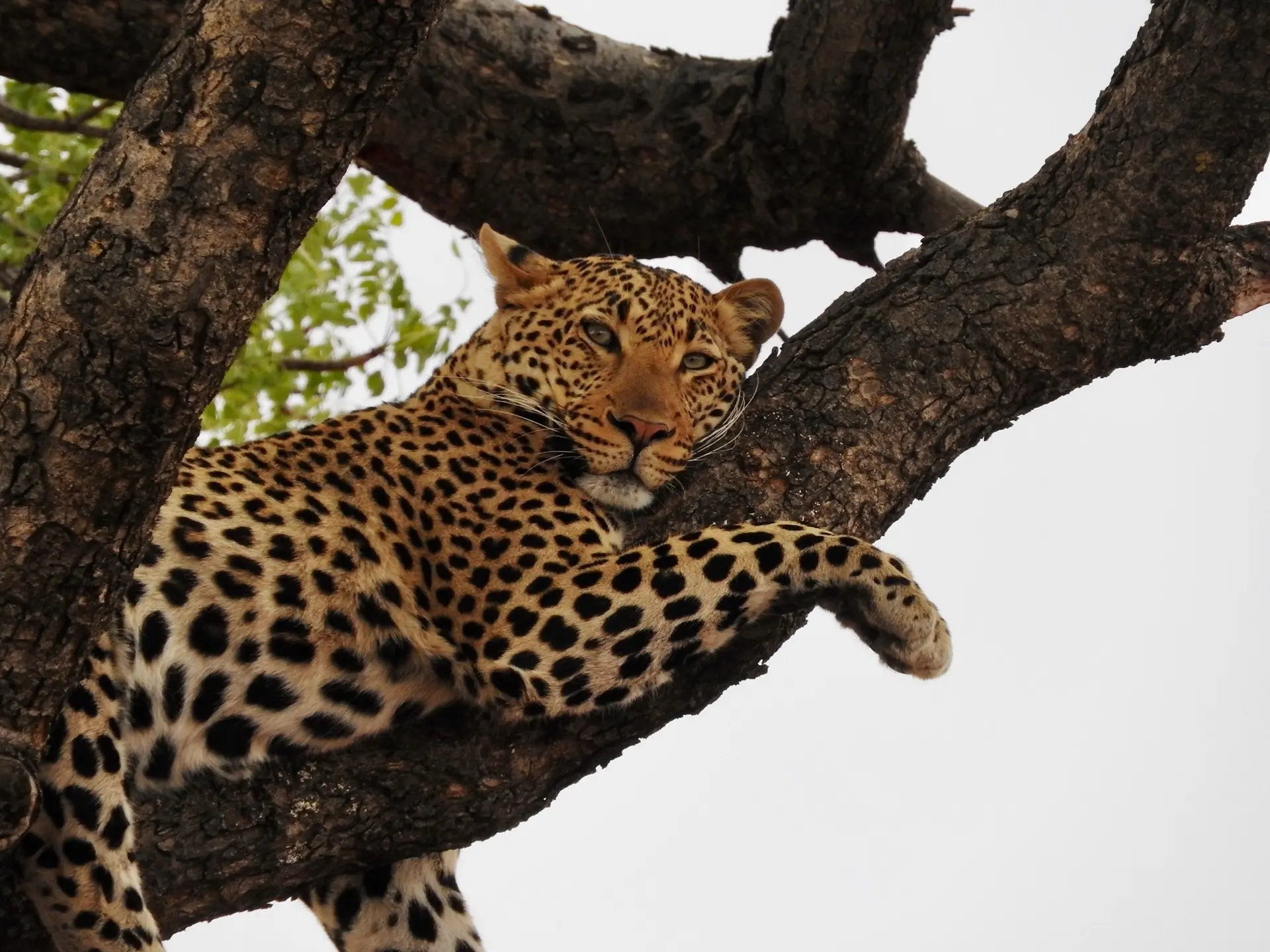
The leopard is the most secretive of the big cats, and it usually takes more time to find than the lion. A camera-trap study published in 2020 estimated between five and six leopards for every 100 square kilometres of Serengeti National Park and described the park as one of the strongholds of the species in Africa. The same study found that leopards choose areas with good cover and keep away from lions and other large carnivores, so they are rarely seen on the open plains.
We recommend the central Serengeti for leopards, where the trees along the Seronera River give them the cover they need. Leopards also live in Tarangire and the Ngorongoro Crater, although sightings there are less frequent. Three nights in the Serengeti give a much better chance than one, which is why our longer itineraries spend two full days in the park.
Elephant
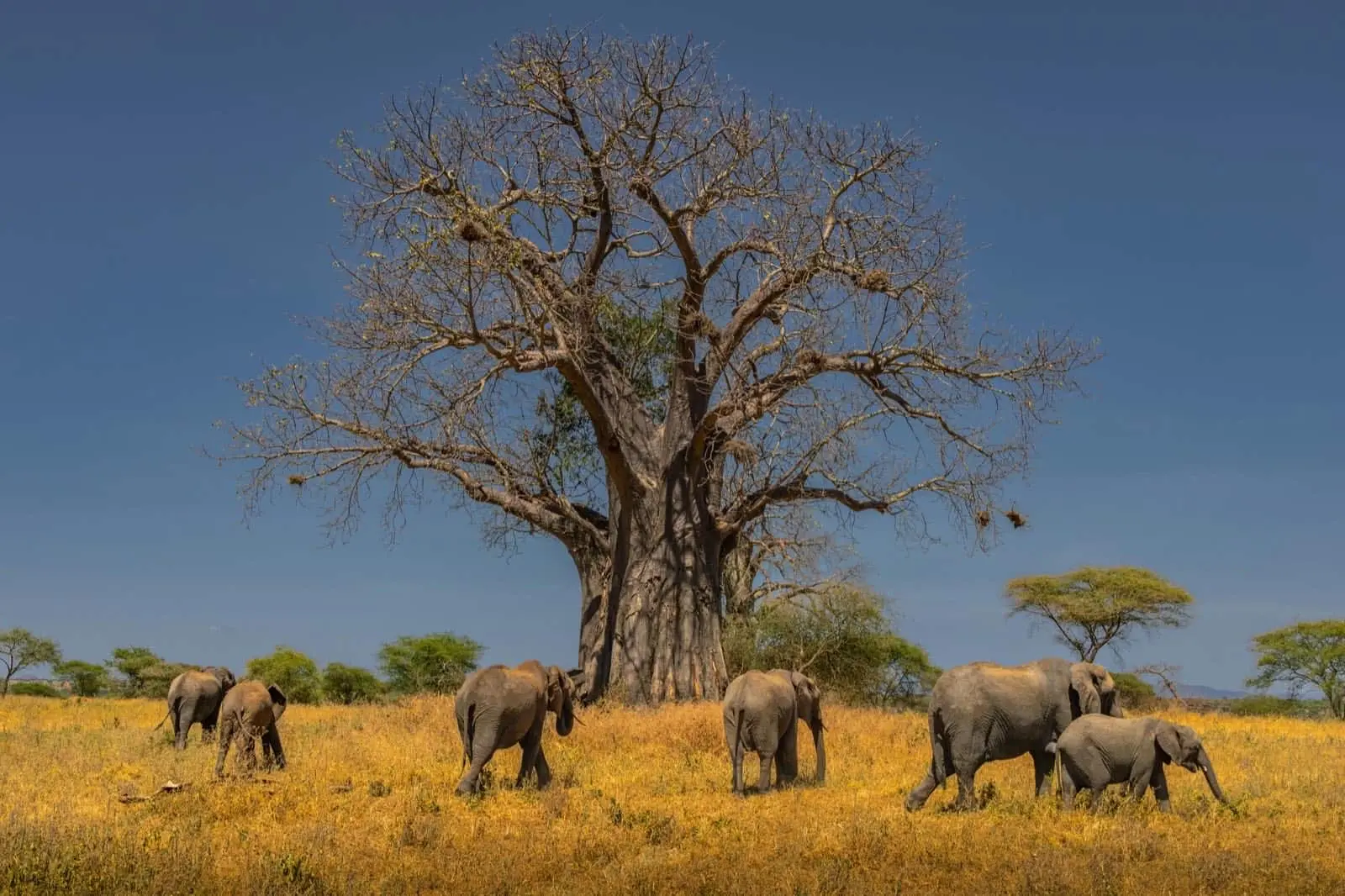
Tarangire National Park is the best place on the northern circuit for elephants, and it is the first park on most of the routes we build. The Tarangire River is one of the only dry-season water sources in the wider Tarangire ecosystem, so from around June to October the elephants and other large animals gather along it. In the wet season most of them spread out into the land beyond the park boundaries, and the herds are harder to find.
Elephants also live in the Serengeti and in the Ngorongoro Crater, so you will usually see them in more than one park. Tarangire in the dry season is where you are most likely to see the largest herds.
Buffalo
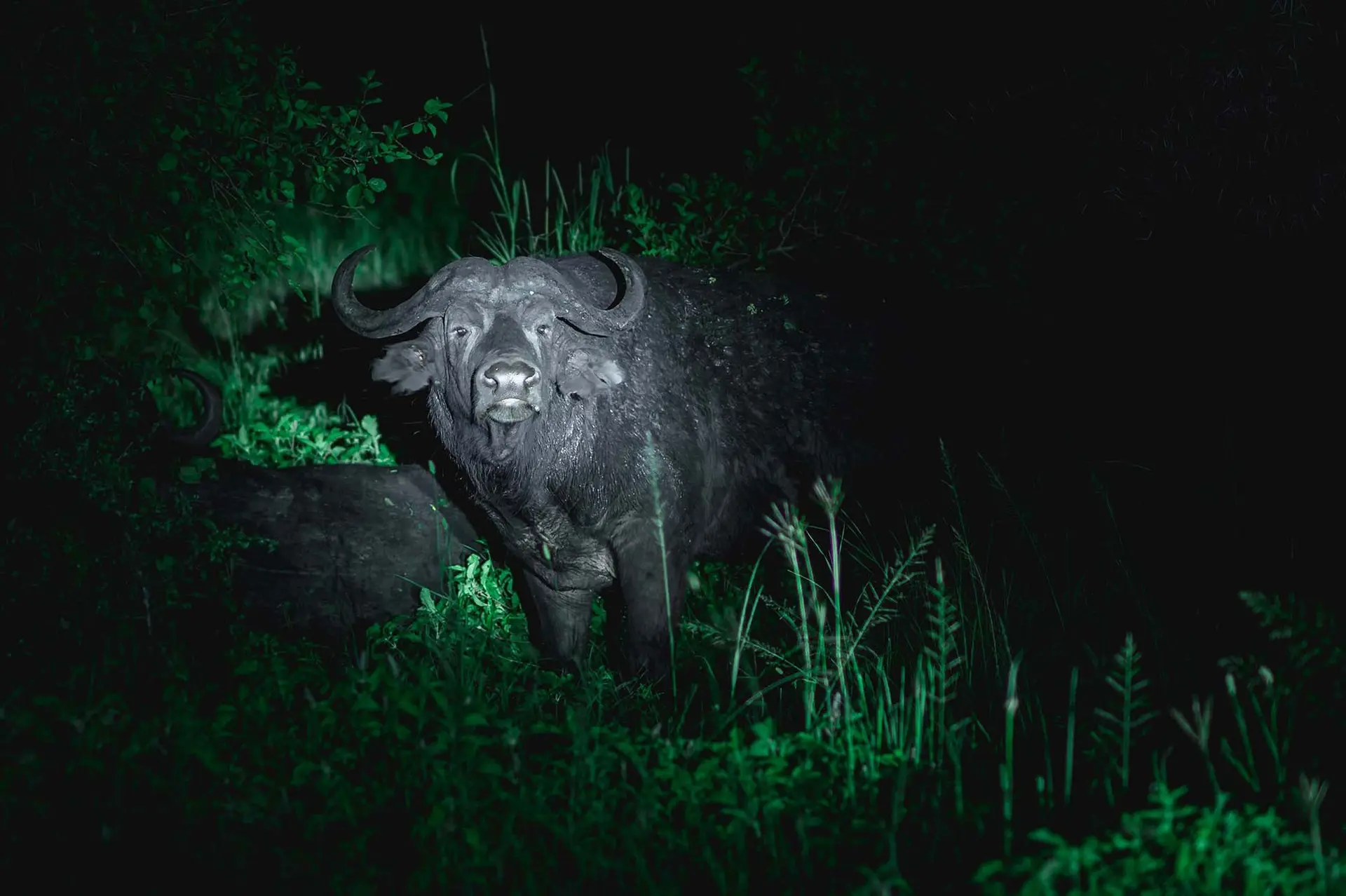
The African buffalo, often called the Cape buffalo, is the easiest of the Big Five to see in northern Tanzania. Buffalo live in the Ngorongoro Crater, the Serengeti and Tarangire, and on the crater floor they are usually seen in large herds on the open grassland.
Buffalo are part of the Big Five because hunters regarded them as one of the most dangerous animals to hunt on foot. Seen from a vehicle, a herd grazing on the crater floor is one of the more relaxed sightings of the day.
Black rhino
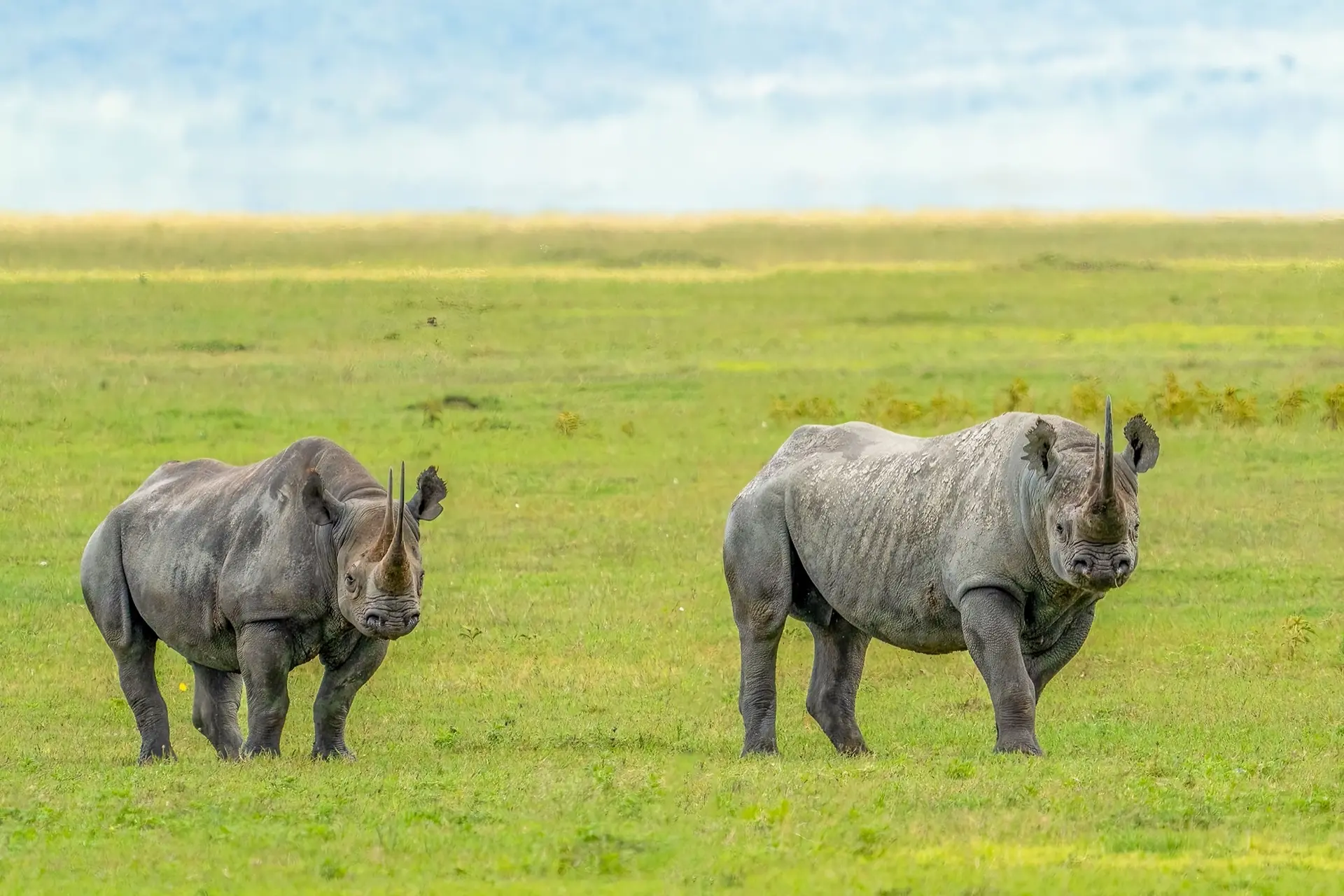
The black rhino is the hardest of the Big Five to see in Tanzania, and the Ngorongoro Crater is the best place to try. The rhinos of northern Tanzania are eastern black rhinos, a subspecies of the black rhino, which is listed as Critically Endangered by the IUCN. At the end of 2024 there were 6,788 black rhinos across the whole of Africa.
Poaching reduced the crater rhinos from about 110 animals in the mid-1960s to about 20 by the mid-1970s, according to research published in the journal Oryx, and the population stayed small for many years. In 2018 the Chief Conservator of the Ngorongoro Conservation Area Authority reported that numbers in the conservation area had risen to more than 50, and the animals are now protected and monitored around the clock.
Vehicles in the crater must stay on the designated tracks and keep at least 25 metres from any animal, so rhinos are usually seen at a distance, and we recommend bringing a pair of binoculars. The Serengeti also has a small, closely guarded population around Moru Kopjes, which has been reinforced with rhinos moved from South Africa and elsewhere, but these are seen far less often than the crater rhinos.
A day in the Ngorongoro Crater
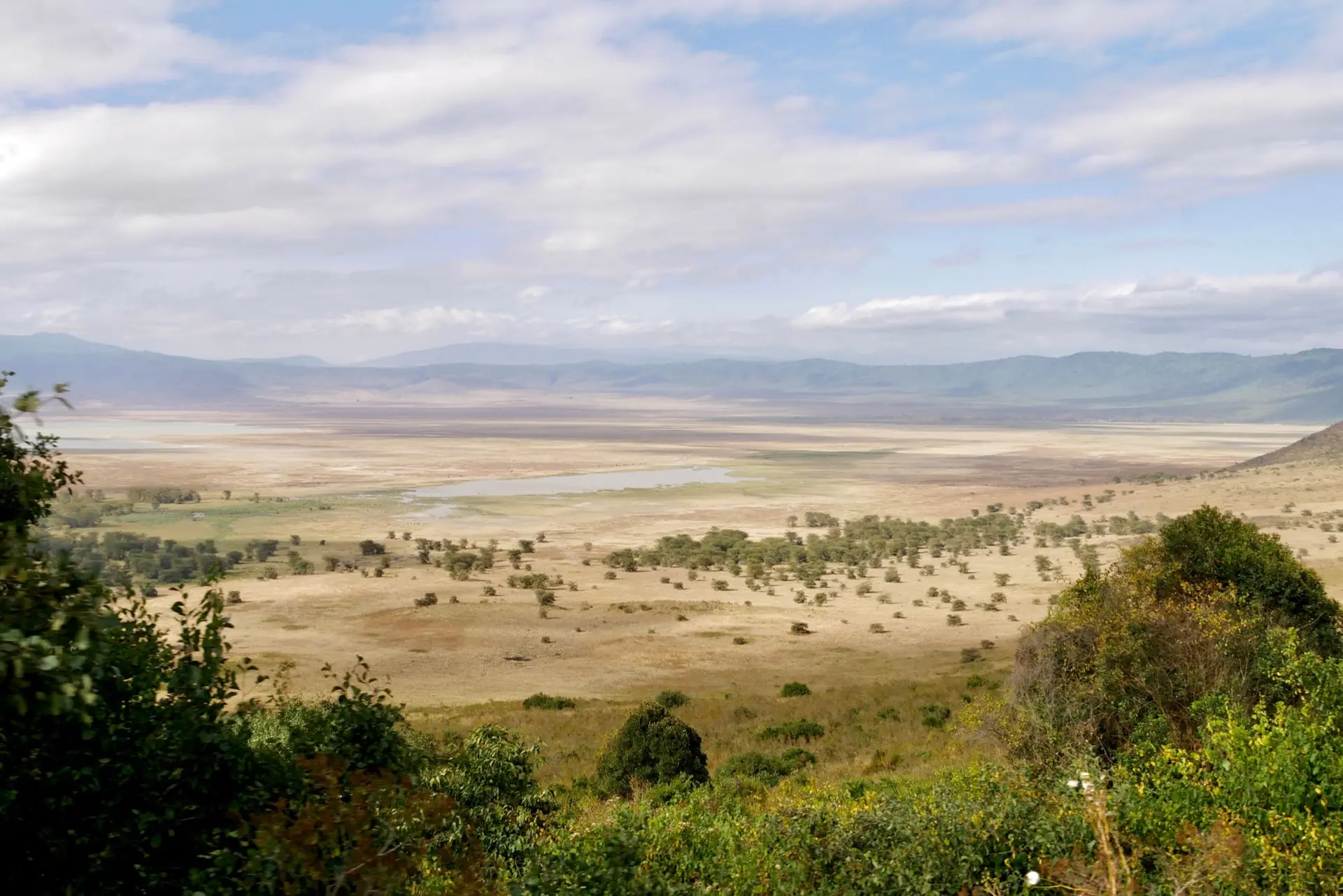
The crater is the one place on the northern circuit where all five can be seen in a single day, and for that reason every itinerary we publish includes it. The floor is a wide caldera of grassland, swamps, rivers and woodland, and the conservation area authority notes that wildlife can be watched here more easily than almost anywhere else.
Driving in the crater is permitted between 06:00 and 18:00, and our itineraries plan the descent for the early morning so that you have most of the day on the floor. Conservation area guidelines allow no more than five vehicles at a sighting and require a distance of at least 25 metres from the animals, which keeps the wildlife calm and the viewing orderly.
One full day in the crater is enough for most guests, and one descent is what we include on every route. If black rhino is a priority for you, please mention it when you enquire.
The best time for a Big Five safari
The Big Five can be seen in every month, because the lions, leopards, buffalo and rhinos of the crater and the central Serengeti stay in the same areas all year. The season changes how easy they are to find more than whether they are there.
From June to October the grass is short and dry, which makes animals easier to spot, and the elephants of Tarangire gather along the river in their largest numbers. These are also the busiest months in the parks and the most expensive months for lodges.
The green season from November to May is good value, with lodge rates commonly 20 to 40 percent below the peak, and park entry fees are slightly lower from 15 March to 15 May. The resident wildlife of the crater stays where it is, and from January to March a Big Five safari can be combined with the wildebeest calving season on the southern plains. In April and May the long rains can make some roads muddy, so the drives between parks may take longer.
Our itineraries that include all five
Each of these private itineraries spends time on the Ngorongoro Crater floor, which gives you the best chance of the black rhino. For leopards, we recommend one with at least two full days in the Serengeti, and for the large elephant herds, one that starts in Tarangire.
8-Day Classic Tanzania Safari
Tarangire · Serengeti · Ngorongoro
From $2,625 pp
Calving Season Safari: Ndutu & Ngorongoro
Ndutu · Ngorongoro · Southern Serengeti
From $2,640 pp
Great Migration Safari in Tanzania: Northern Serengeti
Northern Serengeti · Serengeti · Ngorongoro
From $4,680 pp
Tanzania & Zanzibar Honeymoon
Tarangire · Serengeti · Ngorongoro · Zanzibar
From $5,510 pp
5-Day Northern Circuit Safari
Tarangire · Serengeti · Ngorongoro · Lake Manyara
From $1,815 pp
11-Day Tanzania & Zanzibar
Tarangire · Serengeti · Ngorongoro · Zanzibar
From $3,350 pp
Family Safari Tanzania
Tarangire · Serengeti · Ngorongoro
From $2,625 pp
7-Day Tanzania Safari Itinerary
Tarangire · Serengeti · Ngorongoro
From $2,325 pp
The Big Five, the Big Seven and the Little Five
The Big Seven adds the cheetah and the African wild dog to the Big Five. Cheetahs are at home on the open Serengeti plains, where researchers have studied them over several decades, and they are often seen in the southern and central Serengeti. Wild dogs are much harder, as they disappeared from Serengeti National Park in 1991 and now live mainly to the east of the park, in the Ngorongoro Conservation Area and Loliondo. We treat a wild dog sighting as a rare bonus on the northern circuit.
The Little Five is a lighter list made popular in South Africa, made up of the elephant shrew, rhino beetle, red-billed buffalo weaver, leopard tortoise and ant lion. Each name echoes one of the Big Five, and the list is a way of drawing attention to the smaller animals that most visitors drive past.
Frequently asked questions about the Big Five
What are Africa's Big Five?
The Big Five are the lion, leopard, elephant, African buffalo and rhinoceros. The term was coined by big-game hunters in the late 1800s for the five animals they considered the most difficult and dangerous to hunt on foot. Today it is used on photographic safaris, and Tanzania has all five.
Why are they called the Big Five?
The name comes from hunting and has little to do with size. Colonial-era hunters used it for the animals that were the most challenging and dangerous to track and hunt on foot, which is why the leopard is included and the much larger hippo and giraffe are left out.
Can you see the Big Five in Tanzania?
Yes, all five live on the northern safari circuit, and a route that combines Tarangire, the Serengeti and the Ngorongoro Crater gives you a good chance of seeing them. Lion, elephant and buffalo are very likely on a week-long safari, the leopard needs some time and luck, and the black rhino is the hardest.
Where is the best place to see the Big Five in Tanzania?
The Ngorongoro Crater is the best single place, and the Ngorongoro Conservation Area Authority describes it as probably the best site in Tanzania to see the Big Five. It is also the most reliable place on the northern circuit for black rhino. For leopards we recommend adding the central Serengeti, and for large elephant herds, Tarangire in the dry season.
Which of the Big Five is the hardest to see?
The black rhino is the hardest, as it is Critically Endangered, the populations in northern Tanzania are small and closely protected, and in the Ngorongoro Crater they are usually seen at a distance from the tracks. The leopard is the second hardest, as it keeps to areas with good cover.
How many days do you need to see the Big Five?
We recommend seven or eight days, with one or two nights in Tarangire, three nights in the Serengeti and a full day in the Ngorongoro Crater. A five-day itinerary visits the same parks and can still produce all five, although with less time in the Serengeti the chance of a leopard is lower.
What is the best time of year for a Big Five safari?
The Ngorongoro Crater and the central Serengeti have resident lions, leopards, buffalo and rhino all year. The dry months from June to October are the best time for elephants in Tarangire, as the herds gather along the river. The green season from November to May is good value, with lower lodge rates, and the crater wildlife stays where it is.
Is a Big Five sighting guaranteed?
No safari company can guarantee wildlife sightings, and we never promise one. What we can do is plan the route around the parks where each of the five is most reliably seen, with enough time in each, and every itinerary we publish includes the Ngorongoro Crater for this reason.
What are the Big Seven?
The Big Seven are the Big Five plus the cheetah and the African wild dog. Cheetahs are regularly seen on the open plains of the Serengeti. Wild dogs are much rarer, as they disappeared from Serengeti National Park in 1991 and now live mainly to the east of the park, in the Ngorongoro Conservation Area and Loliondo.
What are the Little Five?
The Little Five are the elephant shrew, rhino beetle, red-billed buffalo weaver, leopard tortoise and ant lion, smaller animals whose names echo the Big Five. The term was made popular in South Africa as a way to draw attention to the smaller life of the bush.
Sources and Maintenance
Where these figures come from
Population figures and park guidelines on this page come from the sources below, each read on the date shown. The likelihood column and our recommendations are our own planning judgement, and wildlife sightings can never be guaranteed.
- National Geographic, Africa's Big Five, by Liz Langley, 26 July 2019 (origin of the term, checked 24 November 2026)
- Ngorongoro Conservation Area Authority, Ngorongoro Crater (25,000 animals and the Big Five, checked 24 November 2026)
- Ngorongoro Conservation Area Authority, Visitor Guidelines and Procedures (driving hours, tracks, distances and vehicle limits, checked 24 November 2026)
- IUCN press release on African rhino numbers, 7 August 2025 (black rhino total and Red List status, checked 24 November 2026)
- Mills and others, Managing small populations in practice, Oryx 40, 2006 (history of the crater rhino population, checked 24 November 2026)
- The Citizen, Rhino numbers in Ngorongoro exceed 50, 21 June 2018 (figure given by the NCAA Chief Conservator, checked 24 November 2026)
- University of Glasgow news release on a PNAS study with TANAPA and TAWIRI, 4 June 2025 (Serengeti rhinos and translocations, checked 24 November 2026)
- Snapshot Serengeti research blog, Rare Romping Rhinoceros, 3 July 2013 (the Moru Kopjes rhinos, checked 24 November 2026)
- University of Illinois news release on Allen and others, Biodiversity and Conservation, 31 August 2020 (Serengeti leopard density and habitat, checked 24 November 2026)
- Packer, The African Lion, Frontiers in Ecology and Evolution, 2019 (Serengeti and crater lion research, checked 24 November 2026)
- Foley and Faust, Rapid population growth in an elephant population, Oryx 44, 2010 (Tarangire River and seasonal elephant movements, checked 24 November 2026)
- Kelly and others, Demography of the Serengeti cheetah population, Journal of Zoology, 1998 (cheetahs of the Serengeti plains, checked 24 November 2026)
- Mongabay, Why did Serengeti's wild dogs disappear, 1 March 2019 (wild dogs in and around the Serengeti, checked 24 November 2026)
- Natural Habitat Adventures, The Big Five safari and beyond (definition of the Big Seven, checked 24 November 2026)
- South African Tourism, The Little 5 (the Little Five, checked 24 November 2026)
Would you like to plan a Big Five safari?
Send us your travel dates and the animals you most want to see, and we will plan a private itinerary with the right time in each park.