Park Comparison
Serengeti vs Ngorongoro vs Tarangire
The three parks are very different, and the right choice depends on what you would most like to see and how much time you have.
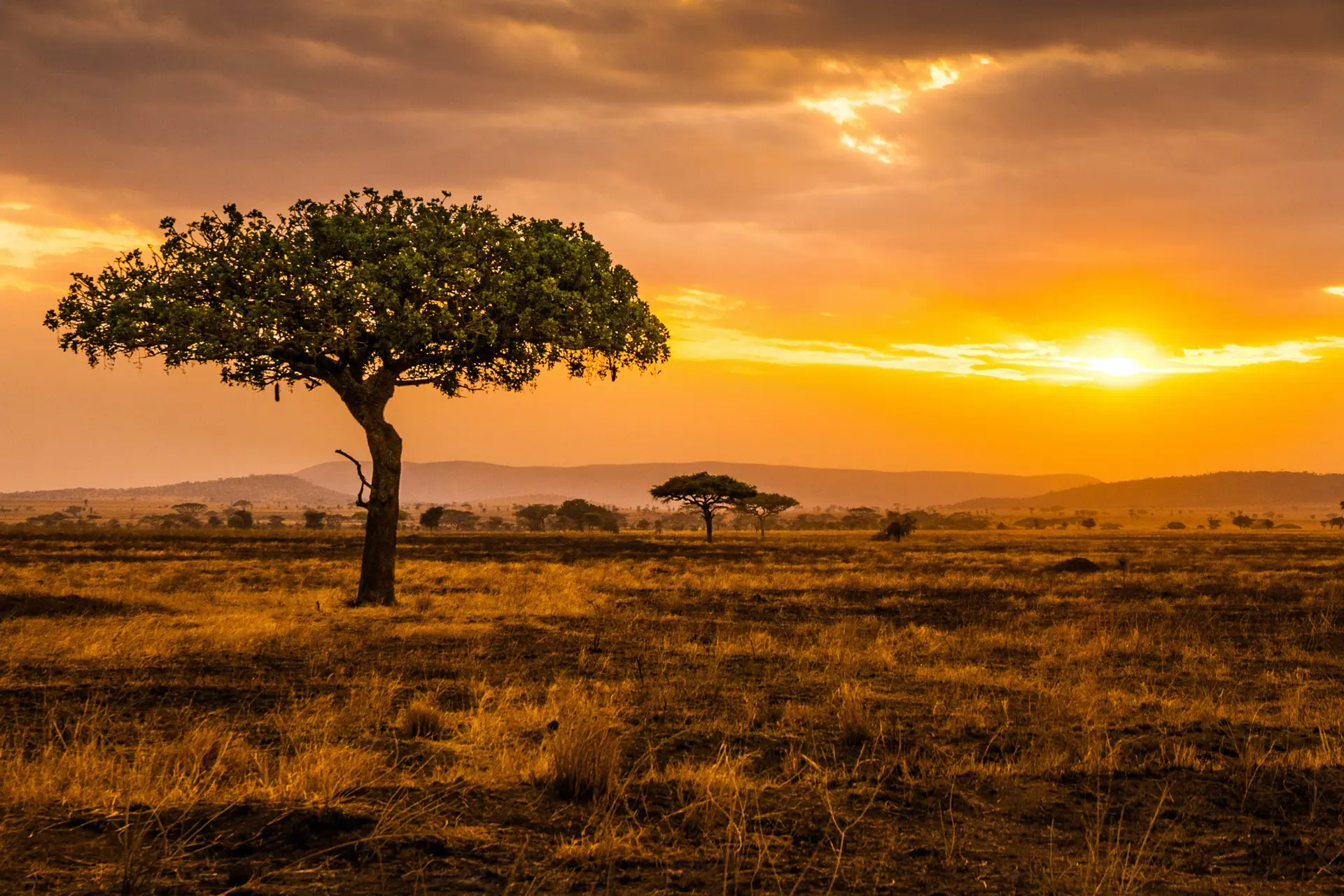
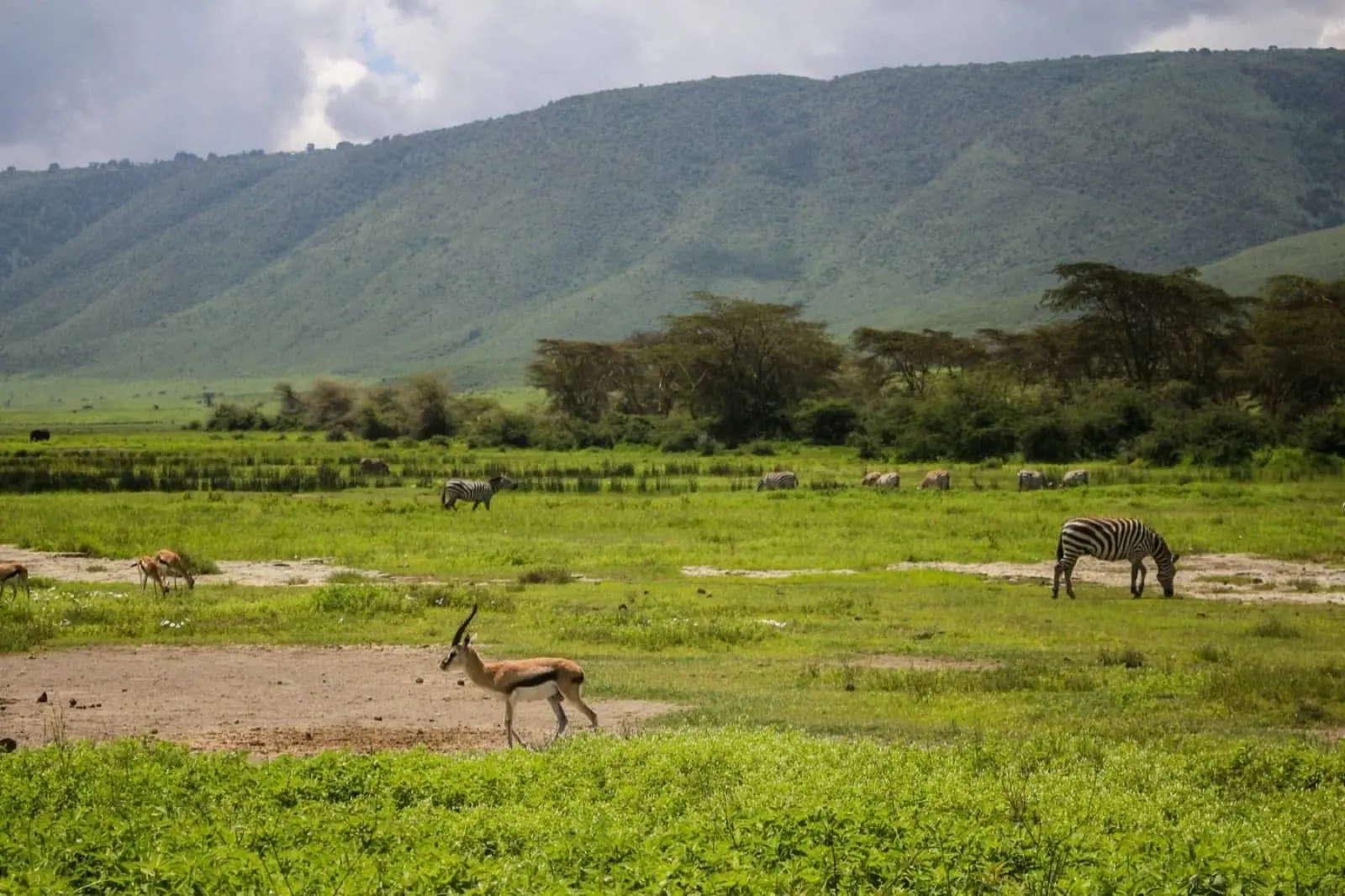
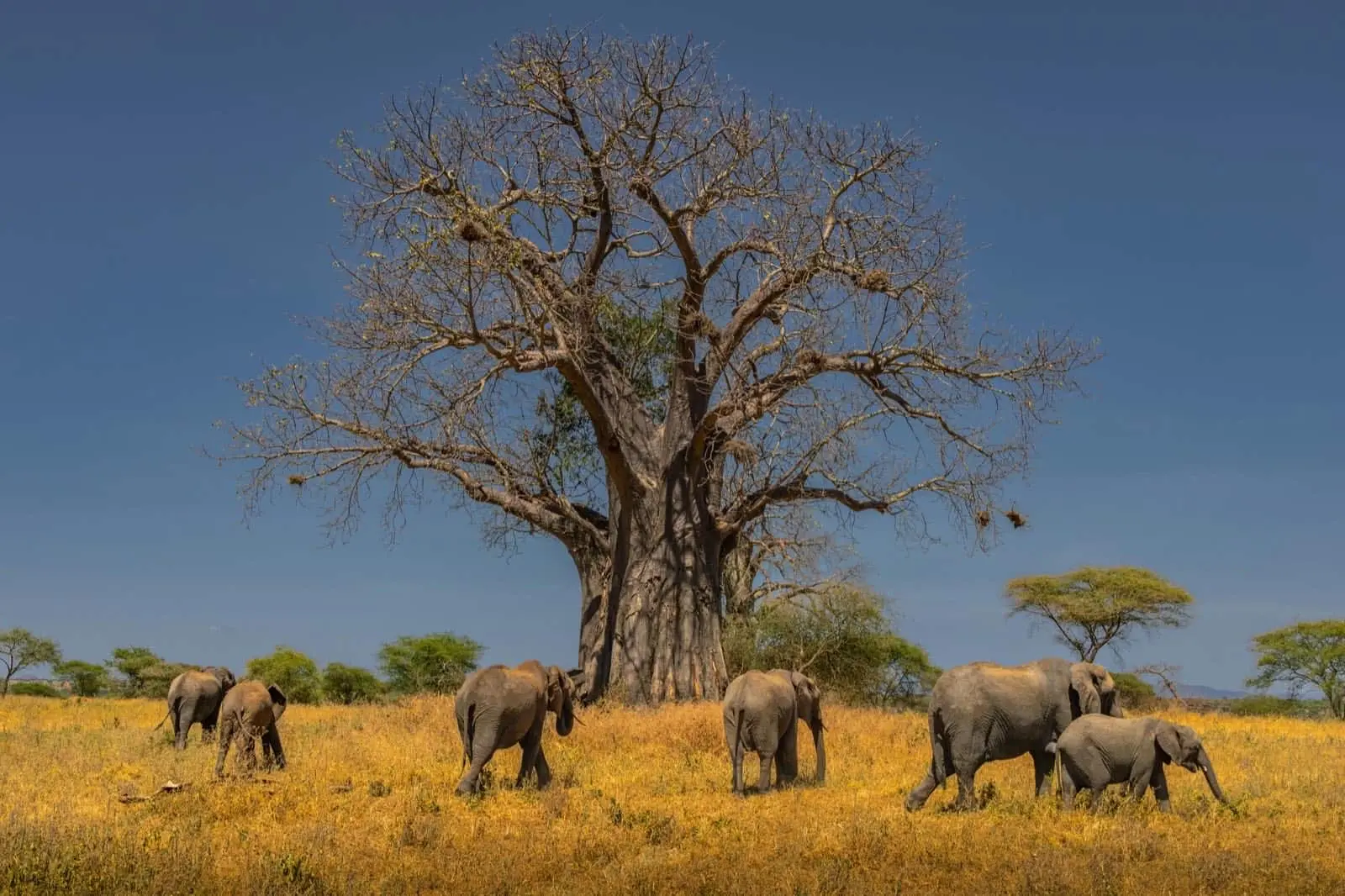
At a Glance
Side-by-side comparison
| Serengeti | Ngorongoro Crater | Tarangire | |
|---|---|---|---|
| Size | 14,763 km² | 260 km² (crater floor) | 2,850 km² |
| Entry fee (adult/day) | $70.80 low / $82.60 peak | $70.80 flat + $295.00/vehicle per descent | $53.10 low / $59.00 peak |
| Drive from Arusha | ~5 hours | ~3.5 hours | ~2 hours |
| Minimum useful stay | 3 nights (2 is a taste, not a look) | 1 full day (no overnight on the floor) | 1–2 nights |
| Vehicle crowding | Moderate; heavy at Mara crossing points Jul–Oct | Highest on the circuit, as almost every itinerary includes the crater | Lowest of the three; a full-day drive can mean under 10 other vehicles |
| Include or skip on a short trip | Include if 5+ days; skip only on a 3-day trip | Include on any northern circuit trip, as one day is always worthwhile | Include as the opening or closing park; skip only if under 4 days total |
| Best months | Year-round (varies by zone) | June–Sept, Jan–Mar | June–Oct (dry season) |
| Big Five | Yes (rhino rare) | Yes, all five regularly | No rhino |
| Migration | Yes, year-round movement | No | No |
| Best for elephants | Good | Present, not the focus | Best in Africa (dry season) |
| Overnight allowed | Yes | Rim only | Yes |
Decision Guide
Which park suits you
Pick Serengeti if...
- +The migration is the reason you are coming to Tanzania
- +You would like several nights in a single park, as the Serengeti rewards a longer stay
- +Predators are your priority: lion, cheetah, leopard, hyena, wild dog
- +You want the classic wide-open-plains safari landscape
- +You are doing 8+ days and want the full Northern Circuit
Pick Ngorongoro if...
- +You need a near-certain Big Five sighting on a short trip
- +Seeing black rhino matters to you, as the crater is the best place for them
- +The landscape is a priority, as the crater walls are extraordinary
- +You want high animal density in a compact, navigable space
- +You are combining with Tarangire or Serengeti, not instead of them
Pick Tarangire if...
- +Elephants are your main interest, particularly in the dry season
- +You would like fewer vehicles, as Tarangire is far less crowded than the Serengeti
- +The landscape of ancient baobabs appeals to you
- +You are visiting between June and October, when Tarangire is at its best
- +You are close to Arusha and want an efficient first-or-last park
Deep Dive
The Serengeti
The Serengeti covers 14,763 square kilometres, slightly more than the US state of Connecticut, so you can drive for three hours inside the park and still be in the Serengeti.
The migration is extraordinary, but the Serengeti offers much more, as in every month its density of predators is among the highest in Africa, with cheetahs on the southern plains, leopards in the kopjes and along the Seronera River, wild dog packs in the Loliondo area and lions throughout.
The area you visit should match the time of year. From July to October we recommend the northern Serengeti for the Mara River crossings, from January to March the southern Serengeti and Ndutu for the calving, and in November, December and from April to June the central Serengeti, which is good for predators all year.
We recommend at least three nights in the Serengeti, as two is rarely enough.
Deep Dive
Ngorongoro Crater
The crater is about 20 kilometres across. You descend 600 metres from the rim and spend the day on the floor before driving back up, as overnight stays inside the crater are not permitted.
The number of animals in such a small space is remarkable, with about 60 lions, 50 black rhinos, 15,000 wildebeest and 9,000 zebra. Because the walls keep them in, densities are far higher than in any open park, and a single morning drive usually produces lions, elephant, buffalo, hippo and flamingo, with a reasonable chance of rhino.
There are no giraffes in the crater, as the walls are too steep for them to descend.
One full day is enough for most visitors, although a second day gives a better chance of seeing rhino.
Deep Dive
Tarangire
Tarangire is often underestimated. It is the first park on the standard northern circuit, two hours from Arusha, and some itineraries treat it as a short stop before the Serengeti, although it deserves more time. In the dry season the Tarangire River is the only permanent water for hundreds of kilometres, so the animals of the whole ecosystem come to it, and the elephant herds are the largest in Tanzania, sometimes 200 in a single group, with old bulls whose tusks almost touch the ground and cows with very young calves.
Tarangire also has fringe-eared oryx, gerenuk, a long-necked antelope that feeds standing on its hind legs, greater kudu and pythons in the fig trees along the river, and more than 550 bird species have been recorded. Some of the baobabs are thought to be 3,000 years old. The park is also far less crowded than the Serengeti, and on a full-day drive in October you may see only six other vehicles.
FAQ
Frequently asked questions
Is the Serengeti or Ngorongoro better?
The two parks offer very different experiences. The Serengeti covers 14,763 square kilometres of open plains, with the world's largest mammal migration moving through it all year, while Ngorongoro is a collapsed volcano with a floor of 260 square kilometres and resident animals that rarely leave. Most 8-day northern circuit itineraries include both, and we only recommend choosing between them on very short trips.
Can I see the Big Five in all three parks?
The Ngorongoro Crater is the most reliable park for all five, namely lion, elephant, buffalo, leopard and black rhino, as it has one of the highest lion densities in Africa and around 50 black rhinos. The Serengeti has all five, although rhinos are seen less often, and Tarangire has no rhinos but exceptional numbers of elephants and the greatest variety of wildlife in the dry season.
Which park is best for elephants?
Tarangire is the best park for elephants by a wide margin. In the dry season, from June to October, the Tarangire River is the only water source for the surrounding ecosystem, and herds of 200 or more elephants are common on a single morning drive. The park also has a high density of large old bulls, and no other park on the northern circuit has as many elephants.
Which park is best for the Great Migration?
The Serengeti is the best park for the Great Migration, which follows a year-round loop through the Serengeti and into Kenya's Maasai Mara. The Mara River crossings take place in the northern Serengeti from July to October, and the calving season is in the southern Serengeti and the Ndutu area from January to March, while Ngorongoro and Tarangire lie outside the migration route.
Which park is cheapest to visit?
Tarangire has the lowest park fees ($53.10–$59.00/person/day vs $70.80–$82.60 for Serengeti and a flat $70.80 for Ngorongoro). It is also the closest park to Arusha, which reduces driving time and fuel costs. Ngorongoro is the most expensive once the crater is included, at $70.80/person/day entry plus a $295.00 vehicle fee every time you descend into the crater. On a 2-person itinerary, one crater day (entry plus the descent) costs $436.60 in government fees alone, before any overnight fee or accommodation.
Do I need to visit all three parks?
On an 8-day safari we recommend all three. On a 5-day trip you will need to choose, and Tarangire with the Serengeti suits first-time visitors who want to see as much wildlife as possible, while the Serengeti with Ngorongoro suits travellers for whom the Big Five and the crater matter most. On any trip of more than three days, we recommend adding at least one other park to Tarangire.
Sources and Maintenance
Where these figures come from
Park sizes and entry fees come from the park authorities. Crowd levels, minimum useful stay and the include-or-skip calls are our own judgement from running these routes, not official figures.
- TANAPA official tariff and park information (Tanzania National Parks, non-resident tariff)
- NCAA Visitor Guidelines and Procedures (Ngorongoro Conservation Area Authority, checked 26 August 2026)
- NCAA Frequently Asked Questions (Ngorongoro Conservation Area Authority)
- Saleh Safaris park permit payments (operator observation, cross-checked against the official tariffs above)
Explore each park
Comparing the Serengeti with Kenya? Our Serengeti vs Maasai Mara guide explains where the herds are each month and which side of the Mara River suits your dates.