Tanzania Safari in October
The first ten days of October are an underrated time for Mara River crossings. Many brochures say the crossing season ends in September, although the herds keep crossing the river for as long as they stay in the north. At the same time, Tarangire has its best month of the year, with large numbers of elephants along the river, and a sighting anywhere on the circuit usually draws only three to five vehicles. The herds move south once the first rains fall on the southern plains, so the timing depends on the weather and changes from year to year. In some years they leave around October 25, and in others they are still in the north in November.
Wildlife Conditions in October by Park
Serengeti: Northern early, Central/Eastern late
ExcellentEarly October offers the last reliable Mara crossings. Later in the month the herds move south through Lobo and the eastern Serengeti, and the Namiri Plains, which are known for cheetahs, are at their best with very few vehicles. Conditions are dry and dusty, and access is excellent until the rains arrive late in the month.
Tarangire National Park
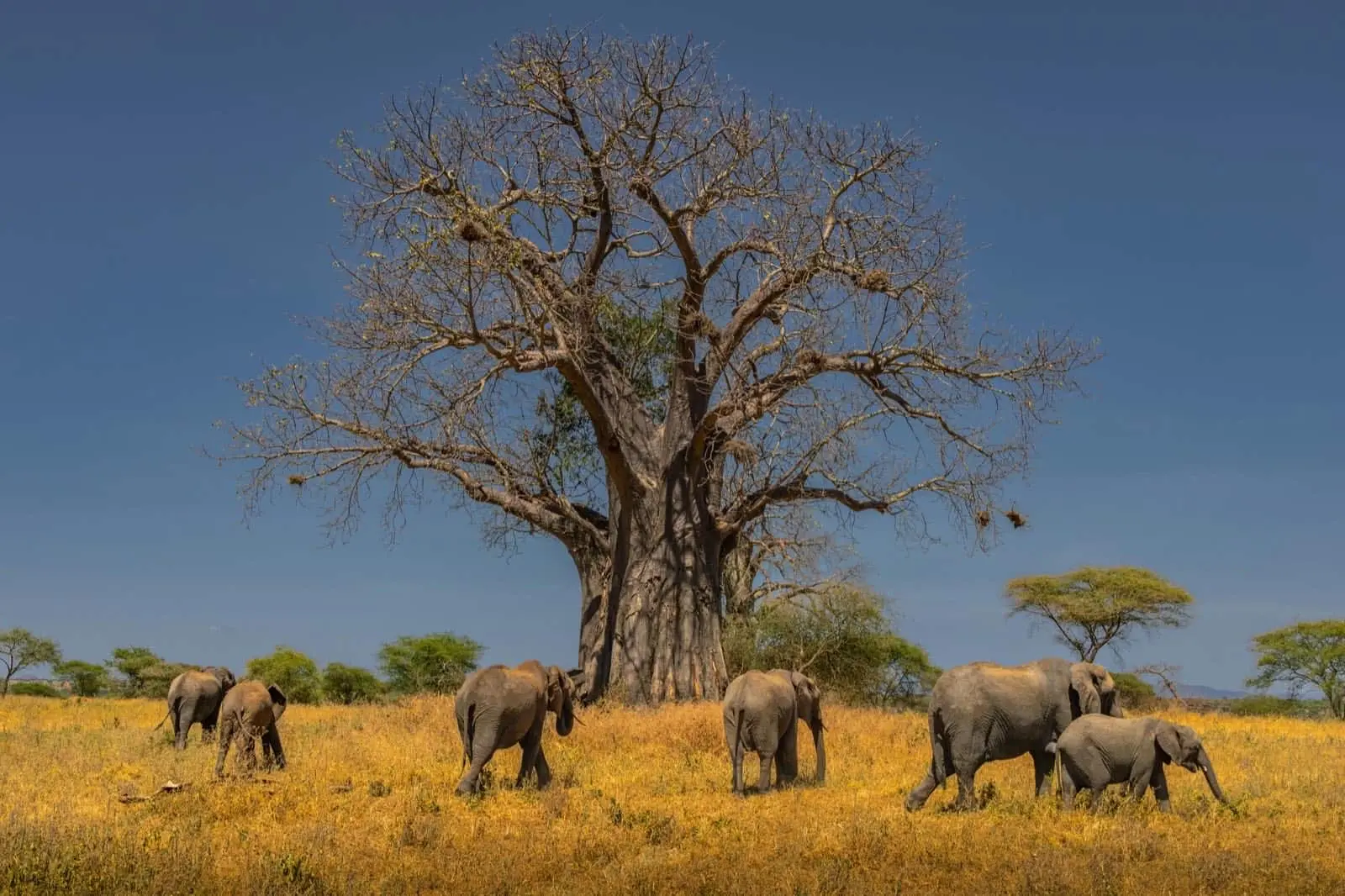
ExcellentOctober is often the best month of the year in Tarangire. In the last weeks before the rains the elephants gather along the river in large numbers, and the Silale Swamp draws buffalo, lions and many other animals.
Ngorongoro Crater
ExcellentThe crater floor is still in the late dry season, with short grass, plenty of game and excellent visibility. The number of visitors falls noticeably during the month.
Lake Manyara
ExcellentAnimals are concentrated near water at the end of the dry season, the vegetation is thin and waterbird numbers are good. The first rains may arrive in the last week.
Ndutu / Southern Serengeti
GoodEarly rains can turn the plains green from the middle of the month, and the first herds sometimes arrive earlier than expected. Otherwise you will mostly find resident game and very quiet tracks.
October Week by Week
October 1-7
Best location: Kogatende fringe / Lobo
The herds are still in the northern Serengeti and around Lobo, moving south slowly. Late Mara crossings are possible, with very few other vehicles watching.
October 8-14
Best location: Lobo / eastern Serengeti
Most of the herds are moving through Lobo and the eastern Serengeti along the Loliondo corridor.
October 15-21
Best location: Central Serengeti / Namiri Plains
The herds spread through the central and eastern Serengeti. The short rains approach and the skies become dramatic.
October 22-31
Best location: Eastern plains toward the south
When the first southern rains arrive, the herds move south more quickly toward the fresh grass of the calving grounds.
| Week | What's Happening | Best Location |
|---|---|---|
| October 1-7 | The herds are still in the northern Serengeti and around Lobo, moving south slowly. Late Mara crossings are possible, with very few other vehicles watching. | Kogatende fringe / Lobo |
| October 8-14 | Most of the herds are moving through Lobo and the eastern Serengeti along the Loliondo corridor. | Lobo / eastern Serengeti |
| October 15-21 | The herds spread through the central and eastern Serengeti. The short rains approach and the skies become dramatic. | Central Serengeti / Namiri Plains |
| October 22-31 | When the first southern rains arrive, the herds move south more quickly toward the fresh grass of the calving grounds. | Eastern plains toward the south |
Tanzania Weather in October
Tanzania weather in October is the warmest of the dry season, and it starts to change towards the end of the month as the first short rains arrive. Average highs reach about 28 to 29°C in Arusha, Tarangire and the Serengeti, and rainfall begins to rise, from about 18 mm in Tarangire to about 94 mm at Kogatende in the far north. October is also the sunniest month of the year in Arusha and Tarangire, and most of the month is still dry in the central and southern parks.
| Location | Average high | Average low | Rainfall | Rain days |
|---|---|---|---|---|
| Arusha1,350 m above sea level | 28°C82°F | 14°C58°F | 32 mm | 5 |
| Tarangire1,180 m above sea level | 29°C84°F | 16°C61°F | 18 mm | 5 |
| Central Serengeti (Seronera)1,490 m above sea level | 28°C82°F | 15°C59°F | 51 mm | 9 |
| Northern Serengeti (Kogatende)1,510 m above sea level | 28°C83°F | 14°C56°F | 94 mm | 12 |
| Ngorongoro Crater rim2,280 m above sea level | 23°C73°F | 9°C49°F | 55 mm | 9 |
| Zanzibar18 m above sea level | 31°C88°F | 22°C72°F | 116 mm | 7 |
Long-term monthly averages. The mainland figures are 1961 to 1990 averages from the Climatic Research Unit climate grid, because we could not find published averages from a weather station inside the parks. The Zanzibar figures are the official 1991 to 2020 averages for the island's weather station. Rain days count days with at least 0.1 mm of rain on the mainland and at least 1 mm on Zanzibar. Sources are listed at the end of the page. The averages for every month are on our Tanzania weather by month page.
Early mornings and the middle of the day
October mornings are milder than in July and August, with average lows of about 14 to 16°C, so a light fleece is usually enough for the first part of a game drive. The middle of the day can feel hot in Tarangire and the Serengeti, where there is little shade on the dry plains away from the rivers, so we recommend an early start and a long midday break.
On the Ngorongoro Crater rim
On the Ngorongoro rim October nights are still cool, with an average low of about 9°C, and the rim starts to see more rain, around 55 mm on average. Afternoons on the rim are pleasant, with an average high of about 23°C.
What to pack for October
For October we recommend lighter clothing than in July and August, with a fleece for dawn drives and the rim, a sun hat, high-factor sunscreen, and a light rain jacket for the end of the month, when the first showers can arrive. On Zanzibar October is warm, with an average high of about 31°C, and rainfall begins to rise ahead of the short rains in November.
How the weather affects game viewing in October
The dry October weather keeps the elephants and other wildlife in Tarangire close to the river, which makes October the park's best month. In the north the herds stay near the Mara River until rain falls on the southern plains, and the timing of that rain determines when they move south, so it changes from year to year.
When the Herds Move South
Most migration charts show the herds leaving the north in October, although the real timing depends on the rain. Wildebeest follow fresh grass, and fresh grass follows rain. When the first heavy storms fall on the southern Serengeti and Ndutu, usually between October 25 and November 5, the herds turn south and can cover the distance very quickly. Until then, they stay in the north and continue to cross the river.
The timing varies a great deal from year to year. In a year when the rains come early, the north can be empty by mid-October, while in a late year the crossings continue into November. For this reason we recommend planning an October itinerary with some flexibility rather than fixing every night in one area, and a guide who stays in touch with other guides by radio is especially useful in October. We plan October routes around the weather in the south rather than the calendar.
Tarangire in October
While most visitors focus on the wildebeest, Tarangire has its best month of the year. By late October the park has had four months without significant rain, the seasonal swamps have shrunk to the Silale, and the Tarangire River is the only reliable water across a very large area. The elephants gather along the river in numbers that are hard to match elsewhere in Africa, and you can see hundreds in a single morning, with family after family under the baobabs.
Many other animals gather at the same water, including buffalo, lions and large herds of plains game, and leopards hunt in the trees along the river. A day in Tarangire in October, with only a few other vehicles in sight, can be more rewarding than following the last of the migration through Lobo. If you need to shorten an October route, we recommend keeping Tarangire.
October Itineraries
8-Day Classic Tanzania Safari
From $2,625 pp8 Days / 7 Nights
Tarangire · Serengeti · Ngorongoro
October is one of the best months for this route, with Tarangire at its peak, the crater in the late dry season and the Serengeti nights placed to meet the herds as they move south.
View Full Itinerary7-Day Tanzania Safari Itinerary
From $2,325 pp7 Days / 6 Nights
Tarangire · Serengeti · Ngorongoro
Our timed day-by-day route, which in October focuses on Tarangire's elephants and the quiet eastern Serengeti.
View Full ItineraryQuestions About a Tanzania Safari in October
Can I still see Mara River crossings in October?
Yes, especially in the first ten days. The herds keep crossing while they remain in the north, and most of the September visitors have gone home. Crossings often continue until the middle of the month and then become occasional as the short rains in the south draw the herds away. The return crossings as the herds head south are an added bonus that many visitors do not expect.
When exactly do the wildebeest leave the north?
There is no fixed date, as the herds move with the weather. They leave after the first heavy rain on the southern plains, which has historically fallen between October 25 and November 5, although the timing varies a great deal. In years when the rains come late the herds stay in the north into November, and in early years the north can be empty by mid-October.
Is October a good safari month overall?
Yes, October is excellent and often underrated. At the end of the dry season the game stays close to water and is easy to see, Tarangire has its best month for elephants, and a sighting usually draws three to five vehicles, compared with six to eight in August. Photographers also value the dramatic skies before the rains.
Where are the herds in October?
In early October the herds are in the northern Serengeti around Kogatende and the Mara River. By the middle of the month they are moving through Lobo and the eastern Serengeti along the Loliondo corridor, and late in the month they spread through the central and eastern plains and move south more quickly once the rains begin. For this reason an October route needs some flexibility.
Is October cheaper than August or September?
In some cases. Some camp groups lower their rates on October 1, while others keep peak rates until November 1, so October falls between peak and shoulder pricing depending on the property. Availability is clearly better than in August. Our 8-day Classic starts from $2,625 per person with park fees included, and October can be booked with much less notice than the peak months.
Is October good for Zanzibar?
Yes. The short rains begin as brief afternoon or evening showers, the mornings are clear, the sea is warm and visibility for diving is good. It is a better beach month than November, when the vuli rains peak. A typical trip has five or six nights on safari followed by four on the coast.
What is the weather like in Tanzania in October?
October is the warmest month of the dry season, with average highs of about 28 to 29°C in Arusha, Tarangire and the Serengeti and mild mornings of about 14 to 16°C. Most of the month is dry, and the first short rains can arrive late in the month, with more rain in the northern Serengeti than in Tarangire. It is also the sunniest month of the year in Arusha and Tarangire.
Sources and Maintenance
Where these figures come from
The temperatures and rainfall in the weather table are long-term averages, and a single year can be wetter, drier, warmer or cooler. We could not find published long-term averages from a weather station inside the northern parks, so the park figures come from the Climatic Research Unit's global climate grid, which builds each grid cell of about 18 km from nearby station records and allows for altitude. The Zanzibar figures are the official 1991 to 2020 averages for the island's weather station. As a check, the official 1991 to 2020 averages for Kilimanjaro International Airport are about 1 to 2°C warmer by day than the grid figures for the same area, so please treat the daytime highs as slightly conservative.
- Climatic Research Unit, University of East Anglia: CRU CL v2.0 global climatology, 10-minute grid (New et al. 2002) (1961-1990 averages for the grid cells covering Arusha, Tarangire, Seronera, Ndutu, Kogatende, the Western Corridor and the Ngorongoro Crater rim and floor, read 24 November 2026)
- World Meteorological Organization 1991-2020 climate normals, Zanzibar station 63870 (published by NOAA NCEI) (average high, low, rainfall and days with 1 mm or more, read 24 November 2026)
- World Meteorological Organization 1991-2020 climate normals, Kilimanjaro International Airport station 63791 (published by NOAA NCEI) (used to cross-check the Arusha grid figures, read 24 November 2026)