The Mara River Crossing
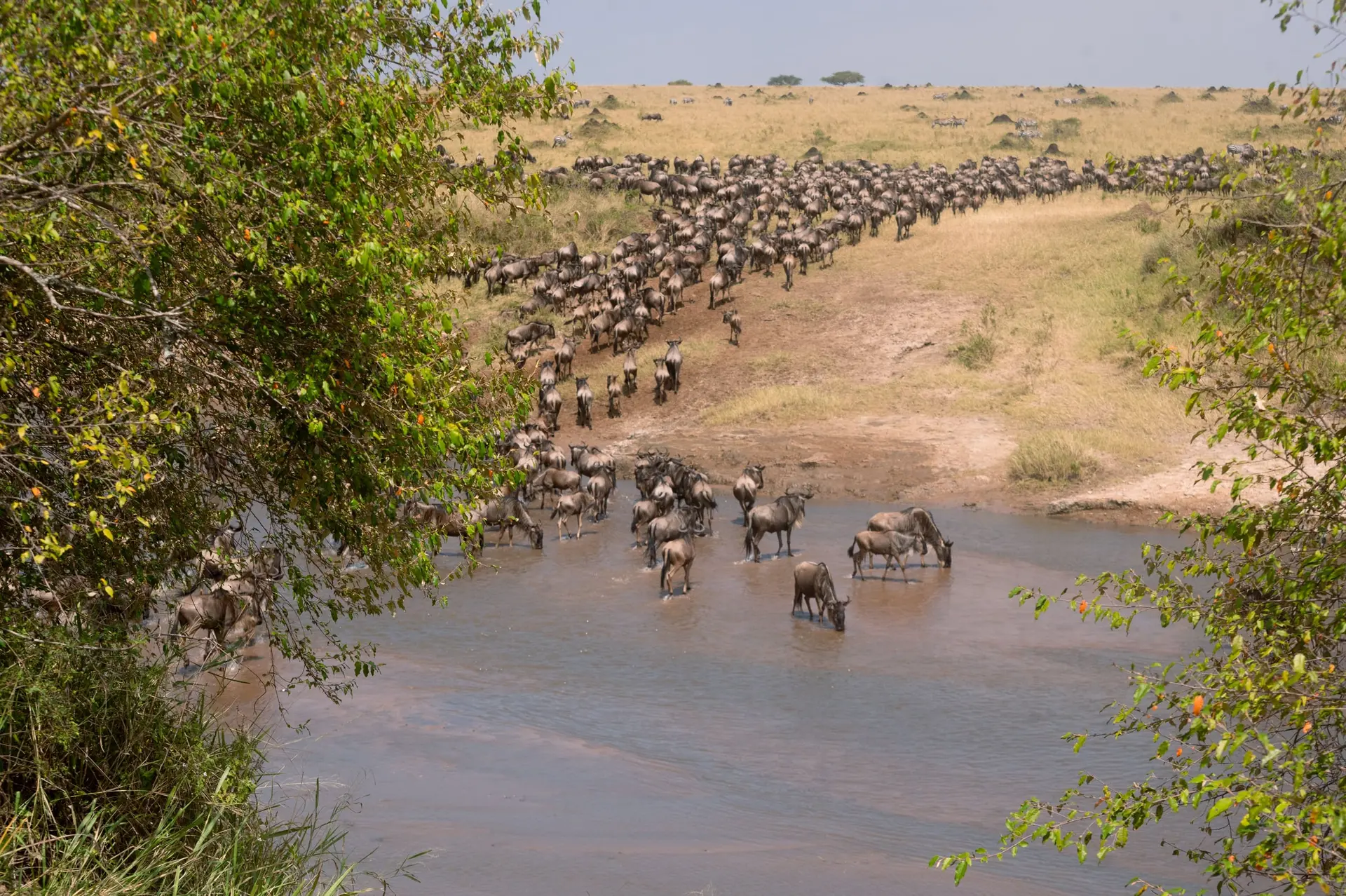
The Mara River crossings are the moments when wildebeest and zebra of the Great Migration plunge across the Mara River on the Kenya and Tanzania border, usually between July and October. On the Tanzanian side they happen in the northern Serengeti around Kogatende and the Lamai Wedge. Each crossing is unpredictable, so nobody can promise one on a given day.
- Crossing season
- July to October
- Where in Tanzania
- Kogatende and the Lamai Wedge, northern Serengeti
- Getting there
- Daily scheduled flights from Arusha to Kogatende, or two days by road
- Nights we suggest
- 3 at least, 4 to 5 if the crossings are your priority
What a Mara River crossing is, and why the herds cross
The Great Migration is a year-round circuit of wildebeest, with zebra and gazelle, through the Serengeti in Tanzania and the Maasai Mara in Kenya. The herds follow the rain and the new grass it brings, and by the middle of the dry season the best grazing left is in the far north of the ecosystem. The Mara River runs straight across that area. NASA describes it as the only river that flows all year through the Serengeti, and the main obstacle between the herds and the short grass of the Maasai Mara.
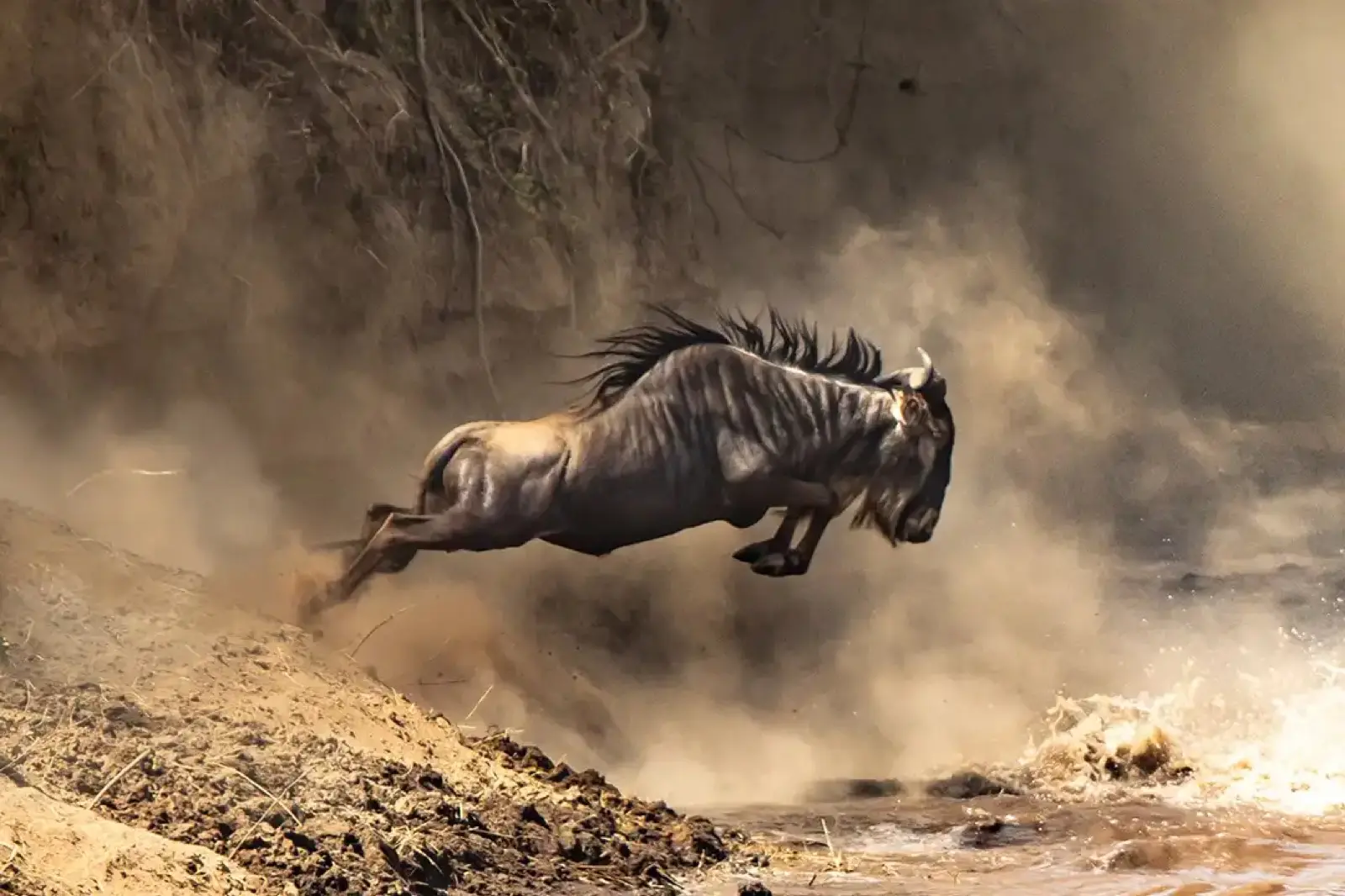
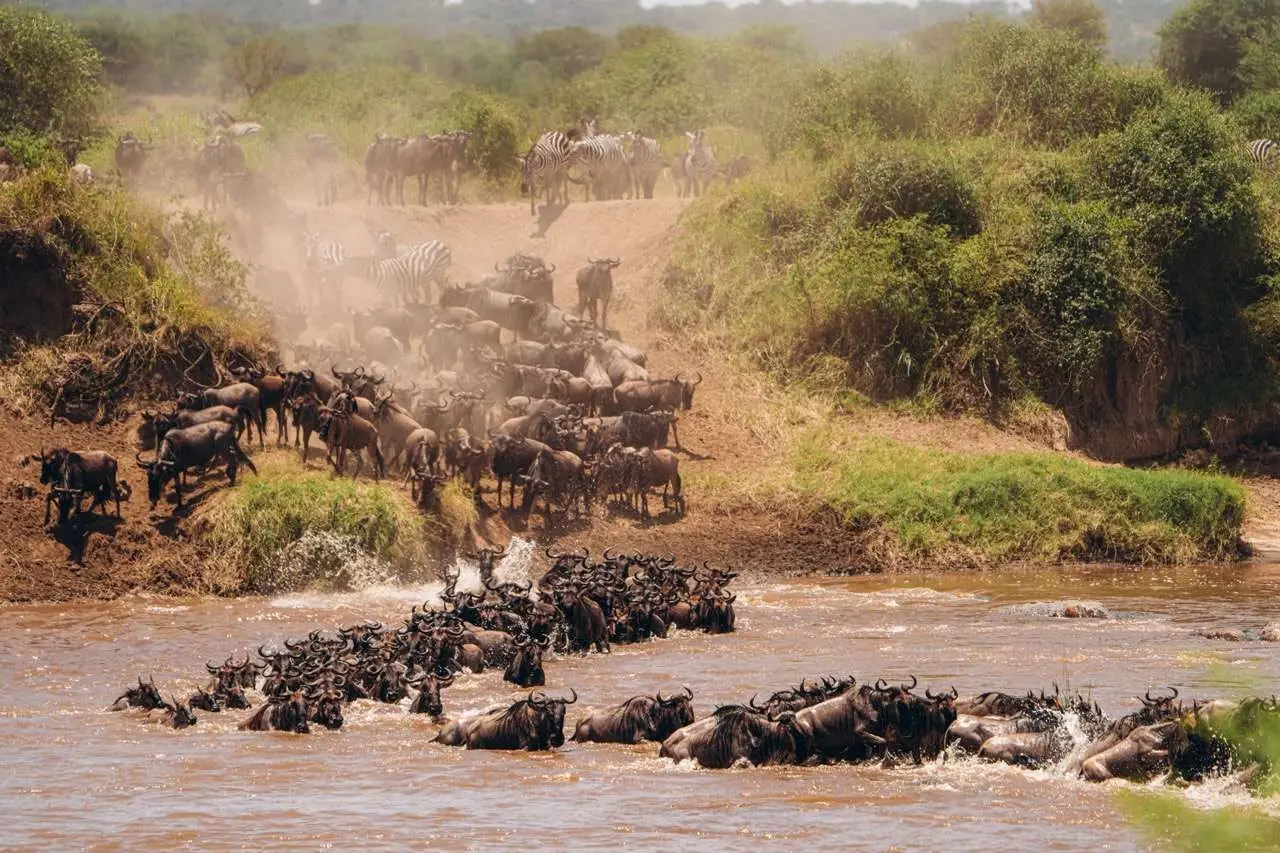
A crossing usually begins with thousands of animals gathering on the bank. They move down to the water and pull back, sometimes many times over several hours, until a few animals go in and the rest follow them down the bank and into the water. On other days the herds turn away from the water and nothing happens. Because the river runs through the Maasai Mara and then through the north of the Serengeti, the herds can cross it more than once in a season and in both directions as they move between grazing areas.
The crossings are part of the same migration as the calving at Ndutu earlier in the year. For the herds month by month, see the Great Migration month by month.
When do the Mara River crossings happen?
The crossing season runs from about July to October. The timing follows the rain, so it changes every year. NASA notes, for example, that in 2019 the herds crossed the Mara earlier than usual because the dry season came early. Most travellers aim for August and September, when the herds are usually spread along the river.
Nobody can guarantee a crossing on a particular day, and we never promise one. We recommend at least three nights in the northern Serengeti, which gives your guide several sessions at the river, and four to five nights if the crossings are the main reason for your trip.
| Month | At the river | Rain at Kogatende | Day / night |
|---|---|---|---|
| July | The first herds reach the northern Serengeti, early in the month in some years and in the middle of the month in others. The first crossings are irregular, and in years when the herds arrive late, they come towards the end of the month. | 33 mm, 8 days | 25°C / 12°C |
| August | The herds are usually spread along the river on both sides of the border, and crossings can happen at any time of day. August is the most popular month and the first to book out at the camps. | 55 mm, 10 days | 26°C / 13°C |
| September | The herds are usually still along the river and can cross in both directions. The school holidays in Europe and North America are over, and the camps are a little easier to book than in August. | 81 mm, 10 days | 27°C / 13°C |
| October | The rains begin to return across the Serengeti ecosystem and the herds turn south. Crossings still happen, but they become less frequent as the month goes on. | 94 mm, 12 days | 28°C / 14°C |
Rain and temperatures are long-term averages for the Kogatende area (CRU climatology, University of East Anglia). For every month of the year, see our July, August, September and October guides.
Where is the Mara River?
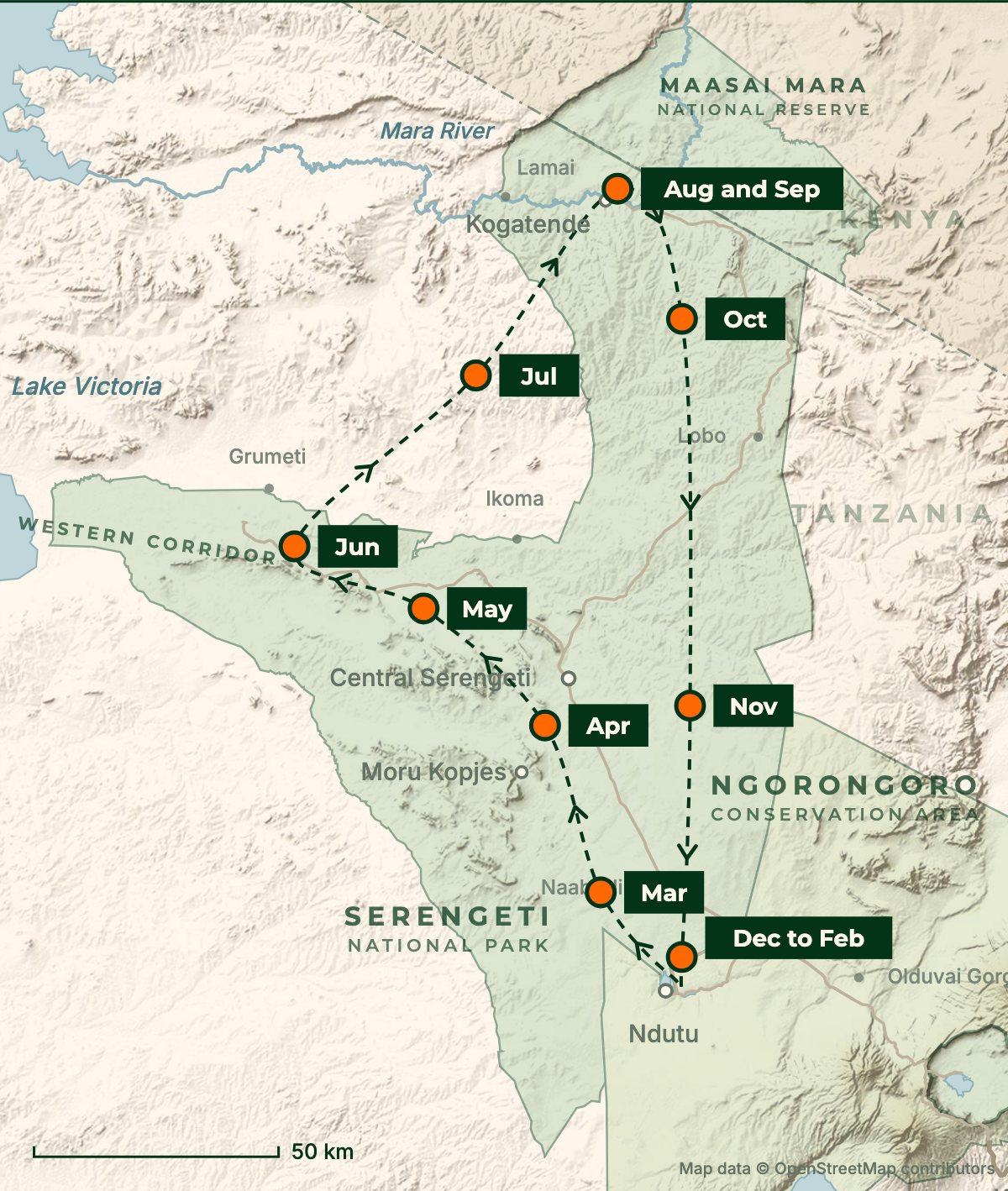
The Mara River rises on the Mau Escarpment in Kenya and flows south through the Maasai Mara National Reserve. It crosses the border into the northern Serengeti, runs west through the park and continues to Lake Victoria in Tanzania's Mara Region, a course of about 395 km. Roughly two thirds of its basin lies in Kenya and one third in Tanzania.
Where to watch on the Tanzanian side
In Tanzania the crossings take place in the northern Serengeti, where the river runs through the park. Kogatende, on the south bank, has the Tanzania National Parks ranger post, an airstrip and most of the camps, and the crossing sites along this stretch are known by numbers. The Lamai Wedge is the strip of park between the north bank and the Kenyan border, with its own airstrip and a small number of camps. Both areas are inside Serengeti National Park, so the park's fees and rules apply on both banks.
Our northern Serengeti guide covers Kogatende, Lamai, the airstrips and the camps in more detail.
Tanzania side or the Maasai Mara?
The river forms part of both parks, and the same herds cross it on both sides of the border, so the crossings can be seen from Tanzania or from Kenya. For a Tanzania safari we recommend the northern Serengeti, because the herds spend most of the year in Tanzania and a trip can combine the crossings with the central Serengeti and the Ngorongoro Crater.
Crowding at the busiest crossing points happens on both sides of the border. In July 2025 visitors left their vehicles at crossing site 4 at Kogatende, and TANAPA identified the vehicles involved and announced disciplinary action against the guides. In August 2025 Kenya's tourism ministry called for more rangers at the Maasai Mara crossing points after visitors were filmed out of their vehicles near a herd. On both sides, guests stay in the vehicle at the river.
There is no border post inside the parks, so travellers who combine both countries fly. Auric Air's 2027-2028 timetable also lists a daily connection between the Maasai Mara and Kogatende or Lamai through the Migori airstrip in Kenya and the Tarime airstrip in Tanzania, with a road transfer across the border at Isebania for immigration.
| Northern Serengeti, Tanzania | Maasai Mara, Kenya | |
|---|---|---|
| Protected area | Serengeti National Park, 14,763 km² | Maasai Mara National Reserve, 1,530 km² |
| Managed by | Tanzania National Parks (TANAPA) | Narok County Government, with the Mara Triangle run by the Mara Conservancy |
| Herds usually there | July to October in the north, and most of the rest of the year elsewhere in the park | August to October |
| Entry, non-resident adult | $82.60 per 24-hour permit, plus $70.80 per night for your camp from July to September | $200 per 12-hour ticket, 1 July to 31 December |
| Permit or ticket | Runs for 24 hours from the time you enter | The 12-hour rule: valid from 6:00 am to 6:00 pm on the day, whatever time you enter, and it does not carry over to the next day |
Kenyan fees are set by Narok County and change from time to time. For the two parks compared in full, see Serengeti vs Maasai Mara.
Crocodiles, drownings and the river of death
Large Nile crocodiles live along the Mara and wait at the crossing points in the migration season, and Singita, whose camp is on the north bank in the Lamai Wedge, describes "enormous populations of crocodile and hippo" in the river. As NASA notes, the crossing is dangerous because of the drowning risk as well as the crocodiles. A study by researchers from Yale and the Cary Institute, published in PNAS in 2017, recorded 23 mass drownings on the Kenyan reach of the river between 2011 and 2015 and estimated that about 6,250 wildebeest drown in the Mara each year, around 1,100 tonnes of carcasses. Historical records showed drownings in at least 13 of the 15 years from 2001 to 2015.
The same study found that crocodiles eat only about 2 percent of the drowned animals. The rest feeds the fish and breaks down in the river, and the bones can remain for seven years or more. The drownings and the crocodiles are the reason the Mara is sometimes called the river of death. The worst years follow heavy rain, and NASA reports that in 2007 about 15,000 wildebeest drowned because of high water.
How deep is the Mara River?
The depth changes with the rain. In the dry months some crossing points are shallow enough for the herds to wade, while after heavy rain the river can swell to around twice its normal size, and the crossings become faster and more dangerous.
Watching a crossing
Crossings are watched from the vehicle. At the Kogatende crossing points, Tanzania National Parks rules do not allow guests to leave the vehicle, and rangers from the Kogatende post enforce this. Vehicles or people too close to the bank can stop a herd from crossing or from climbing out of the water, so guides keep back from the edge while the herd decides.
Much of the day can be spent waiting. Your guide follows the herds with reports from other guides and moves between crossing points, so full days at the river often include a picnic lunch. If the herd does not cross, the northern Serengeti still has its resident lions, elephants and other wildlife to fill the day.
How to get to the Mara River in Tanzania
Kogatende is at the far northern end of the Serengeti, and by road it takes two days from Arusha with a night in the central Serengeti. This is the one leg of a northern circuit where we usually recommend flying, because a morning flight from Arusha reaches Kogatende before lunch and saves a full travel day each way. Scheduled flights run every day.
| Route | Airline | Daily departures |
|---|---|---|
| Arusha (ARK) to Kogatende | Auric Air, Miracle Air | Auric Air 08:00 and 09:35; Miracle Air 08:08 and 09:39 |
| Arusha (ARK) to Lamai | Auric Air | 07:30 and 10:00 |
| Kilimanjaro (JRO) to Kogatende | Auric Air | 10:25 |
| Seronera (central Serengeti) to Kogatende | Auric Air | 09:15 and 12:05 |
| Zanzibar to Kogatende or Lamai | Auric Air | 08:00 |
| Kogatende to Arusha (ARK) | Auric Air | 10:45 and 14:10 |
| Kogatende to Kilimanjaro (JRO) | Auric Air | 10:20 and 14:10 |
| Kogatende to Seronera | Auric Air | 10:20 and 14:10 |
| Kogatende to Zanzibar | Auric Air | 09:25 and 10:20 |
Departure times from the airlines' 2027 timetables, last checked 26 November 2026. Bush flights often stop at other airstrips on the way, and the airline confirms the exact times when the seats are booked.
By road
Times are our best estimates and grow in the wet. See all routes on our drive times page and when flying is worth it on drive or fly.
Where to stay for the crossings
Stay in the north, close to the river. A camp at Kogatende or in the Lamai Wedge puts you at the crossing points at first light, while the central Serengeti is too far away for a day visit. Many of the northern camps are seasonal and open only for the crossing months, and August books out first.
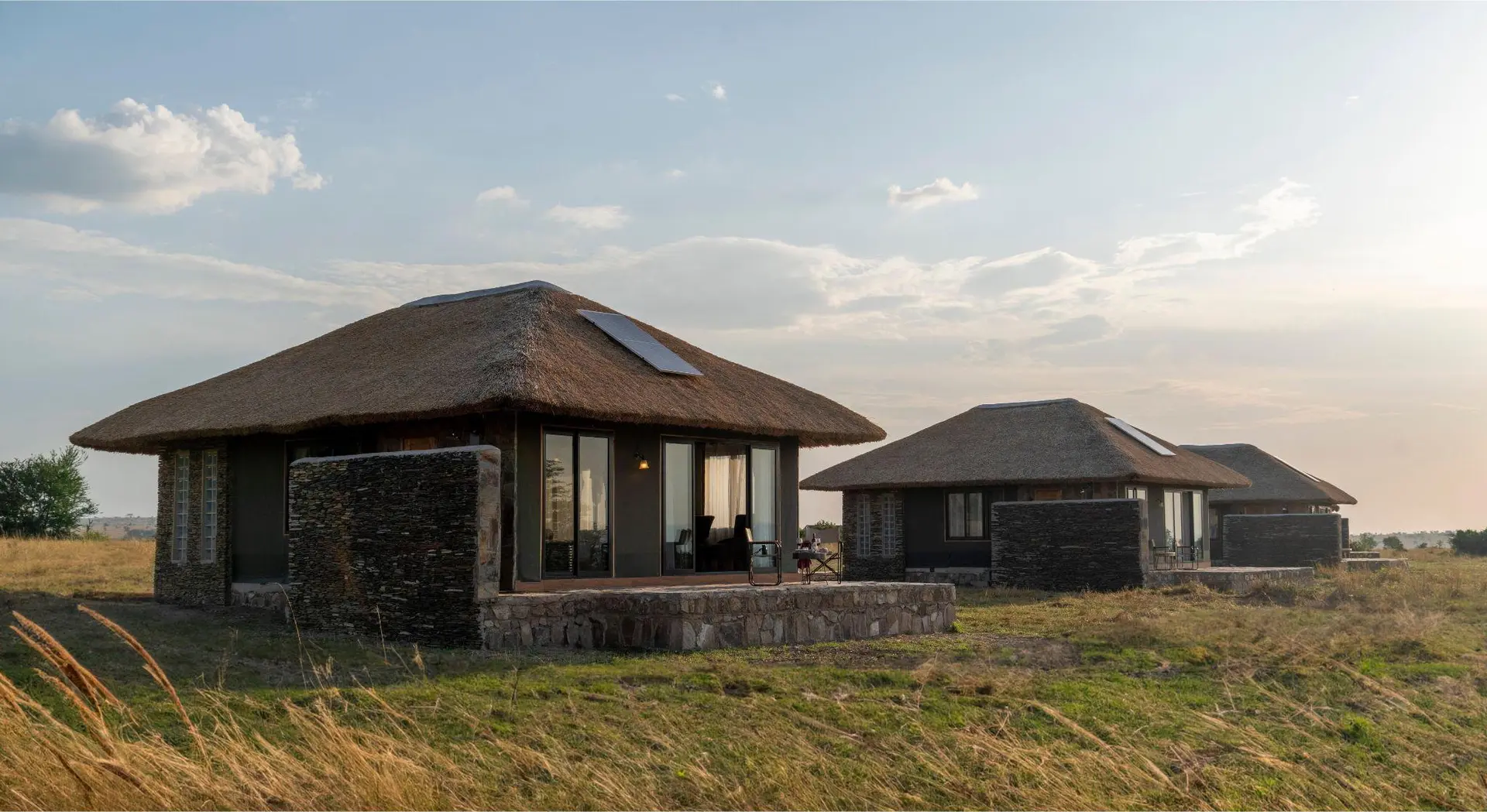
Serengeti Mara River Camp
Nineteen suites at Kogatende in the northern Serengeti, about 10 minutes from the Mara River and 20 minutes from the airstrip.
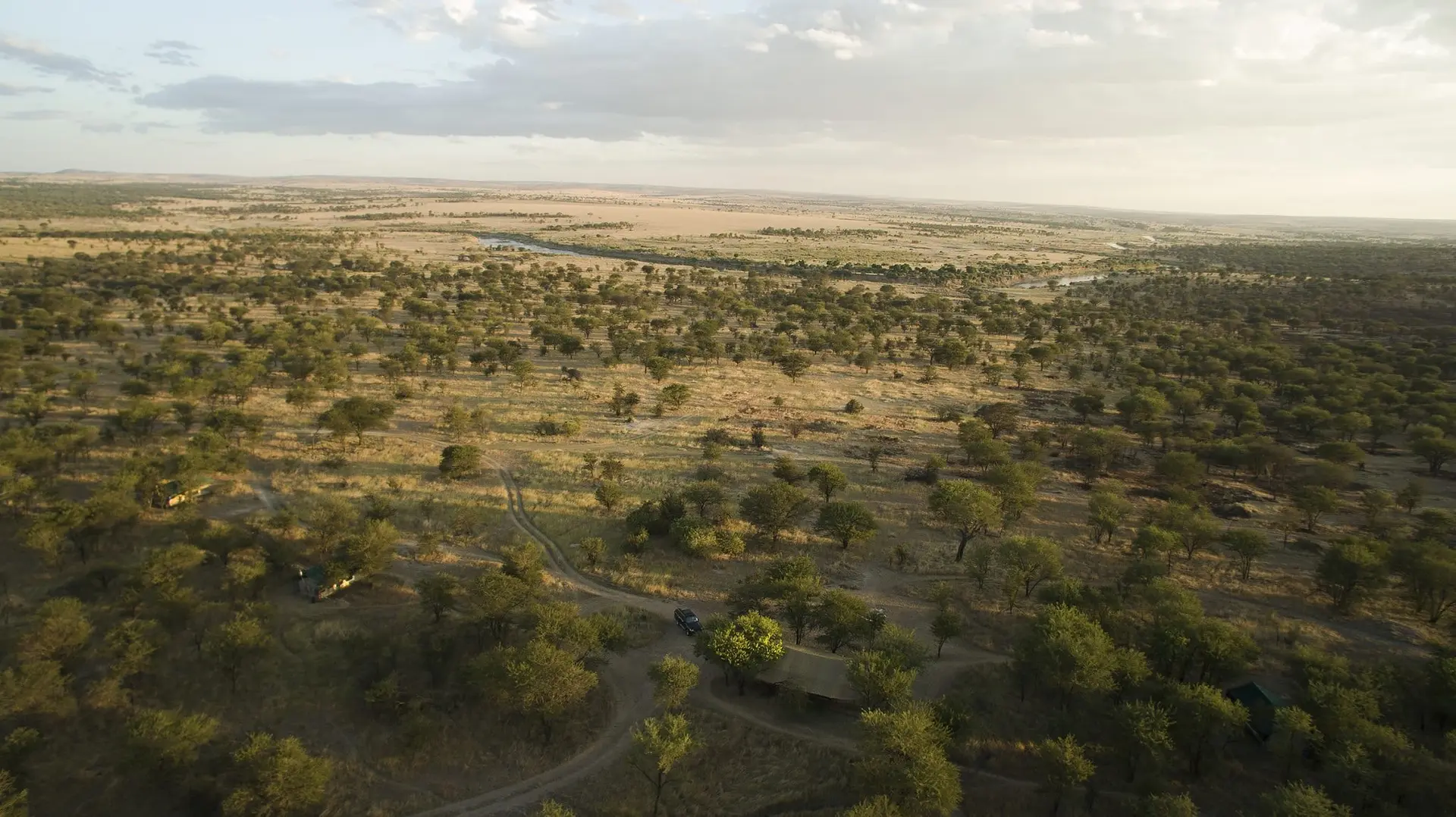
Serian's Serengeti Lamai
Eight tents and two family suites in the Lamai Wedge, above Crossing Point 4 on the Mara River. Every booking has its own vehicle, guide and spotter.
Gnus Lair
A seasonal camp of eight raised tented suites in the Kogatende area, about 10 minutes from the Mara River. Part of the Lairs collection.
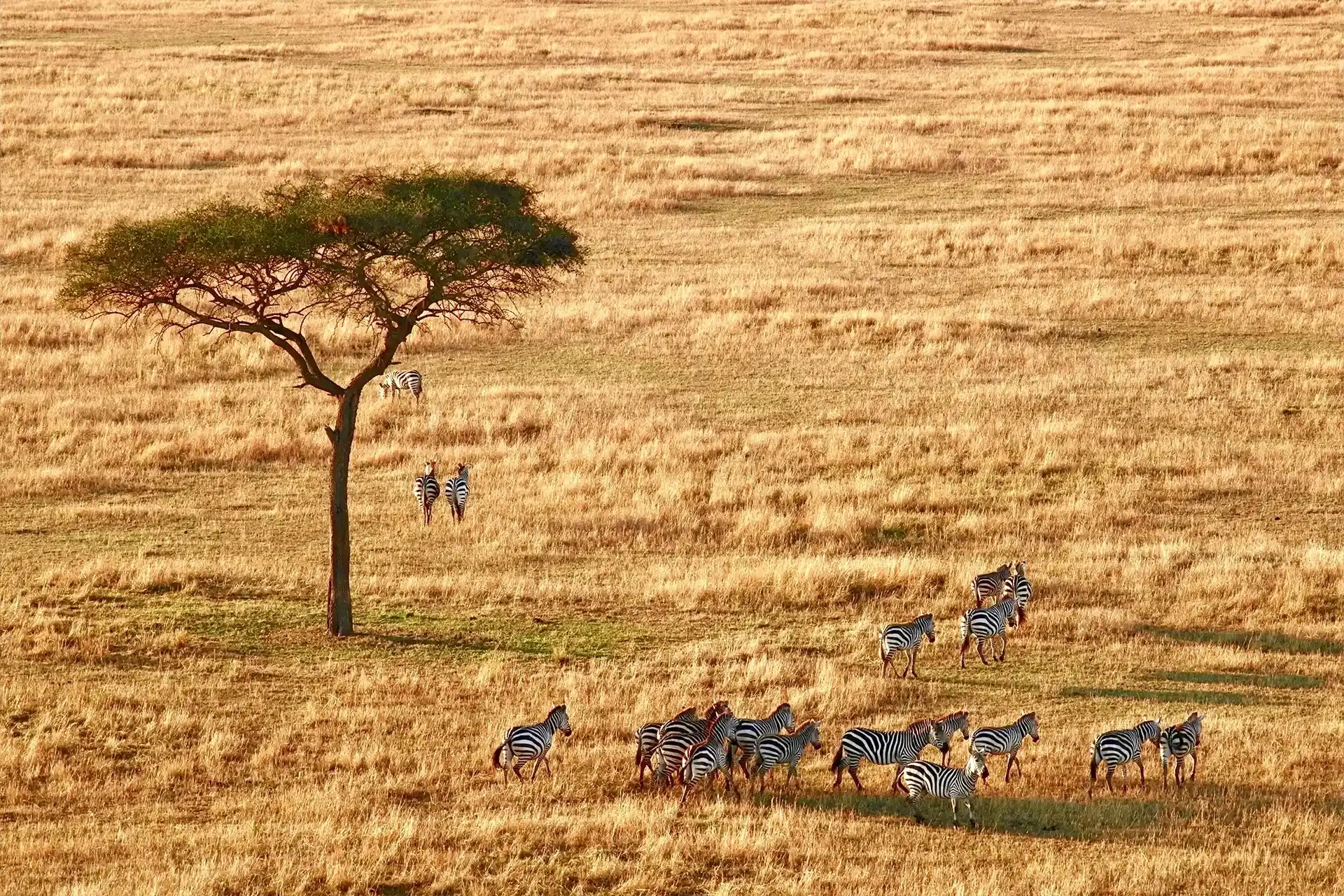
Siringit Migration Camp
A mobile luxury camp that spends the calving months at Ndutu and the dry season at Kogatende, near the Mara River.
We also book Lemala Kuria Hills, Imara Kogatende, Nimali Mara, Mara Mara Tented Lodge, Gnu Mara River Camp, Nyikani Migration Camp Kogatende, Mara Bush Camp and the mobile migration camps that move north for the season. Every camp is listed in our lodge directory. We can book any of them on its own, or as part of a private safari.
What a Mara River crossing safari costs
Our Great Migration Safari in Tanzania: Northern Serengeti spends four nights at Kogatende and returns through the central Serengeti and the Ngorongoro Crater. Prices are per person in US dollars, with a private vehicle and guide, full board and park fees included, and they fall as more guests share the vehicle.
| 10 Days (Migration season (July–October)) | 2 guests | 4 guests | 6 guests |
|---|---|---|---|
| Comfort | $6,020 | $5,015 | $4,680 |
| Premium | $6,895 | $5,890 | $5,555 |
| Luxury | $10,065 | $9,020 | $8,670 |
Per person sharing, international flights excluded. The full day-by-day route is on the Great Migration Safari page, and a fly-in version can be quoted on request.
Park fees in the northern Serengeti
| Serengeti National Park, non-resident | Adult | Child |
|---|---|---|
| Entry, per 24-hour permit | $82.60 | $23.60 |
| Camp or lodge fee per night, July to September | $70.80 | $11.80 |
| Camp or lodge fee per night, October | $59.00 | $11.80 |
Figures include 18% VAT and are already in our prices. Every park is on our Tanzania park fees page. If you are flexible on what you see, the calving season at Ndutu is the other great moment of the migration, and our calving safari starts from $2,640 per person.
Mara River crossing questions
Why do animals cross the Mara River?
They cross to reach fresh grazing. The wildebeest and zebra follow the rain and the new grass it produces, and in the dry season the best remaining grass lies across the river in the northern Serengeti and Kenya's Maasai Mara. NASA describes the Mara as the only river that flows all year through the Serengeti, and the main obstacle between the herds and that grass. Because the river winds through the north of the ecosystem, the herds can cross it more than once and in both directions as they move between grazing areas.
What month is the Great Migration in the Maasai Mara?
Usually from August to October. National Geographic places the herds on the grasslands of Kenya's Maasai Mara by August, grazing there until the rains return across the Serengeti ecosystem in October, when they turn south. On the Tanzanian side the first herds reach the northern Serengeti in July, early in the month in some years and in the middle of the month in others, so the crossing season on both sides runs from about July to October.
Is Kenya or Tanzania better for the Great Migration?
For a whole safari, we recommend Tanzania. The herds spend most of the year inside Serengeti National Park, which at 14,763 km² is far larger than the 1,530 km² Maasai Mara National Reserve, and a Tanzania trip can combine the crossings in the north with the central Serengeti and the Ngorongoro Crater. The same river runs through both countries, so the crossings themselves can be seen from either side. Kenya's reserve charges $200 per adult per 12-hour ticket from July to December, while Serengeti National Park charges $82.60 per adult per 24-hour permit plus a nightly fee for your camp.
What is the 12-hour rule in the Maasai Mara?
It is the way the Maasai Mara National Reserve in Kenya sells its entry tickets. Each ticket is valid from 6:00 am to 6:00 pm on the day, whatever time you enter, and it does not carry over to the next day, so a visitor who enters at midday pays the same as one who enters at dawn. In the second half of the year the non-resident adult ticket costs $200. The rule applies only on the Kenyan side. On the Tanzanian side, Serengeti National Park permits run for 24 hours from the time you enter.
How much does it cost to see the Great Migration river crossings?
Our 10-day Great Migration Safari, with four nights at Kogatende, starts from $4,680 per person in the Comfort tier with six guests sharing, and costs more for two people or for the Premium and Luxury tiers; the table on this page shows every price. A crossing safari costs more than our standard circuit because the northern camps are in their high season, the Serengeti's overnight fee is at its peak from July to September, the north is a long way from Arusha, and the nights at Kogatende carry a remote-area vehicle surcharge. Our calving season safari at Ndutu starts from $2,640 per person on the same basis.
Where is the Mara River?
The Mara River rises on the Mau Escarpment in Kenya, flows south through the Maasai Mara National Reserve, crosses the border into the northern Serengeti in Tanzania and then turns west to Lake Victoria in Tanzania's Mara Region. It is about 395 km long, and roughly two thirds of its basin is in Kenya. The crossings on the Tanzanian side take place where the river runs through the north of Serengeti National Park, around Kogatende and the Lamai Wedge.
How deep is the Mara River?
There is no single figure, because the depth changes with the rain. In the dry months the river is low enough at some crossing points for wildebeest to wade across, while after heavy rain it can swell to around twice its normal size and become fast and deep. The most dangerous crossings happen when the water is high, and NASA reports that in 2007 about 15,000 wildebeest drowned in the Mara because of high water after heavy rain.
Is the Mara River dangerous?
For the animals, yes. A study published in PNAS found that about 6,250 wildebeest drown in the Mara each year on average, with mass drownings in at least 13 of the 15 years from 2001 to 2015, and Nile crocodiles wait at the crossing points. For visitors the crossings are watched from the vehicle. Tanzania National Parks rules do not allow guests to get out at the Kogatende crossing points, and rangers enforce this.
Why is the Mara River called the river of death?
Because of the drownings and the crocodiles. The study in PNAS recorded 23 mass drownings between 2011 and 2015 and estimated about 6,250 drowned wildebeest a year, about 1,100 tonnes of carcasses. Nile crocodiles wait at the crossing points, although the same study found that they eat only about 2 percent of the drowned carcasses, and most of the rest feeds the fish and breaks down in the river.
Are there crocodiles in the Mara River?
Yes. Large Nile crocodiles live along the Mara and wait at the crossing points in the migration season. They are only one of the dangers, as drowning is a serious risk for the herds, especially when the river is high.
Can a Mara River crossing be guaranteed?
No. The herds can gather on the bank, move down to the water and turn back again, sometimes for days, and the timing changes every year with the rain. Nobody can guarantee a crossing on a given day, and we never promise one. We recommend at least three nights in the northern Serengeti, which gives your guide several sessions at the river, and more if the crossings are the main reason for your trip.
Sources and Maintenance
Where these figures come from
The crossings follow the rain, so the weeks move each year. Park fees, Kenyan ticket rules and flight times can change, and we recheck them before each season.
- NASA Earth Observatory, 'Circling the Serengeti' (the Mara as the only perennial river through the park, July to October season, 2019 early crossings, about 15,000 drowned in 2007) (published 9 September 2019)
- National Geographic, wildebeest and the Great Migration (herds in the Maasai Mara by August until the rains return in October) (published 28 April 2026)
- Subalusky, Dutton, Rosi and Post, 'Annual mass drownings of the Serengeti wildebeest migration influence nutrient cycling and storage in the Mara River', PNAS 114 (29), 2017: 23 mass drownings in 2011-2015, 6,250 ± 3,000 carcasses a year, about 1,100 tonnes of biomass, drownings in at least 13 of 15 years 2001-2015, Nile crocodiles eat about 2 percent of the carcasses (Cary Institute press release, 19 June 2017) (read 26 November 2026)
- Wikipedia, 'Mara River' (infobox length 395 km from waterway map data; basin about 65 percent in Kenya and 35 percent in Tanzania, citing the WWF Mara River Basin biodiversity action plan, 2008) (read 26 November 2026)
- ATTA, 'TANAPA responds swiftly to safety breach at Kogatende crossing point' (guests must stay in vehicles, crossing site 4, disciplinary measures) (published 22 July 2025)
- Singita, Lamai region page ('enormous populations of crocodile and hippo in the Mara River') (read 26 November 2026)
- Mara Triangle (Mara Conservancy), conservation fees page: 'The 12-hour park entry ticket is applicable from 6:00 am to 6:00 pm, notwithstanding the time of entry into the park. The ticket will not carry overnight for the 12-hour period.' (read 26 November 2026)
- Kenyans.co.ke, 'Foreign Tourists Begin Paying Ksh26,500 to Access Maasai Mara', 24 July 2024, reporting Narok County Government (USD 100 per non-resident adult per day 1 January to 30 June, USD 200 from 1 July, 12-hour ticket validity); same seasons on masaimara.com FAQ, read 26 Nov 2026 (read 26 November 2026)
- Flight departures: Auric Air 2027-2028 timetable (valid 1 January 2027 to 31 December 2028) and Miracle Air 2027 timetable (valid 1 January to 31 December 2027) (checked 26 November 2026)
- Serengeti National Park fees, from our park fees page (see /tanzania-park-fees)
- Kogatende climate: CRU CL v2.0, Climatic Research Unit, University of East Anglia
- Drive times: Saleh Safaris route notes (estimates, conditions vary)
Plan a river crossing safari
We run private crossing-season safaris from Arusha, with our own vehicle and guide. Send us your dates and we will suggest the camps and the route.