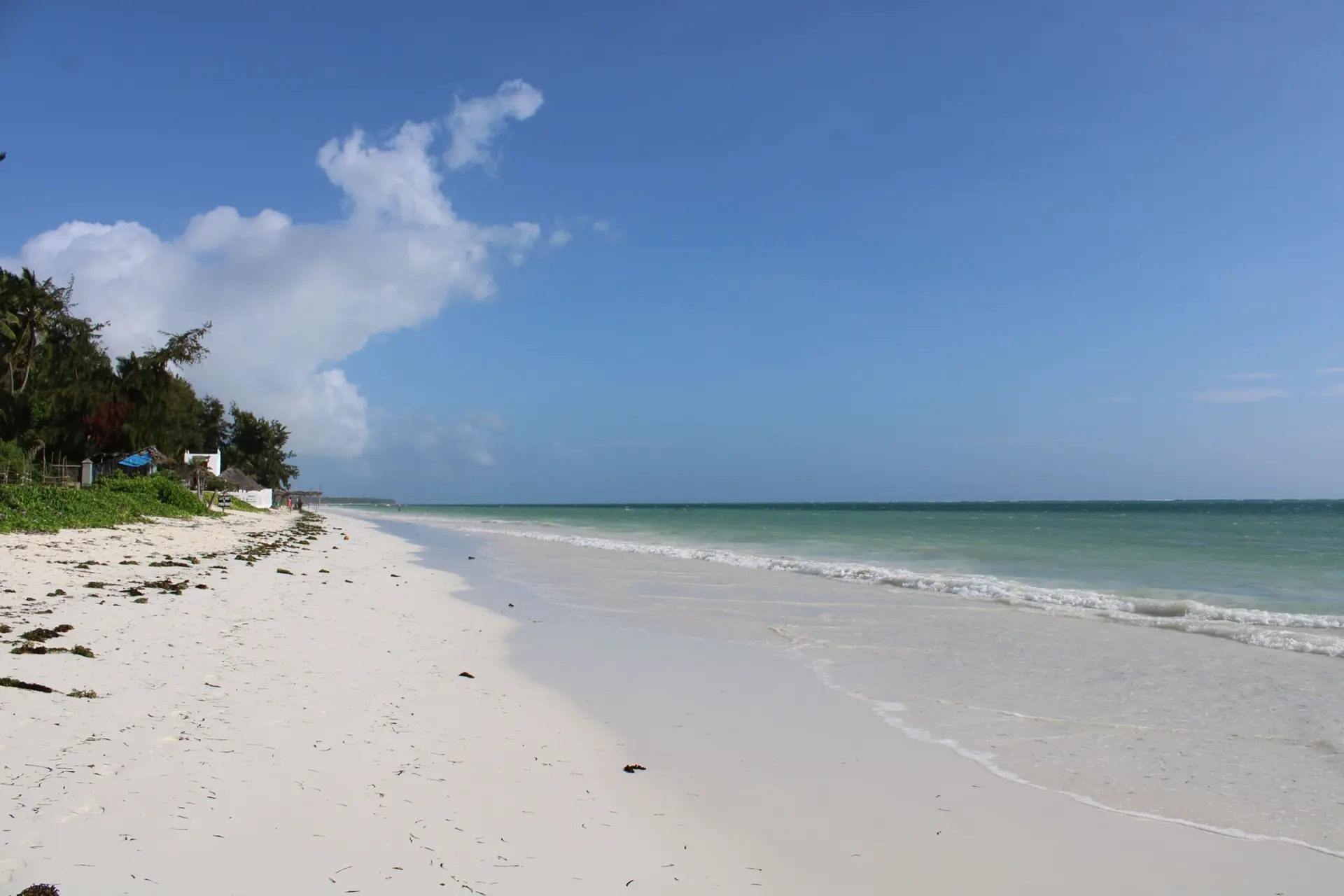
The best time to visit Zanzibar
Zanzibar is warm all year, and the question for most travellers is when the rain falls and how the tide behaves on the coast they choose. This page gives the official weather averages for every month, explains the two monsoon seasons and the tides, and shows how the beach fits at the end of a Tanzania safari.
When to go to Zanzibar
The best months for a beach stay on Zanzibar are June to October, and January and February. June to September is the long dry season, with warm days and the coolest nights of the year, and January and February are hot and mostly dry. The long rains fall from March to May, with April the wettest month, and the short rains arrive in November and continue into December.
Most guests who ask us about Zanzibar want a few nights on the beach after a safari on the northern circuit, so we plan the beach around the safari dates. The two dry seasons line up well, as June to October is also the dry season in the parks, and January and February are the months of the calving season at Ndutu. If you travel in the green season of April and May, safari lodges are at their lowest rates of the year, and Zanzibar is still warm, although you should expect rain on most days in April.
The month you travel also affects which coast we recommend. On the east coast the sea goes out a long way at low tide, while the north-west coast around Kendwa keeps its water close to the beach, and the monsoon winds reach the coasts in different seasons. Both are explained further down this page.
Zanzibar weather by month
The figures below are the World Meteorological Organization's official climate averages for 1991 to 2020, recorded at the Zanzibar weather station at Kisauni, which is the island's airport. Temperatures are the average daily high and low, rainfall is the average monthly total, and rain days are days with at least 1 mm of rain. The right-hand column shows what is happening on safari on the mainland in the same month.
| Month | Average high | Average low | Rainfall | Rain days | On safari |
|---|---|---|---|---|---|
| January | 32.6°C / 91°F | 24.5°C / 76°F | 74 mm | 6 | Early calving season at Ndutu |
| February | 33.2°C / 92°F | 24.3°C / 76°F | 51 mm | 4 | Peak calving season at Ndutu |
| March | 32.5°C / 91°F | 24.5°C / 76°F | 177 mm | 11 | Calving tails off, rains begin late in the month |
| April | 30.6°C / 87°F | 24.5°C / 76°F | 409 mm | 18 | Long rains, lowest safari rates of the year |
| May | 29.7°C / 85°F | 23.8°C / 75°F | 298 mm | 14 | End of the long rains, herds moving west |
| June | 29.3°C / 85°F | 22.9°C / 73°F | 52 mm | 5 | Dry season begins, Western Corridor |
| July | 29.0°C / 84°F | 22.1°C / 72°F | 31 mm | 4 | Herds moving north towards the Mara River |
| August | 29.4°C / 85°F | 21.1°C / 70°F | 38 mm | 6 | Mara River crossing season |
| September | 30.4°C / 87°F | 21.0°C / 70°F | 37 mm | 5 | Mara River crossing season |
| October | 31.2°C / 88°F | 22.0°C / 72°F | 116 mm | 7 | Late dry season, crowds easing |
| November | 31.0°C / 88°F | 23.1°C / 74°F | 201 mm | 14 | Short rains, herds heading south |
| December | 31.8°C / 89°F | 24.0°C / 75°F | 168 mm | 12 | Herds back on the southern plains |
Source: WMO Climate Normals 1991-2020, station 63870 Zanzibar, published by NOAA's National Centers for Environmental Information. Averages describe a typical year, and any single month can be wetter or drier.
Zanzibar's seasons
June to October, the long dry season
This is the most popular time on Zanzibar and on safari. July is the driest and coolest month of the year, although the days are still warm enough for the beach. July and August are high season at the beach hotels, so we recommend confirming the Zanzibar part of the trip at the same time as the safari lodges.
November and December, the short rains
November has rain on about half its days and is the wetter of the two months. December is a little drier, and the weeks around Christmas and New Year are the peak of the year at the beach hotels, with minimum stays at some of them, so these dates need booking early.
January to March, hot and mostly dry
January and February are the hottest months, and February has the fewest rain days of the year. This is a very good time to combine Zanzibar with the calving season in the southern Serengeti and Ndutu. March is wetter, as the long rains usually begin late in the month.
April and May, the long rains
April is the wettest month on Zanzibar by a wide margin, and May is the second wettest. It stays warm, although heavy rain is likely. These months bring the lowest rates of the year in the safari lodges, and if your dates fall here we suggest a shorter beach stay at a hotel with a good pool and covered space.
Zanzibar weather in October
October is warm and mostly dry on Zanzibar, with average highs of around 31°C and rain on about seven days of the month. The average rainfall is higher than in September, but the figure is raised by a few very wet years. October 2019 had 530 mm, the wettest October in the 30-year record, while in three years out of five October had less than 97 mm.
The FCDO gives the short rainy season as October to mid-December, although on Zanzibar the heavier rain usually arrives in November, as the table above shows. On safari, October is the end of the dry season, the crowds ease after mid-month, and Tarangire is at its hottest. A safari in early October followed by Zanzibar in the middle of the month works well, and we recommend it to guests who want dry weather in both places with fewer people than in August.
The monsoon seasons on Zanzibar
The monsoon on Zanzibar is a wind season, and it should be read separately from the rain. A 2024 study of Zanzibar's coral reefs, published in Frontiers in Marine Science, describes the island's year as shaped by the northeast monsoon from October to March and the southeast monsoon from April to September. Within that, the authors identify four seasons, calm and hot from December to February, heavy rain from March to May, cool and windy from June to August, and the short rains from September to November.
The same study notes that the reefs off Nungwi and Mnemba in the north are exposed to strong winds during the northeast monsoon, while the reefs off Kizimkazi in the south take strong waves during the southeast monsoon, and the reefs off Stone Town are relatively sheltered. This mostly matters for boat trips and snorkelling, so it is worth keeping in mind when you choose excursions.
Canada's travel advice for Tanzania notes that the cyclone season runs from November to April and recommends keeping travel plans flexible during that period. Good travel insurance covers this kind of disruption, as our Tanzania travel insurance page explains.
Tides and which coast to choose
The tide makes a bigger difference to a beach holiday on Zanzibar than the weather does for much of the year. Along the east coast the reef lies well offshore, and at low tide the sea draws back across a wide, shallow lagoon, leaving sand and seagrass. Hotels on the north-west coast around Kendwa describe their beach as tideless, and the sea stays close to the shore through the day.
The biggest tides, known as spring tides, come twice a month around the full moon and the new moon, which is when the east coast lagoons empty furthest. Tide times move each day, so it is worth checking a tide table for your dates if you plan to stay on the east coast.
Low tide on the east coast is a pleasant part of the day in its own right, with walks across the lagoon and visits to the seaweed farms. If swimming at any hour matters more to you, we recommend Kendwa.
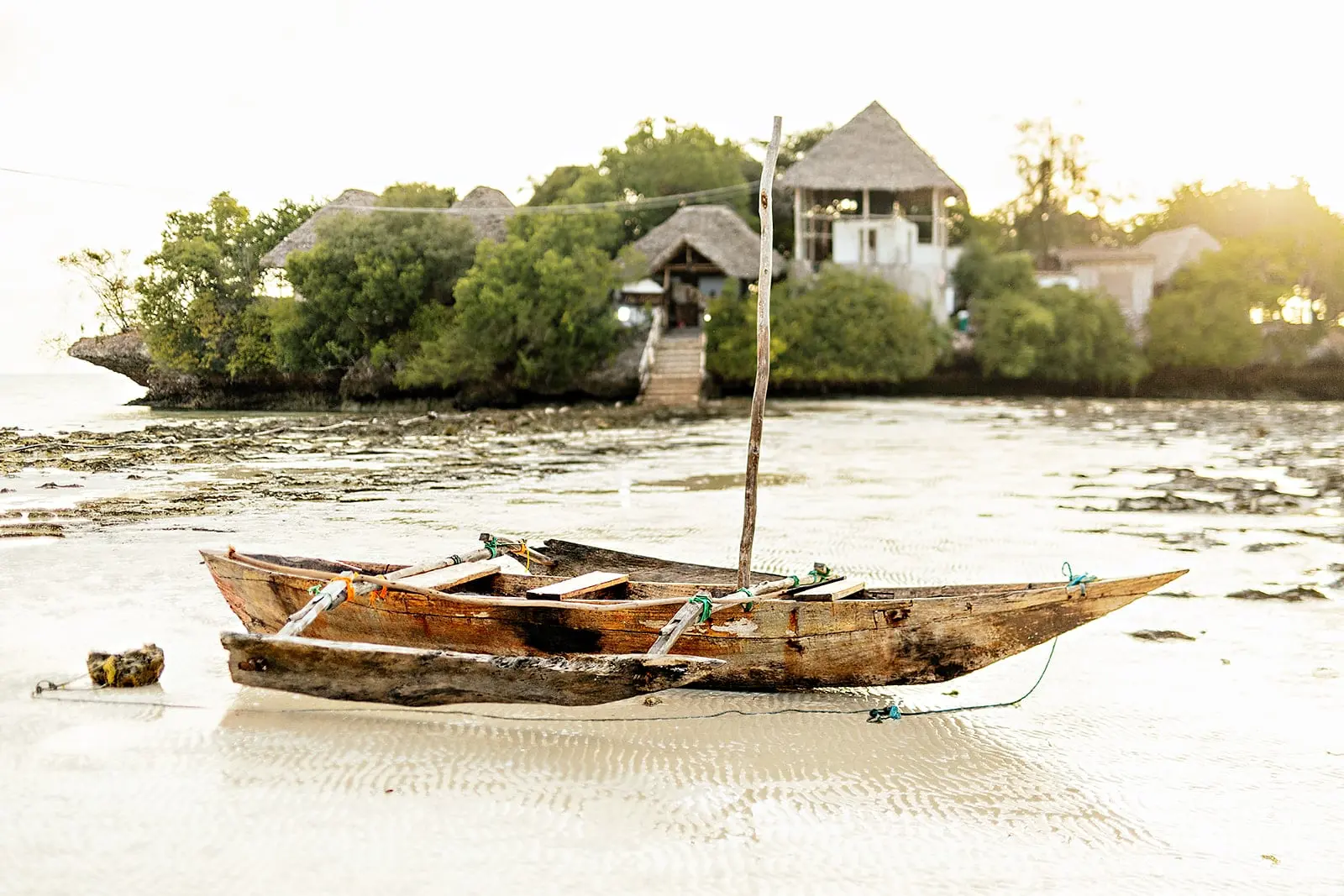
North-west: Kendwa
The sea stays close to the beach through the day.
Kendwa faces west across the channel, so the sun sets over the sea. Gold Zanzibar Beach House & Spa describes its stretch of Kendwa as a tideless beach on its own website, and this is the coast we suggest if swimming at any hour matters to you.
Hotels we book here: Gold Zanzibar Beach House & Spa
North: Nungwi
Varies from one stretch of the peninsula to the next.
Nungwi is at the northern tip of the island, just up the coast from Kendwa, and conditions differ from one hotel to the next. Turaco Nungwi Resort is on the beachfront, while Essque Zalu Zanzibar has a shoreline that is unsuitable for swimming and runs a free shuttle to Kendwa Beach for its guests.
Hotels we book here: Turaco Nungwi Resort, Sandies Nungwi Beach, Essque Zalu Zanzibar
East: Matemwe, Kiwengwa and Pongwe
The sea goes out across a wide lagoon at low tide.
The east coast has long beaches with the reef some distance offshore. At low tide you can walk out across the sand and seagrass, and the lagoon fills again at high tide. Iberostar Selection Zanzibar faces Mnemba Island, and The Island Pongwe Lodge sits on a coral islet that guests reach on foot at low tide and by small boat at high tide.
Hotels we book here: Iberostar Selection Zanzibar, Tembo Kiwengwa Resort, Diamonds Mapenzi, The Island Pongwe Lodge
South-east: Paje, Bwejuu and Jambiani
The widest tidal lagoon on the island.
A University of Dar es Salaam study of Jambiani describes the reef there as far from the beach, with a wide intertidal lagoon that is also used for seaweed farming. These villages suit travellers who enjoy long walks on the beach, and swimming is best planned around high tide.
Stone Town
A town stay, usually for one or two nights.
Stone Town is the old trading town on the west coast and a UNESCO World Heritage Site. Most guests spend a night or two here before or after the beach. Beyt Al Salaam Boutique Hotel on Kelele Square has its own swimming pool, and Tembo House Hotel is on the seafront in Shangani.
Hotels we book here: Beyt Al Salaam Boutique Hotel, Tembo House Hotel
Ramadan and local customs
A high proportion of Zanzibar's people are Muslim, and the holy month of Ramadan moves about eleven days earlier each year. Canada's travel advice says Ramadan is expected to begin on or around 7 February 2027. During the month, the UK's Foreign, Commonwealth and Development Office asks visitors to avoid eating or drinking in public outside hotels and restaurants.
As this advice applies to public places, a beach stay is little affected by Ramadan. Modest dress is expected away from the hotels at any time of year, particularly in Stone Town, and our Zanzibar safety page covers the dress code and local laws in more detail.
Zanzibar after a safari
Safari and Zanzibar is the trip we plan most often. The scheduled flight from Arusha to Zanzibar takes about 1 hour 10 minutes nonstop, or about 1.5 hours with a stop, so guests leave the Ngorongoro highlands in the morning and are on the beach by the afternoon. Our Zanzibar itineraries include three nights on the coast, and for families we recommend four or five.
For the safari side of the year, please see our guide to the best time to visit Tanzania.
Frequently asked questions about Zanzibar's weather
What are the best months to travel to Zanzibar?
June to September are the driest months on Zanzibar, with rain on about four to six days a month and average highs of around 29 to 30°C. January and February are also dry, and hotter, with average highs of about 33°C. April and May are the wettest months. These figures are the official 1991 to 2020 averages for the weather station at Zanzibar airport.
What is the weather like in Zanzibar in October?
October is warm and mostly dry, with an average high of about 31°C and rain on about seven days. The average rainfall of 116 mm is raised by a few very wet years, and in three years out of five October had less than 97 mm. The heavier short rains on Zanzibar usually arrive in November.
When is the monsoon season in Zanzibar?
Zanzibar has two monsoon wind seasons. The northeast monsoon blows from about October to March and the southeast monsoon from about April to September. The rain comes in two separate periods, the long rains from March to May and the short rains, which on Zanzibar are heaviest in November and December.
What is the rainiest month in Zanzibar?
April is the wettest month, with an average of about 409 mm of rain and rain on 17 or 18 days, and May is the second wettest. It stays warm throughout, with average highs of around 30°C.
Which Zanzibar beaches are best for swimming at low tide?
The north-west coast around Kendwa is the most reliable for swimming at any hour, and hotels there describe the beach as tideless. On the east and south-east coasts, from Matemwe down to Jambiani, the sea goes out across a wide lagoon at low tide, so swimming is best around high tide. The biggest tides come around the full moon and the new moon.
Is Zanzibar worth visiting in the rainy season?
April and May are the green season on safari, when lodge rates on the mainland are at their lowest, and Zanzibar still makes a warm end to the trip. You should expect rain on more than half the days in April. If your dates fall in these months, we recommend a hotel with a good pool and covered space, and a few nights rather than a long stay.
When is Ramadan in Zanzibar in 2027?
Canada's travel advice says Ramadan is expected to begin on or around 7 February 2027. A high proportion of Zanzibar's people are Muslim, and during Ramadan visitors are asked to be discreet about eating, drinking and smoking in public during daylight. The UK advice applies to public places outside hotels and restaurants.
Sources and Maintenance
Where these figures come from
The climate figures on this page are long-term official averages, and the travel advice and hotel details were checked on the date below. Weather in any one year can differ from the averages.
- WMO Climate Normals 1991-2020, station 63870 Zanzibar, NOAA National Centers for Environmental Information (rainfall, rain days and temperatures, checked 24 November 2026)
- Ussi et al., Status and long-term changes of coral reefs around Zanzibar, Frontiers in Marine Science (monsoon and season dates, published 30 May 2024)
- Lyimo, Mvungi and Mgaya, seagrass and macrofauna on the east coast of Zanzibar, Tanzania Journal of Science (description of the Jambiani reef and intertidal lagoon, 2008)
- What is a spring tide?, NOAA National Ocean Service (checked 24 November 2026)
- Gold Zanzibar Beach House & Spa official website (describes Kendwa as a tideless beach, checked 24 November 2026)
- Tanzania travel advice, Government of Canada (Ramadan 2027 date and cyclone season, last updated 30 October 2026, checked 24 November 2026)
- Tanzania travel advice, UK Foreign, Commonwealth and Development Office (Ramadan guidance, updated 30 October 2026, checked 24 November 2026)
- Hotel contracts and fact sheets on file for the Zanzibar hotels named on this page (operator observation, 2026 and 2027 seasons)
Planning a safari and Zanzibar?
Send us your travel dates and we will suggest the coast and hotel that suit the month, with the safari and the beach in one quote.