Tanzania in November: Safari and Weather Guide
November is the first month of the short rains in northern Tanzania. The rain usually comes as showers spread over many days rather than long wet spells, the plains turn green during the month, and the migration herds leave the north and move south through the Serengeti towards Ndutu. Most safari lodges move to a lower season on 1 November, so the month costs less than July to October, and the parks are quieter.
Tanzania in November at a Glance
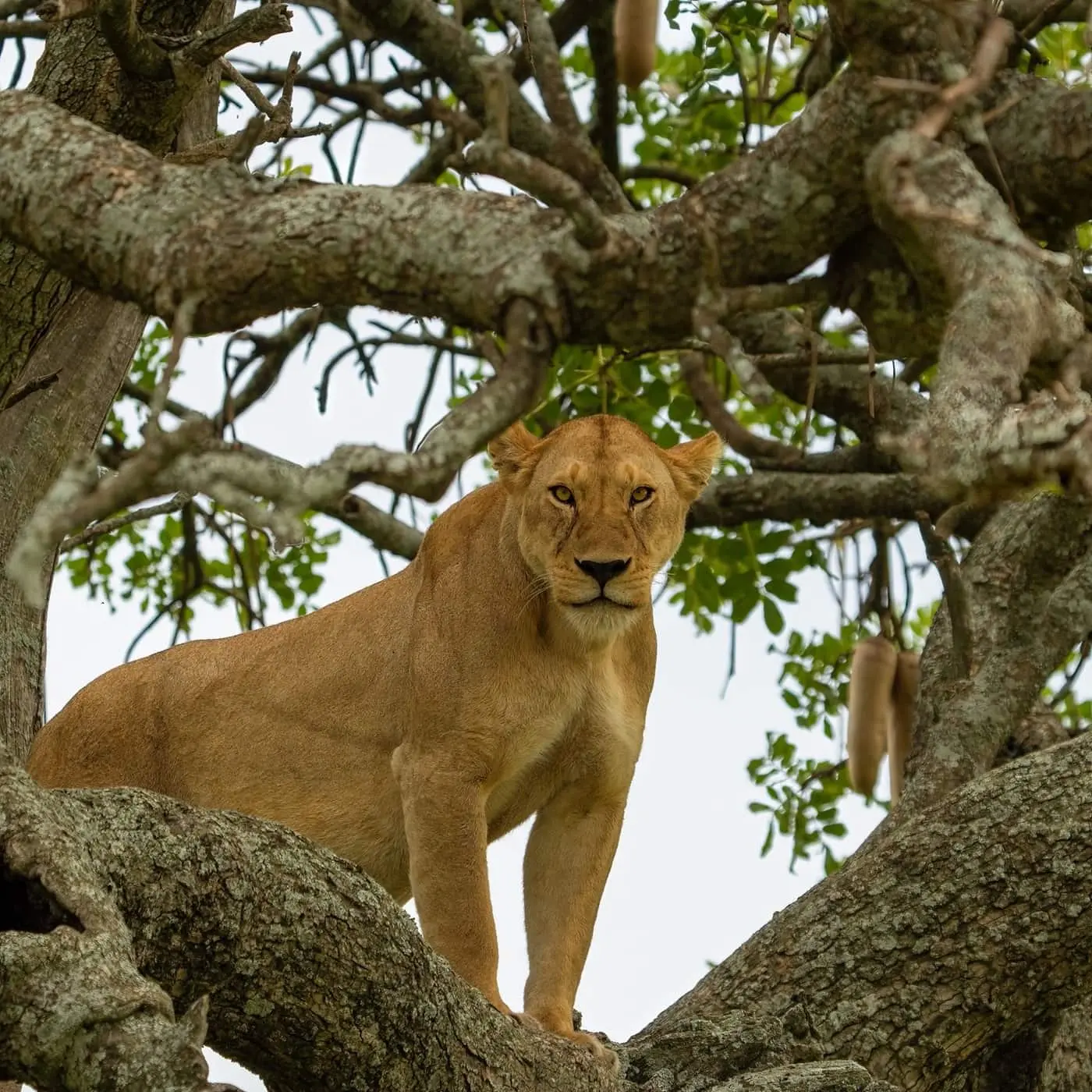
November is a good month for a Tanzania safari if you do not mind some rain. The short rains begin, with highs of about 26 to 29°C (80 to 84°F) in the parks and some rain on about half the days. The herds move south through the Serengeti, the parks are quieter, and most lodges charge less than in July.
- Weather in the parks
- Highs of 26 to 29°C (80 to 84°F), lows of 14 to 17°C (58 to 62°F)
- Rain in the parks
- 81 to 122 mm in the month, with some rain on 12 to 15 days
- Ngorongoro Crater rim
- High of 22°C (72°F), low of 10°C (50°F), 114 mm of rain
- Zanzibar
- High of 31°C (88°F), 201 mm of rain on about 14 days
- Migration herds
- Moving south through the central and eastern Serengeti, with the first groups reaching Ndutu late in the month
- Lodge rates
- 198 of 278 safari lodges and camps change to a lower season on 1 November
- Park entry fees
- Peak entry fees, as the low-season entry fee only runs 15 March to 15 May
Weather figures are long-term averages for Arusha, Tarangire, the central Serengeti and Ndutu. The weather table has each place separately.
Wildlife Conditions in November by Park
Serengeti: Eastern plains and Seronera
GoodThe herds return south through the eastern short-grass plains and the Namiri area, and the first groups reach the Ndutu area by the end of the month. The resident cats around Seronera are as reliable as ever, and the north becomes very quiet. Some southern tracks become soft once the rains are established.
Ngorongoro Crater
ExcellentThe short rains turn the crater green and bring back the migrant birds, and the resident game stays all year. The crater floor is lush and quieter than in the dry season, although the descent road can be slippery after storms.
Tarangire National Park
ExcellentVery good early in the month, when the elephants are often still gathered along the river after a dry season with almost no rain. They spread out once the rains bring water to the rest of the park.
Lake Manyara
GoodThe short rains bring migrant birds in large numbers, which makes Manyara a good birding stop this month. The vegetation is thickening, although the game is still easy to find.
Ndutu / Southern Serengeti
GoodThe first herds can arrive late in the month as the rains turn the plains green. Most of the seasonal camps in the Ndutu area open in December (8 of those we book open on 1 December), so in November the choice of camps close to Ndutu is small.
November Week by Week
November 1-7
Best location: Northern / central Serengeti
The herds are spread across the north and centre, and in a year when the rains come late some can still be near the Mara River. Most lodges are already on their lower November rates.
November 8-14
Best location: Central and eastern Serengeti
The herds move south in scattered groups through the centre and east as the short rains settle in.
November 15-21
Best location: Eastern plains / Seronera
The first herds reach the eastern short-grass plains and the edge of Seronera, and the plains turn green quickly.
November 22-30
Best location: Ndutu / southern Serengeti
The first herds approach Ndutu, the rains become more regular and the south fills up ahead of the calving season.
| Week | What's Happening | Best Location |
|---|---|---|
| November 1-7 | The herds are spread across the north and centre, and in a year when the rains come late some can still be near the Mara River. Most lodges are already on their lower November rates. | Northern / central Serengeti |
| November 8-14 | The herds move south in scattered groups through the centre and east as the short rains settle in. | Central and eastern Serengeti |
| November 15-21 | The first herds reach the eastern short-grass plains and the edge of Seronera, and the plains turn green quickly. | Eastern plains / Seronera |
| November 22-30 | The first herds approach Ndutu, the rains become more regular and the south fills up ahead of the calving season. | Ndutu / southern Serengeti |
Tanzania Weather in November
Tanzania in November is at the start of the short rains, and the weather changes from dry to green during the month. Rainfall rises sharply from October, to about 122 mm in Arusha, but it is spread across 12 to 17 days with some rain in most places, so a typical rain day in the parks brings about 6 to 10 mm. Temperatures stay warm, with average highs of about 26 to 29°C in the parks, and the nights are mild. The table below shows the November weather in Tanzania for each stop on a typical route.
| Location | Average high | Average low | Rainfall | Rain days |
|---|---|---|---|---|
| Arusha1,350 m above sea level | 27°C81°F | 15°C59°F | 122 mm | 13 |
| Tarangire1,180 m above sea level | 29°C84°F | 17°C62°F | 81 mm | 12 |
| Central Serengeti (Seronera)1,490 m above sea level | 27°C81°F | 15°C59°F | 100 mm | 15 |
| Ndutu (southern Serengeti)1,640 m above sea level | 26°C80°F | 14°C58°F | 86 mm | 15 |
| Ngorongoro Crater rim2,280 m above sea level | 22°C72°F | 10°C50°F | 114 mm | 17 |
| Zanzibar18 m above sea level | 31°C88°F | 23°C74°F | 201 mm | 14 |
Long-term monthly averages. The mainland figures are 1961 to 1990 averages from the Climatic Research Unit climate grid, because we could not find published averages from a weather station inside the parks. The Zanzibar figures are the official 1991 to 2020 averages for the island's weather station. Rain days count days with at least 0.1 mm of rain on the mainland and at least 1 mm on Zanzibar. Sources are listed at the end of the page. The averages for every month are on our Tanzania weather by month page.
Early mornings and the middle of the day
November mornings are mild, with average lows of about 15 to 17°C in Arusha, Tarangire and Seronera, so a light layer is enough for early drives. The days are warm and can feel humid before a storm, and in most years the morning is the most reliable time for a long game drive.
On the Ngorongoro Crater rim
The Ngorongoro rim becomes wetter again in November, with about 114 mm of rain and some rain on around 17 days, and dawn temperatures average about 10°C. The crater floor is drier and warmer than the rim, so a descent is still well worth planning.
What to pack for November
For November we recommend a light waterproof jacket, quick-drying clothes, a fleece for the rim and early mornings, and insect repellent, as mosquitoes are more active after rain. On Zanzibar November is one of the wetter months, with about 201 mm of rain on average, so a beach stay works best with flexible plans.
How the weather affects game viewing in November
The first rains of November bring migrant birds and new grass, and the herds start to move from the north through the central Serengeti towards the southern plains. Game viewing stays good because the rain usually falls as brief spells on most days, the main roads stay passable and the parks are quieter than in the dry season.
Lodge Rates in November
November is when most safari lodges in northern Tanzania leave their high season. The figures below come from the 2026 and 2027 rates of the 290 northern-circuit safari lodges and camps and the 26 Zanzibar hotels we book, comparing one standard double room at each property.
| Change to a lower season on 1 November | 198 of 278 |
|---|---|
| November compared with July | Median 24 percent lower, with the middle half of lodges 16 to 34 percent lower and none charging more than in July |
| Early December compared with July | Median 21 percent lower, as most lodges keep their November rate until mid-December |
| Late December compared with November | Median 33 percent higher |
| Northern Serengeti | 10 seasonal camps in the north and centre are closed from November to January, while the permanent camps stay open |
| Change season on 1 November | 8 of 26, as most keep one rate from September or October until December |
|---|---|
| November compared with July | Median 15 percent lower |
These are lodge figures only. Park fees do not fall in November, so the saving on a full safari is smaller than the lodge figures suggest, and the exact difference for your dates depends on the lodges on your route.
Figures from the lodge and hotel rates we hold for the 2026 and 2027 seasons, as of 26 November 2026. Medians compare each property's standard double room rate, and a lodge group is one rate sheet covering one or more camps.
What a November Safari Costs
These are our published prices per person in US dollars, with park fees, lodges, meals on safari and a private vehicle with a guide included. The figures are the Comfort tier from each itinerary's main season column, named in the table. A quote for your dates is built from each lodge's rate for those nights, so it can come in below these figures in November and early December, when most lodges charge less than in July.
| Itinerary | 2 sharing | 6 sharing | Season column |
|---|---|---|---|
| 8-Day Classic Tanzania Safari8 Days | $4,410 | $3,300 | Peak season (June to October) |
| 5-Day Northern Circuit Safari5 Days | $2,990 | $2,215 | Peak season (June to October) |
| 7-Day Tanzania Safari Itinerary7 Days | $3,975 | $2,980 | Peak season (June-October) |
| 11-Day Tanzania & Zanzibar11 Days | $4,970 | $3,920 | Peak season (June to October) |
Park fees in November
Park entry fees in November are on the peak band, because the low-season entry fee only applies 15 March to 15 May. Per adult, a day in the Serengeti costs $82.60 in entry fees, plus $59.00 for each night inside the park, which is the October to June overnight fee and lower than the $70.80 charged from July to September. A day in the Ngorongoro Conservation Area, which includes Ndutu, costs $70.80, and each descent to the crater floor adds $295.00 per vehicle. Tarangire costs $59.00 a day. All of these are included in the prices above, and our park fees page lists every fee.
Pros and Cons of November
Reasons to go in November
- 198 of 278 safari lodges and camps move to a lower season on 1 November, with a median rate 24 percent lower than in July
- The plains turn green as the short rains begin, and the migrant birds arrive
- The parks are quieter than in the July to October season
- The herds move south through the Serengeti towards Ndutu
What to plan around
- The short rains bring 81 to 122 mm of rain to the parks over the month, with some rain on 12 to 15 days
- Some southern tracks become soft once the rains are established
- 10 camps in the northern and central Serengeti on our rate cards close from November to January
- Zanzibar has its short rains too, with about 201 mm on about 14 days
Early or Late November
November is the month when the weather changes. On the long-term averages Arusha has about 32 mm of rain in October and 122 mm in November, and the Ngorongoro rim goes from 55 mm to 114 mm, so by the end of the month the short rains are usually well established. The date they start varies from year to year.
The herds move with the rain. In the first half of the month they are usually still in the north and centre of the Serengeti, and late rains can keep them in the north into November. By the end of the month the first groups reach the short-grass plains in the south. If you would most like to see the herds on the southern plains, late November or December is the safer choice. In early November, Tarangire's elephants are often still gathered near the river, as the park has had almost no rain since May.
Birdwatching in November
November is one of the best months for birds in northern Tanzania, because the short rains coincide with the arrival of the Palearctic migrants, which breed in Europe and Asia and spend the northern winter in East Africa. Steppe Eagles and Montagu's Harriers hunt over the plains, European Rollers perch in the acacias, White Storks gather in flocks on the fresh grass and Barn Swallows feed over the waterholes. They join more than a thousand resident species, many of which come into breeding plumage as the rains begin.
Lake Manyara is a good birding stop on the circuit this month, and flamingos return to the crater floor. We recommend bringing binoculars, even if birds are not the main reason for your trip, as a Steppe Eagle hunting thirty metres from the vehicle is a memorable sight.
Getting There, Visas and Health
- Arriving
- Our safaris start in Arusha, about 1 hour by road from Kilimanjaro International Airport (JRO).
- Visa
- A single-entry tourist visa costs $50, and US passport holders need the multiple-entry visa at $100. Please apply on the official portal, visa.immigration.go.tz, two to three weeks before you fly.
- Inbound insurance
- Since 1 October 2026, visitors to mainland Tanzania also need the mandatory inbound travel insurance, USD 44 per adult, separate from your own travel insurance.
- Health form
- As of November 2026, because of Ebola outbreaks in parts of Africa, Tanzania asks all travellers to complete a Traveller's Health Surveillance Form online at afyamsafiri.moh.go.tz, before departure or on arrival, and travellers from affected countries are screened at the airport. This is a temporary measure, so please check that it still applies before you travel.
- Malaria
- The World Health Organization, the CDC and the UK's TravelHealthPro record malaria in every part of Tanzania below 1,800 m, which includes Arusha, the safari parks and Zanzibar, so please ask your doctor or travel clinic about prevention.
Our visa and health guide has the yellow fever rule and the vaccine advice, the travel insurance page explains the inbound policy, and the flights page lists the airlines into Kilimanjaro and Zanzibar.
November Itineraries
8-Day Classic Tanzania Safari
From $2,625 pp8 Days / 7 Nights
Tarangire · Serengeti · Ngorongoro
In early November this route includes Tarangire while the elephants are often still near the river, and the herds moving south through the Serengeti, at lower lodge rates than July to October.
View Full Itinerary5-Day Northern Circuit
From $1,815 pp5 Days / 4 Nights
Tarangire · Serengeti · Ngorongoro
A shorter route through the same three parks, which suits November's quieter parks and lower lodge rates.
View Full ItineraryPlanning a November Trip
- Great Migration month by month: where the herds are in every month
- Tanzania weather by month: the averages for every month and park
- Tarangire guide: the elephants and the river in the dry months
- Lake Manyara guide: birds, flamingos and tree-climbing lions
- What to pack for a safari: including which colours to wear and whether red is fine
- Best time to visit Zanzibar: the weather on the island month by month
- Serengeti or Maasai Mara: how the two compare through the year
- Tanzania park fees: every entry and overnight fee
- Safari in October: the end of the dry season
- Safari in December: the herds arriving at Ndutu and the festive season
Questions About a Tanzania Safari in November
Is November a good time to visit Tanzania?
Yes, as long as you are comfortable with some rain. November is the start of the short rains, with showers on about half the days rather than long wet spells, and warm days of about 26 to 29°C (80 to 84°F) in the parks. The plains turn green, the migrant birds arrive, the herds move south through the Serengeti and the parks are quieter than in the dry season. Most safari lodges also move to a lower season on 1 November.
How hot is it in Tanzania in November?
Warm. Average highs are about 26 to 29°C (80 to 84°F) in the northern parks and 27°C (81°F) in Arusha, with lows of about 14 to 17°C (58 to 62°F). The Ngorongoro Crater rim is cooler, with a high of about 22°C (72°F) and a low of 10°C (50°F). Zanzibar is hot and humid, with an average high of 31°C (88°F) and a low of 23°C (74°F).
How much does it rain in Tanzania in November?
On the long-term averages the parks have 81 to 122 mm of rain in November, spread over 12 to 15 days with some rain, so a typical rain day brings about 6 to 10 mm. The rain is much lighter than in April, the main roads of the northern circuit stay passable, and the mornings are usually the most reliable time for a long drive. The Ngorongoro rim is wetter, with 114 mm.
Where is the Great Migration in November?
In November the herds are returning south. In the first half of the month they move through the eastern Serengeti and the Namiri area, and by late November the first groups reach Ndutu and the southern plains, where they stay for the calving season. In a year when the rains come late, the herds can stay in the north into November, so travellers in early November sometimes see them there as well.
How many days do I need for a November safari?
Our 5-day Northern Circuit covers Tarangire, the Serengeti and the Ngorongoro Crater at a faster pace, and the 8-day Classic gives the same parks more time, with two nights in Tarangire, three in the central Serengeti and two at Ngorongoro. If you are adding Zanzibar, our 11-day Tanzania and Zanzibar trip combines the two.
Will November feel crowded?
November is quieter than the July to October season, and 10 of the camps in the northern and central Serengeti on our rate cards close until January, while the herds are moving south. The Ngorongoro Crater is busy all year, so we recommend going down when the gates open at 06:00.
How is Zanzibar in November?
Hot, humid and fairly wet. Zanzibar averages 201 mm of rain in November on about 14 days with at least 1 mm, which makes it the third-wettest month on the island after April and May. The average high is 31°C (88°F). A beach stay works if your dates require it, and December, January and February are drier. Most beach hotels charge less in November than in July.
Is Tanzania expensive to visit?
A private safari is not cheap, because park fees and lodges make up most of the cost. On our 8-day Classic, the Comfort tier works out at about $551 per person per day for two people sharing in the June to October column, with park fees, lodges and a private vehicle with a guide included, and it costs less per person as the group grows. In November most safari lodges charge less than in July, so a quote for November dates is usually lower.
Is it better to do a safari in Kenya or Tanzania in November?
For the migration, Tanzania is the better choice in November. By then the herds have left Kenya's Maasai Mara and are moving south through the Serengeti towards Ndutu, where they spend December to March. The Maasai Mara keeps its resident wildlife all year, although at 1,530 km² it is much smaller than Serengeti National Park, at 14,763 km².
Does it matter whether I travel in early or late November?
Yes, it makes a real difference. Early November is closer to the dry season, with elephants often still gathered in Tarangire and, in a year when the rains come late, herds still in the north. Late November has more regular rain, the best birding and the first wildebeest arriving near Ndutu. Both make good trips, although they are quite different, and we plan the route differently for each.
Sources and Maintenance
Where these figures come from
The temperatures and rainfall in the weather table are long-term averages, and a single year can be wetter, drier, warmer or cooler. We could not find published long-term averages from a weather station inside the northern parks, so the park figures come from the Climatic Research Unit's global climate grid, which builds each grid cell of about 18 km from nearby station records and allows for altitude. The Zanzibar figures are the official 1991 to 2020 averages for the island's weather station. As a check, the official 1991 to 2020 averages for Kilimanjaro International Airport are about 1 to 2°C warmer by day than the grid figures for the same area, so please treat the daytime highs as slightly conservative.
- Climatic Research Unit, University of East Anglia: CRU CL v2.0 global climatology, 10-minute grid (New et al. 2002) (1961-1990 averages for the grid cells covering Arusha, Tarangire, Seronera, Ndutu, Kogatende, the Western Corridor and the Ngorongoro Crater rim and floor, read 24 November 2026)
- World Meteorological Organization 1991-2020 climate normals, Zanzibar station 63870 (published by NOAA NCEI) (average high, low, rainfall and days with 1 mm or more, read 24 November 2026)
- World Meteorological Organization 1991-2020 climate normals, Kilimanjaro International Airport station 63791 (published by NOAA NCEI) (used to cross-check the Arusha grid figures, read 24 November 2026)
Sources and Maintenance
Where these figures come from
The lodge rate figures are our own counts from the rates lodges and hotels send us for each season, so they change when new rate sheets arrive. The park fees are the official TANAPA and NCAA tariffs. The calving window is our team's observation from the southern plains, and the exact timing moves with the rains each year.
- Saleh Safaris lodge and hotel rate cards for 2026 and 2027 (94 safari cards and 22 Zanzibar cards) (season dates, supplements and the change in each property's standard double rate between November, December, January and July, read 26 November 2026)
- TANAPA and NCAA park fee tariffs, including VAT (peak entry band outside 15 March to 15 May, read 27 October 2026)
- Calving peak, late January to early March (operator observation by our team in Arusha, reviewed 26 November 2026)
Sources and Maintenance
Where these figures come from
Visa fees, health requirements and the inbound insurance rule can change at short notice, so please check them before you travel. The public holidays fall on the same dates every year.
- Tanzania Immigration visa guidelines; High Commission of Tanzania, Ottawa, visa fee page (visa fees, read 2026-11-06)
- Tanzania Ministry of Health, Traveller's Health Surveillance Form (temporary measure, as of November 2026)
- Insurance (Inbound Travel Insurance) Regulations, 2026, Government Notice No. 256 of 2026 (mainland inbound insurance from 1 October 2026)
- Vaccination requirements and recommendations for international travellers, country list, World Health Organization (International Travel and Health) (18 November 2022 edition, revised 3 January 2023, the latest WHO edition, read 24 November 2026)
- Tanzania, including Zanzibar, CDC Travelers' Health (page last reviewed 18 November 2026, read 24 November 2026)
- Tanzania, TravelHealthPro (UKHSA National Travel Health Network and Centre) (read 24 November 2026)