Central Serengeti and the Seronera Valley
The central Serengeti is the middle of Serengeti National Park, around the Seronera valley. Seronera has the park's main airstrip, its wildlife research centre and many of its lodges and camps, and lions and leopards live in the area all year. The migration herds usually pass through in April and May and again in November, so the central Serengeti suits a safari in any month.
Plan a Central Serengeti Safari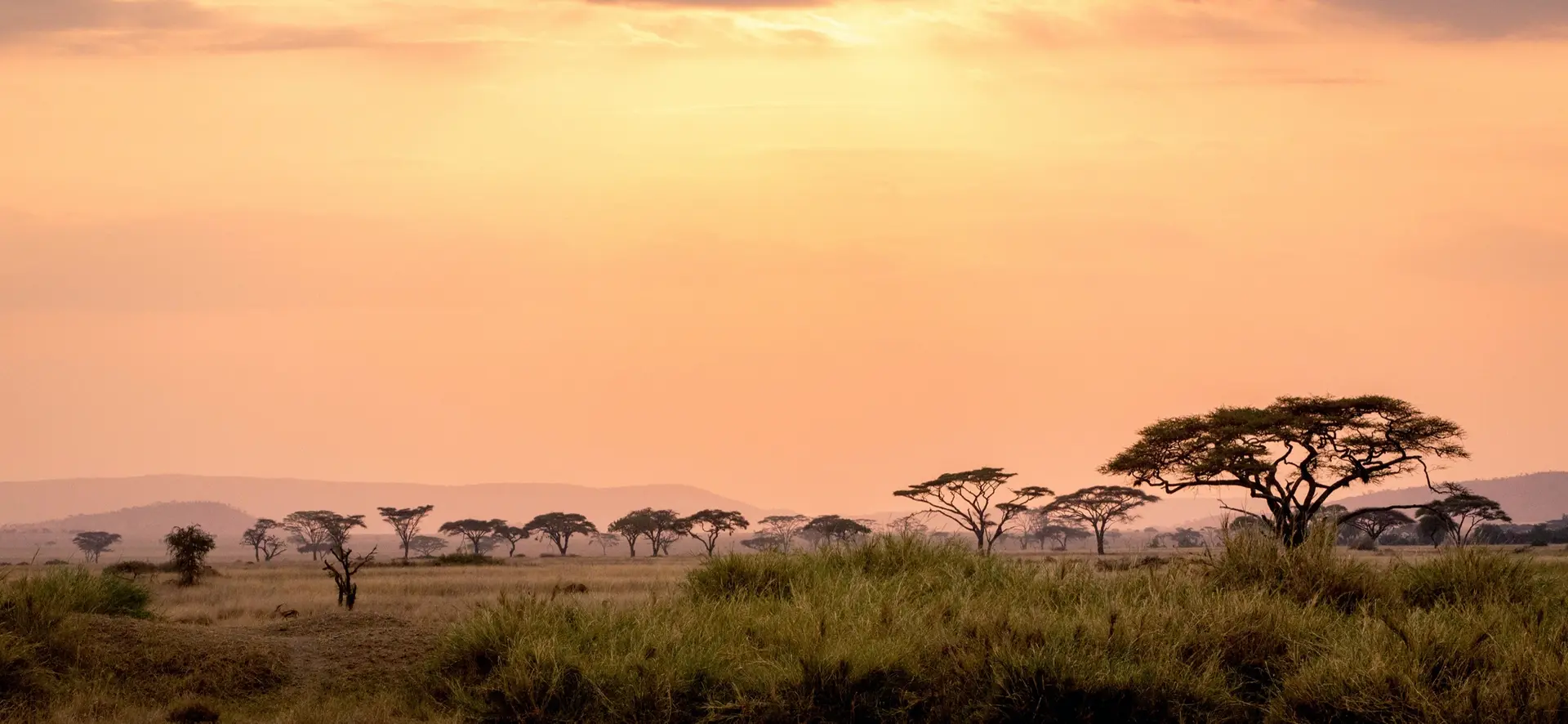
- Best for
- Resident lions and leopards, all year
- Migration herds
- Usually April, May and November
- Airstrip
- Seronera, daily scheduled flights
- Park
- Serengeti National Park, national park fees apply
Where is the central Serengeti?
The central Serengeti lies in the middle of Serengeti National Park, where the short-grass plains of the south give way to longer grass and acacia woodland, and where granite outcrops, known as kopjes, rise out of the grassland. Seronera, in the valley of the same name, is the hub of the area and the main settlement in the park, with the Seronera airstrip and many of the lodges and camps.
Most safaris arrive by road from the Ngorongoro Crater, entering the park at Naabi Hill Gate and driving north across the plains to Seronera. From here the Western Corridor runs west towards Lake Victoria, and the northern Serengeti and the Mara River lie to the north. Because of this central position, the central Serengeti is on almost all of our itineraries, and it connects easily with the crater, Ndutu and the northern Serengeti.
A centre for wildlife research
Seronera is also the home of the Serengeti Wildlife Research Centre, run by the Tanzania Wildlife Research Institute. According to the institute, wildlife research in Tanzania began at this centre, which was first the headquarters of the Serengeti Research Institute. The Serengeti Lion Project, started by George Schaller in 1966, has followed the prides near the centre of the park ever since, and it is one of the longest-running studies of any wild animal.
Wildlife in the central Serengeti
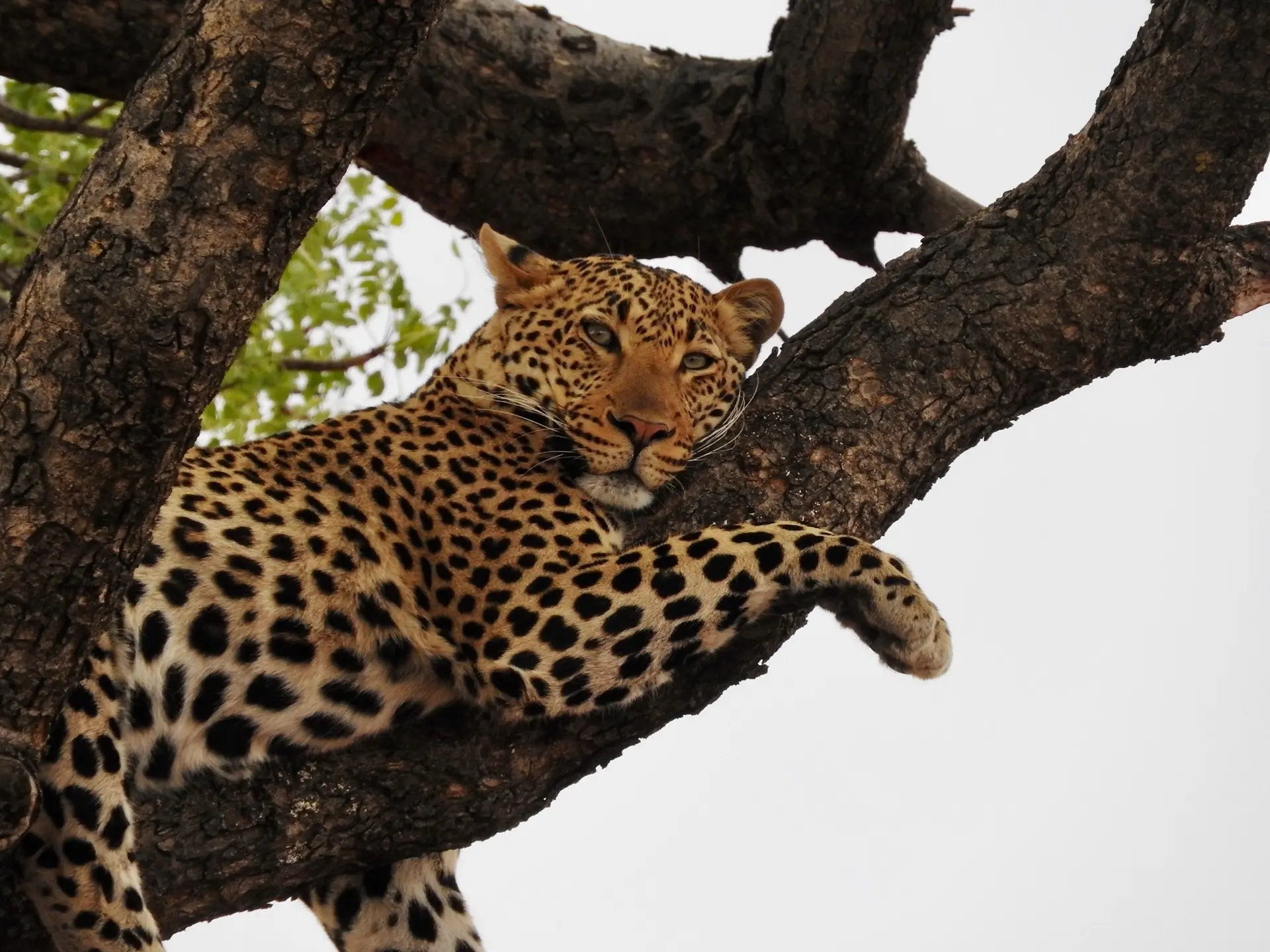
The central Serengeti is known for its big cats. The kopjes are favourite lookouts for lions, and the wider Serengeti ecosystem has about 3,000 of them. Leopards are at home in trees, where they rest and often take their kills, and our guides look for them along the rivers around Seronera. A camera-trap study in the park estimated about 5.7 leopards per 100 km² in the wet season and 5.4 in the dry season, which the researchers describe as moderately healthy. Cheetahs, which BirdLife lists in reasonable numbers in the park, hunt on the open plains.
Many of the Serengeti's animals do not follow the migration. UNESCO counts around 70,000 buffalo, 27,000 topi and 4,000 giraffe in the ecosystem, as well as elephant, hippo and Thomson's gazelle, so there is plenty to see in the months when the wildebeest are elsewhere. The park is also good for birds, and three species found only in Tanzania, the grey-breasted spurfowl, the rufous-tailed weaver and Fischer's lovebird, occur here in good numbers.
On our itineraries the full days in the central Serengeti start early and include a picnic lunch in the park, so that you can stay out for the whole day. Sightings depend on the animals, and no one can promise a particular species on a particular day. Balloon flights leave from Seronera in every month of the year, and our balloon safari page has the seasons and launch sites for the whole park.
When to visit the central Serengeti
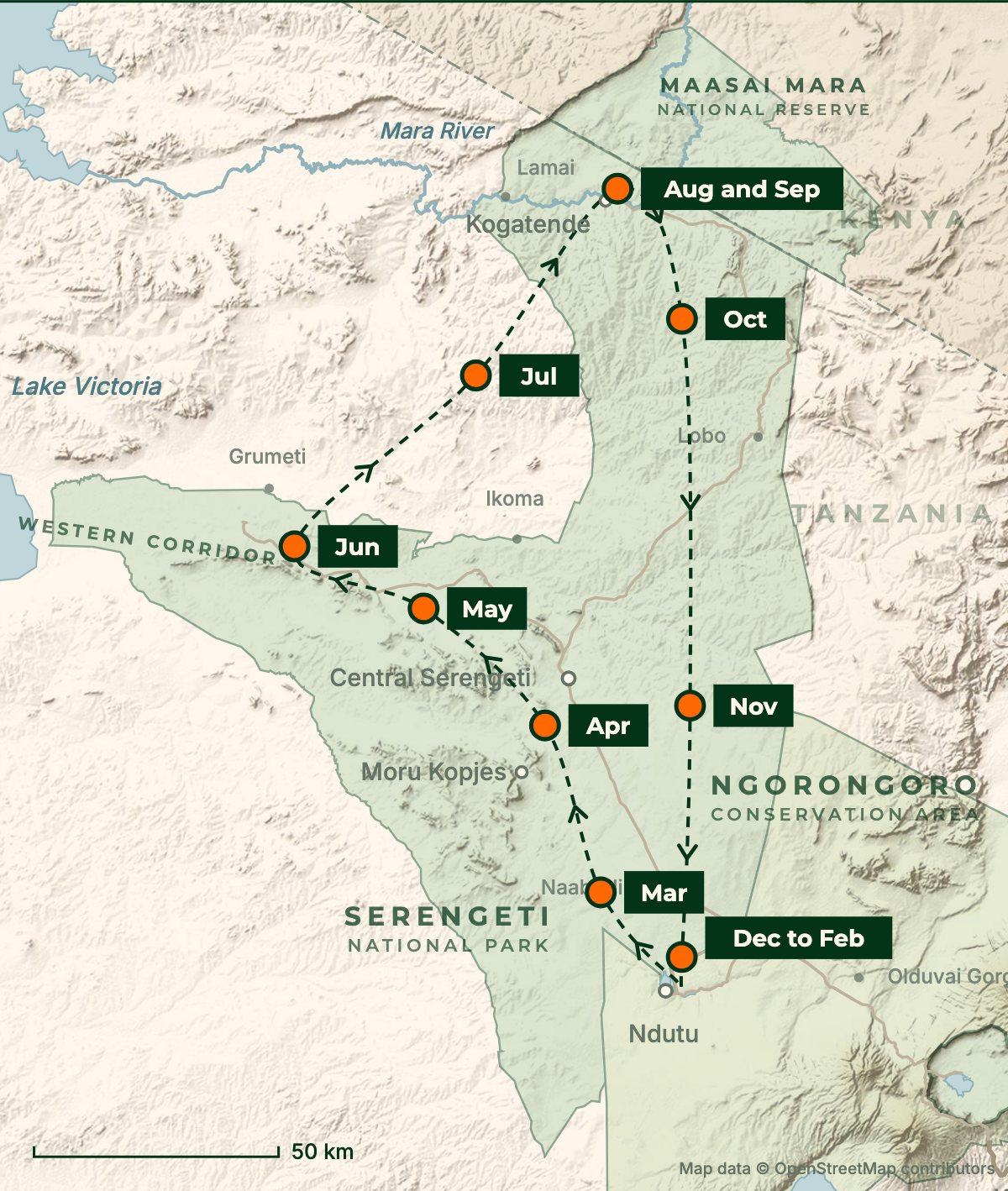
The central Serengeti can be visited all year. The main migration herds usually pass through twice, first in April and May, when they move from the southern plains past Moru Kopjes and Seronera towards the Western Corridor, and in November, when the short rains draw them back south. In the other months the herds are in the south, the west or the north, and the central Serengeti is a base for its resident wildlife.
June to October is the dry season, and July is the driest month at Seronera, with an average of 9 mm of rain. The rain peaks in April, with an average of 137 mm, when several seasonal camps close and the camps that stay open are at their lowest rates. At about 1,490 metres the days are warm all year and the early mornings are cool, so a warm layer is useful on the first game drive. For the calving from December to March, see our guide to the Ndutu calving season.
| Month | Where the herds usually are | Rain | Rain days | Day / night |
|---|---|---|---|---|
| January | Ndutu and the southern Serengeti plains | 81 mm | 13 | 28°C / 15°C |
| February | Ndutu and the southern Serengeti plains | 100 mm | 13 | 28°C / 15°C |
| March | Ndutu, then moving north-west | 121 mm | 16 | 28°C / 15°C |
| April | Central Serengeti, between Moru Kopjes and Seronera | 137 mm | 21 | 26°C / 16°C |
| May | Central Serengeti into the Western Corridor | 68 mm | 16 | 26°C / 15°C |
| June | Western Corridor, along the Grumeti River | 23 mm | 7 | 25°C / 14°C |
| July | Western Corridor to the northern Serengeti | 9 mm | 6 | 25°C / 13°C |
| August | Northern Serengeti, on the Mara River | 18 mm | 6 | 26°C / 14°C |
| September | Northern Serengeti, on the Mara River | 34 mm | 6 | 27°C / 14°C |
| October | Northern Serengeti, then moving south | 51 mm | 9 | 28°C / 15°C |
| November | Eastern and central Serengeti, moving south | 100 mm | 15 | 27°C / 15°C |
| December | Ndutu and the southern Serengeti plains | 97 mm | 15 | 27°C / 15°C |
Shaded rows are the months the main herds usually pass through the central Serengeti. Rain and temperatures are long-term averages for the Seronera area from the CRU climatology of the University of East Anglia, and rain days are days with any rain. The herd positions are the usual pattern and move with the rain each year. See the Great Migration month by month.
Getting to Seronera
Seronera airstrip has daily scheduled flights that link it with Arusha, Kilimanjaro, Kogatende and Zanzibar. The direct flight to Zanzibar takes about 1 hour 40 minutes, which makes Seronera a convenient place to end a safari before a few days on the beach. Most travellers arrive by road from the Ngorongoro Crater, as the drive across the plains to Seronera passes through wildlife country and becomes a game drive in itself.
Drive times
Times are our best estimates without game-viewing stops and grow in the wet. See all routes on our drive times page, or compare the options on driving or flying between parks.
Park gates
Naabi Hill Gate
The main gate for safaris coming from Arusha and the Ngorongoro Crater, on the south-eastern edge of the park where the Ngorongoro Conservation Area ends. Most northern circuit itineraries enter the Serengeti here, so it can be busy in the middle of the day.
Fort Ikoma Gate
A gate on the north-western boundary next to Ikoma village, close to the lodges and camps in the Ikoma area just outside the park. The Fort Ikoma airstrip lies nearby.
Every gate is described on our park gates page.
Park fees in the central Serengeti
Seronera and the rest of the central Serengeti are inside Serengeti National Park, so the national park fees apply. Each entry permit runs for 24 hours, and every night in a camp or lodge inside the park adds a concession fee, which is at its highest from July to September.
| Non-resident | Adult | Child |
|---|---|---|
| Entry, per 24-hour permit | $82.60 | $23.60 |
| Entry, 15 March to 15 May | $70.80 | $23.60 |
| Camp or lodge fee per night, July to September | $70.80 | $11.80 |
| Camp or lodge fee per night, October to June | $59.00 | $11.80 |
Figures include 18% VAT. Every park is on our Tanzania park fees page.
Where to stay in the central Serengeti
The central Serengeti has more lodges and camps than any other part of the park in our directory, from large lodges to small tented camps. The camps below have full pages on our site, with their own photos, rooms and locations.
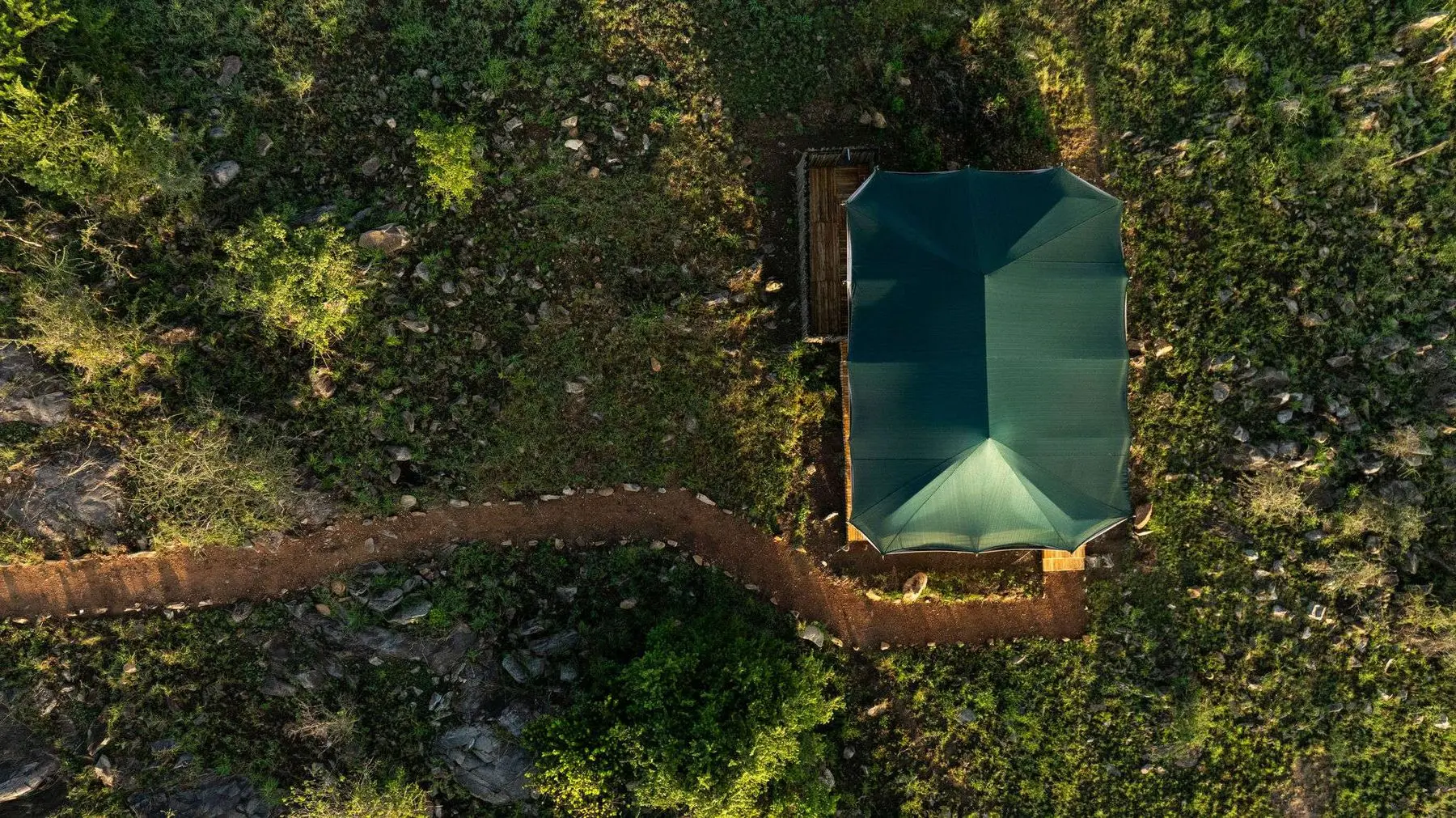
Siringit Serengeti Camp
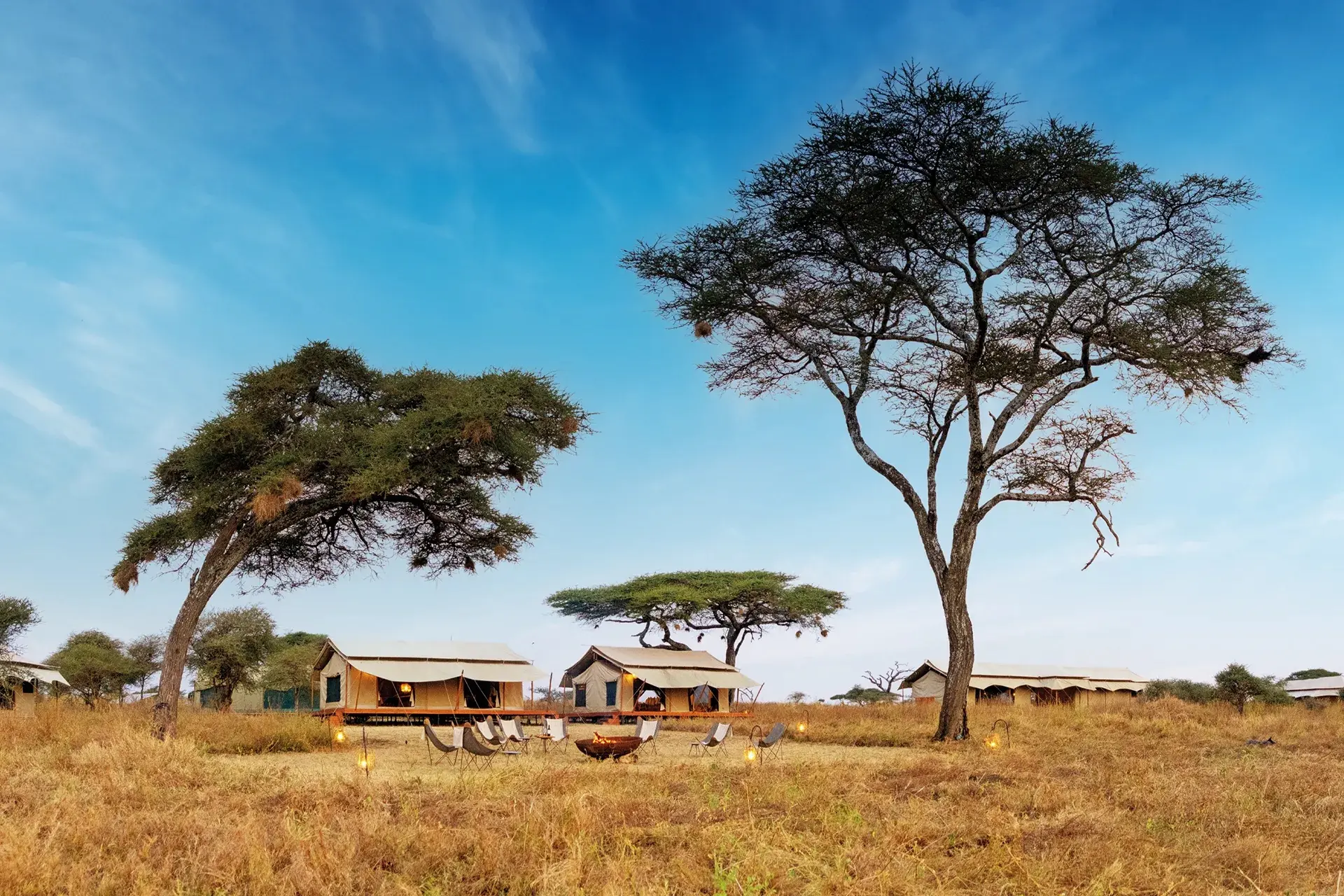
Ten tented suites under acacia trees in the central Serengeti, 6 km east of Seronera airstrip, with views west over the plains.
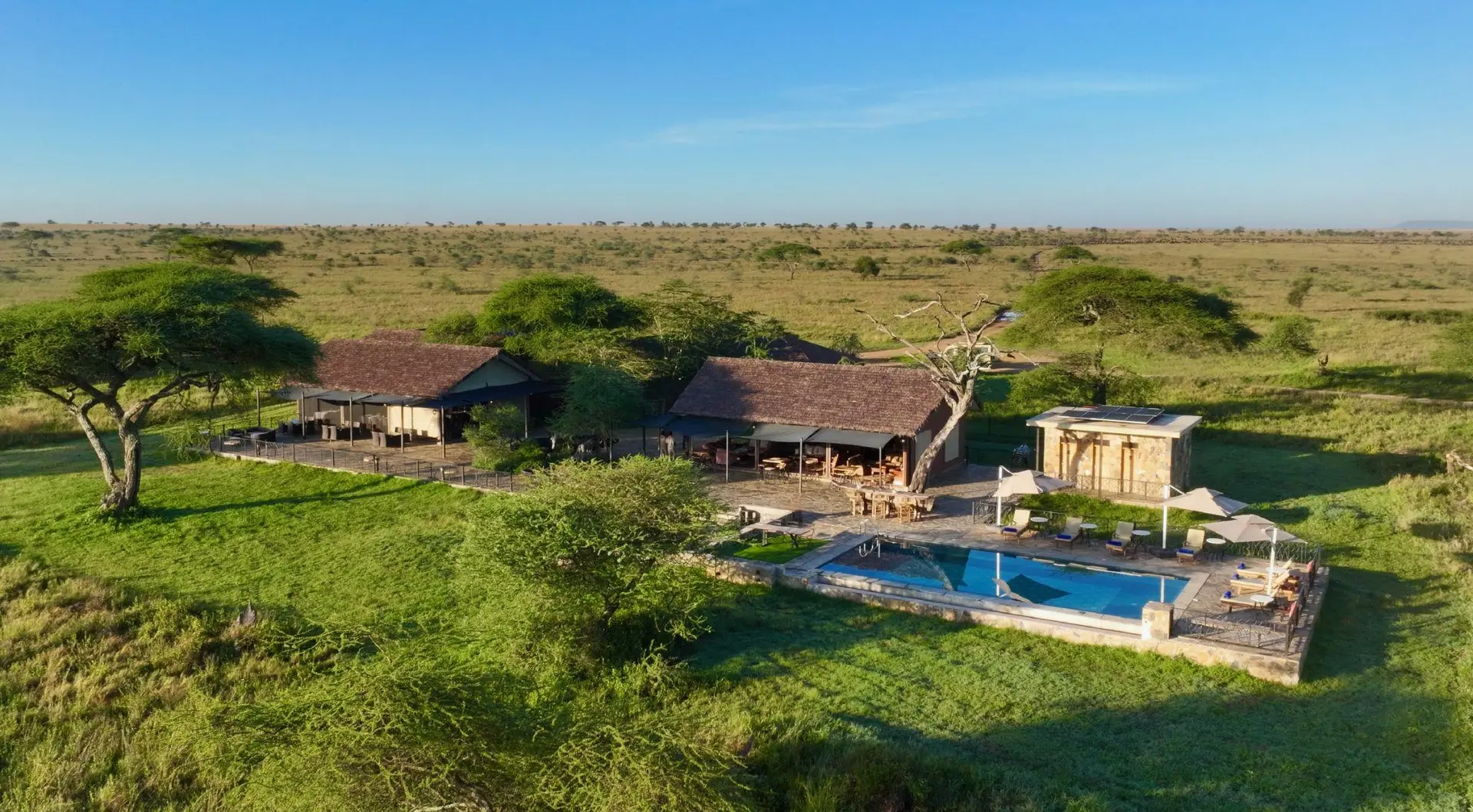
Jackals Lair
Ten tented suites in the Nyabogati area of the central Serengeti, about an hour from Seronera airstrip. Part of the Lairs collection.
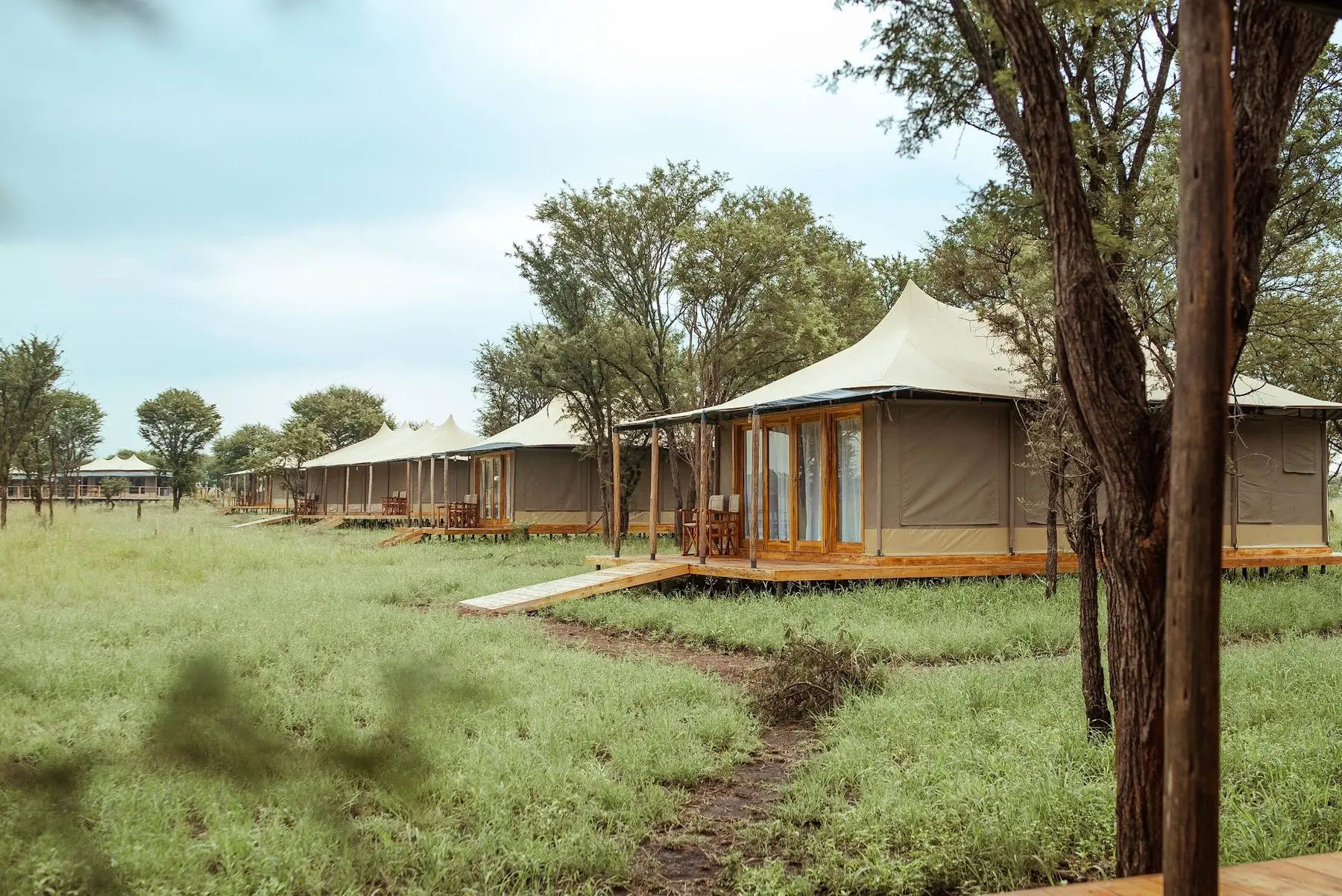
Serengeti Sametu Camp
Fourteen large tents beside the Ngare Nanyuki River in the central-eastern Serengeti, away from the busiest roads around Seronera.
Conserve Safari Central Serengeti
A new luxury tented camp on the Ikoma side of the central Serengeti, about 6 km from Ikoma Gate.
Other lodges and camps we book
| Lodge or camp | Where |
|---|---|
| Serengeti Serena Safari Lodge | Acacia ridge, central Serengeti |
| Seronera Wildlife Lodge | Seronera |
| Mawe Tented Camp | Central Serengeti |
| Nyikani Central Serengeti Camp | Banagi, central Serengeti |
| Ang'ata Serengeti Camp | Central Serengeti |
| Ang'ata Kimarishe Camp | Kimarishe, central Serengeti |
| Serengeti Tortilis Camp | Near Seronera |
| Land of Nature Camp Serengeti | Central Serengeti |
| Dove Luxury Serengeti Camp | Lomoti, Seronera area |
| Imara Makoma Hills | Makoma Hills, central Serengeti |
| Imara Lomoti | Lomoti, central Serengeti |
| Arukore Simba Camp | Inside the park, central Serengeti |
| Serengeti Acacia Bliss | Banagi, central Serengeti |
| Kon Tiki Tented Camp Central Serengeti | Kimarishe, central Serengeti |
| Serengeti Pioneer Camp | Central Serengeti |
| Lemala Ewanjan | Near Seronera |
| Serengeti Infinity Camp | Nyaruboro Hill, central Serengeti |
| Raha Camp Serengeti | Central Serengeti, adults only |
| Baobab Central Serengeti Camp | Central Serengeti |
| Nimali Serengeti | Makoma Hill, Seronera |
| Soroi Serengeti | Central plateau above the Musabi Plains |
| Kubu Kubu Tented Lodge | Central Serengeti |
| Neptune Serengeti Luxury Camp | Central Serengeti |
Every property is in our lodge directory. We can book any of them on its own, or as part of a private safari, and our page on Serengeti Serena Safari Lodge covers the lodge used on several of our itineraries.
Safaris that include the central Serengeti
Almost all of our itineraries spend two or three nights in the central Serengeti. The 5-Day Northern Circuit Safari is the shortest, from $1,815 per person, and our 7-Day Tanzania Safari Itinerary starts from $2,325 per person, with three nights here between Tarangire and the Ngorongoro Crater. The 8-Day Classic Tanzania Safari follows the same route with a full day on the crater floor, from $2,625 per person.
From July to October, the Great Migration Safari in Tanzania: Northern Serengeti combines the central Serengeti with the Mara River crossings at Kogatende and the Ngorongoro Crater in 10 days, from $4,680 per person. For the north itself, see our northern Serengeti guide, and for the area to the west, our Western Corridor guide. We can adjust any of these routes to your dates and the camps you prefer.
Central Serengeti questions
Where is Seronera?
Seronera is in the central Serengeti, in the middle of Serengeti National Park in northern Tanzania. It has the park's main airstrip, the Serengeti Wildlife Research Centre and many of the park's lodges and camps, and most safaris that drive in from Arusha and the Ngorongoro Crater enter the park at Naabi Hill Gate and continue north to Seronera.
Is Seronera worth visiting?
Yes, and it is on almost all of our itineraries, because the central Serengeti has resident lions and leopards all year, it is close enough to the Ngorongoro Crater to fit a five-day safari, and Seronera airstrip has daily scheduled flights. On a longer trip it combines well with Ndutu from December to March, for the calving, or with the northern Serengeti from July to October, for the Mara River crossings.
When is the best time to visit the central Serengeti?
The central Serengeti is good in any month for resident wildlife. The migration herds usually pass through in April and May, on their way from the southern plains to the Western Corridor, and again in November as they move south. June to October is the dry season, with the lowest rainfall of the year at Seronera, although the main herds are in the west and the north in those months.
Is the central or the northern Serengeti better?
It depends on the month. From July to October the northern Serengeti has the Mara River crossings, and the central Serengeti has resident wildlife but not the main herds. For the rest of the year the herds are elsewhere, the north is quiet and the central Serengeti is usually the better base. The two areas combine well, as the drive from Seronera to Kogatende takes 4 to 5 hours, or 7 to 8 hours as a game drive and doubles as a game drive.
Can I see the central Serengeti, the northern Serengeti and the Ngorongoro Crater in one trip?
Yes, our Great Migration Safari in Tanzania: Northern Serengeti combines all three in 10 days, with two nights in the central Serengeti, the Mara River at Kogatende, a night back in the central Serengeti on the way south, and a morning in the Ngorongoro Crater. It starts from $4,680 per person, and we can change the number of nights in each area to suit your dates.
How many nights should I spend in the central Serengeti?
We recommend two or three nights. Our itineraries spend two or three nights in the central Serengeti, which gives you one or two full days of game drives between the travel days, and three nights suits a trip where the Serengeti is the highlight.
How do you get to Seronera?
By road, the drive from Arusha takes 7 to 8.5 hours, so most itineraries break it with a night in Tarangire, Karatu or on the Ngorongoro Crater rim. From the crater the drive takes 3 to 4 hours. By air, daily scheduled flights link Seronera airstrip with Arusha, Kilimanjaro, Kogatende and Zanzibar, and the direct flight to Zanzibar takes about 1 hour 40 minutes.
Are there leopards in Seronera?
Yes, leopards live in the central Serengeti all year, and our guides look for them in the trees along the rivers, where they often rest during the day, although a sighting is never guaranteed. A camera-trap study in the park, using the Snapshot Serengeti grid of 225 cameras, estimated about 5.7 leopards per 100 km² in the wet season and 5.4 in the dry season.
What are the park fees in the central Serengeti?
The central Serengeti is inside Serengeti National Park, so the national park fees apply: $82.60 per adult for each 24-hour entry permit, plus a camp or lodge fee of $70.80 per adult per night from July to September and $59.00 from October to June. The figures include VAT, and our quotes show them as separate lines.
Sources and Maintenance
Where these figures come from
Park fees, flight schedules and camp seasons can change, and the herds move with the rain, so we recheck this page every six months.
- Tanzania Wildlife Research Institute, Serengeti Wildlife Research Centre, at Seronera in the central Serengeti and first the headquarters of the Serengeti Research Institute (read 27 November 2026)
- Packer, 'The Serengeti Lion Project', Frontiers in Ecology and Evolution, on George Schaller starting the project in 1966 (published 2019)
- Smithsonian Magazine, 'The Truth About Lions', on the study prides near the park's centre and kopjes as lion haunts (published January 2010)
- National Geographic, leopard facts, on leopards resting in trees and hauling kills into the branches (read 27 November 2026)
- Allen et al., 'Counting cats for conservation: Seasonal estimates of leopard density and drivers of distribution in the Serengeti', Biodiversity and Conservation (2020), Snapshot Serengeti camera-trap data; University of Illinois news release (read 27 November 2026)
- Swanson et al., 'Snapshot Serengeti', Scientific Data 2, 150026, with 225 camera traps across 1,125 km² (published 2015)
- BirdLife International and Key Biodiversity Areas, Serengeti National Park factsheet, on kopjes, the rocky ridges in the central and western areas, cheetahs and the Tanzanian endemic birds (read 27 November 2026)
- UNESCO World Heritage Centre, Serengeti National Park, on kopjes and the buffalo, topi and giraffe numbers for the ecosystem (read 27 November 2026)
- Where our guides look for leopards, and the full days with a picnic lunch, from Saleh Safaris itineraries (operator observation)
- Balloon launch sites and seasons, from our balloon safari page (see /hot-air-balloon-safari-serengeti)
- Most widely stated figure for the Serengeti ecosystem; consistent with the Serengeti Lion Project record that the 1994 canine distemper outbreak killed about a third of the Serengeti lions, more than 1,000 animals ('Infectious Diseases Subdue Serengeti Lions', 2009) (lion numbers for the wider ecosystem)
- Seronera climate, from CRU CL v2.0, Climatic Research Unit, University of East Anglia (1961-1990 averages)
- Where the herds are each month, from the Saleh Safaris migration calendar (operator observation, see /great-migration-month-by-month)
- Flights, from the airlines' scheduled timetables for Seronera airstrip (checked November 2026)
- Serengeti National Park fees, from our park fees page (see /tanzania-park-fees)
- Drive times, from Saleh Safaris route notes (estimates, conditions vary)
Plan your central Serengeti safari
We run private safaris to the central Serengeti from Arusha, with our own vehicle and guide. Send us your dates and we will suggest the camps and a route that suits the month.
- 7-Day Tanzania Safari Itinerary
- Or message us on WhatsApp +255 742 789 292

Plan Your Dream Safari
Free quote · No commitment · Reply within 24h
Your enquiry is free and without obligation.