The Western Corridor and the Grumeti River
The Western Corridor is the long arm of Serengeti National Park that reaches west towards Lake Victoria, along the Grumeti and Mbalageti rivers. The migration herds usually pass through between May and July, and they cross the Grumeti River, most often in June, with the timing moving by a few weeks from year to year. Outside those months the herds are elsewhere in the park.
Plan a Western Corridor Safari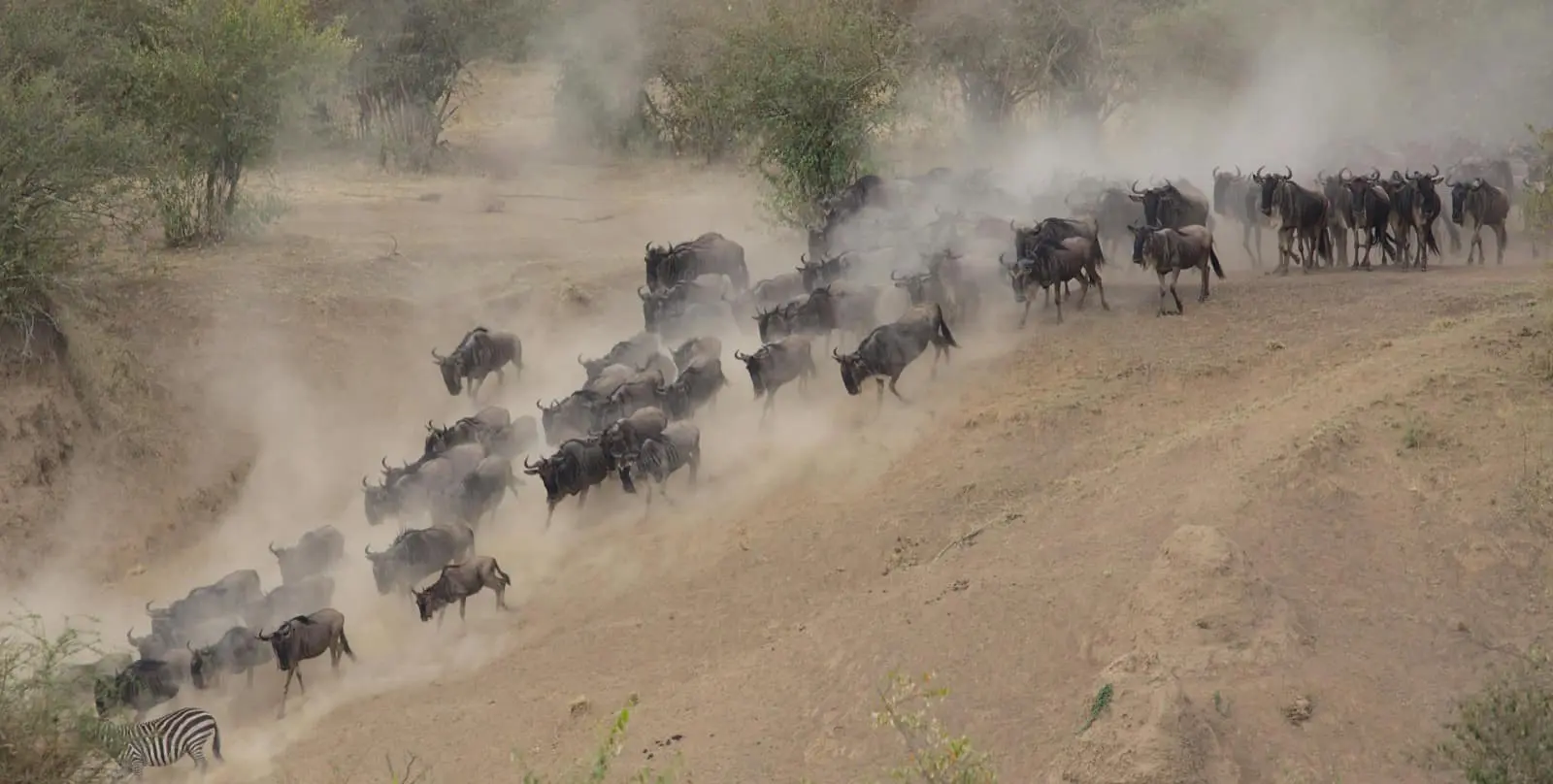
- Best for
- Grumeti River crossings, most often in June
- Migration herds
- Usually May to July
- Airstrips
- Grumeti (Kirawira) and Fort Ikoma
- Park
- Serengeti National Park, national park fees apply
Where is the Western Corridor?
The Western Corridor is the long western arm of Serengeti National Park. It runs from the central Serengeti towards Lake Victoria, and the park drains in the same direction, with the Grumeti and Mbalageti rivers flowing west to the lake. BirdLife International describes rich riverine forest along the Grumeti and rocky hills that form ridges across the central and western parts of the park.
The park's western gate, at Ndabaka, stands near Lake Victoria on the road between Mwanza and Musoma. The park boundary does not yet reach the lake shore, and UNESCO notes a plan to extend it to the lake so that animals can reach water in dry years. To the north-west, the Ikorongo and Grumeti game reserves are part of the wider Serengeti ecosystem but lie outside the national park.
The Grumeti River
The Grumeti is the river the migration herds meet on their way north, before they reach the Mara. Unlike the Mara, which UNESCO describes as the only river that flows all year through the park, the Grumeti does not flow all year. It holds Nile crocodiles, which wait for the herds at the crossing points, and the crossings here are usually smaller than on the Mara, with far fewer vehicles.
When to visit the Western Corridor
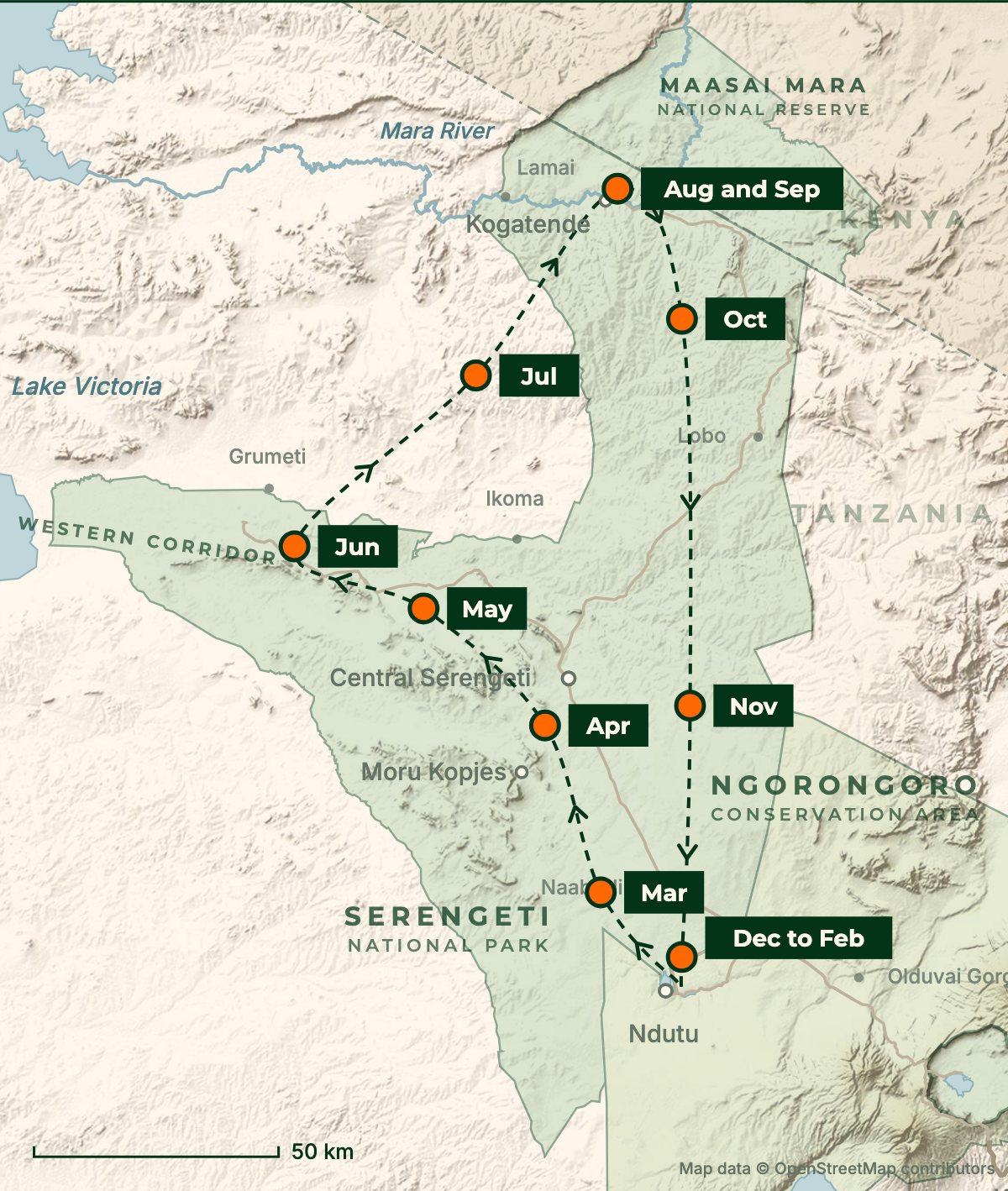
The Western Corridor has its season from May to July. The herds move west out of the central Serengeti in May, gather along the Grumeti River in June, when the first river crossings of the year most often take place from the middle of the month, and push north towards the Mara River in July. The timing follows the rain, so in some years the herds arrive a few weeks earlier or later. For June travel we recommend three nights or more in the Western Corridor, as the crossings cannot be predicted to the day, and for the first half of July a route that starts here and continues north to Kogatende.
June to October is the dry season, and July is the driest month, with an average of 11 mm of rain. The rain peaks in April, with an average of 155 mm. The Western Corridor lies about 300 metres lower than Seronera and is about 2°C warmer during the day on average over the year, so it can feel hot in the middle of the day.
| Month | Where the herds usually are | Rain | Rain days | Day / night |
|---|---|---|---|---|
| January | Ndutu and the southern Serengeti plains | 73 mm | 13 | 29°C / 17°C |
| February | Ndutu and the southern Serengeti plains | 99 mm | 12 | 29°C / 17°C |
| March | Ndutu, then moving north-west | 128 mm | 16 | 29°C / 18°C |
| April | Central Serengeti, between Moru Kopjes and Seronera | 155 mm | 21 | 28°C / 18°C |
| May | Central Serengeti into the Western Corridor | 87 mm | 16 | 28°C / 17°C |
| June | Western Corridor, along the Grumeti River | 28 mm | 7 | 28°C / 16°C |
| July | Western Corridor to the northern Serengeti | 11 mm | 5 | 28°C / 15°C |
| August | Northern Serengeti, on the Mara River | 23 mm | 6 | 28°C / 16°C |
| September | Northern Serengeti, on the Mara River | 49 mm | 7 | 29°C / 17°C |
| October | Northern Serengeti, then moving south | 68 mm | 10 | 30°C / 17°C |
| November | Eastern and central Serengeti, moving south | 117 mm | 16 | 29°C / 17°C |
| December | Ndutu and the southern Serengeti plains | 107 mm | 15 | 28°C / 17°C |
Shaded rows are the months the main herds are usually in the Western Corridor. Rain and temperatures are long-term averages for the Grumeti area from the CRU climatology of the University of East Anglia, and rain days are days with any rain. The herd positions are the usual pattern and move with the rain each year. See the Great Migration month by month.
Wildlife in the Western Corridor
From May to July the Western Corridor is where the migration is. The wildebeest and zebra move west in long columns during the rut, gather along the Grumeti and then cross it, watched by the crocodiles that live in the river.
In the other months the herds are elsewhere and the area is quieter. The park's resident animals remain, and lions and cheetahs are found in reasonable numbers across the park, according to BirdLife International, while a camera-trap study estimated about 5.7 leopards per 100 km² in the wet season and 5.4 in the dry season in the national park. For a balloon flight in the migration season, the Kirawira launch site in the Western Corridor operates from May to July or August, with a minimum of four guests, and our balloon safari page has the details.
Getting to the Western Corridor
Grumeti airstrip, also called Kirawira, serves the camps in the Western Corridor, and Fort Ikoma airstrip lies just outside the park boundary. Both are on the scheduled bush-flight routes from Arusha and Seronera. By road, most safaris reach the Western Corridor from Seronera after a night or more in the central Serengeti, and travellers starting in Mwanza can enter the park at Ndabaka Gate.
Ndabaka Gate
The western gate, on the Mwanza to Musoma road near Lake Victoria. It opens onto the Western Corridor and the Grumeti River, so it is the natural entrance for travellers starting in Mwanza.
Fort Ikoma Gate
A gate on the north-western boundary next to Ikoma village, close to the lodges and camps in the Ikoma area just outside the park. The Fort Ikoma airstrip lies nearby.
Every gate is described on our park gates page, and our drive or fly page compares the options between parks.
Park fees in the Western Corridor
The Western Corridor is inside Serengeti National Park, so the national park fees apply. Each entry permit runs for 24 hours, and every night in a camp or lodge inside the park adds a concession fee. The main season here, from May to July, falls mostly in the lower band for that fee, which rises from July to September.
| Non-resident | Adult | Child |
|---|---|---|
| Entry, per 24-hour permit | $82.60 | $23.60 |
| Entry, 15 March to 15 May | $70.80 | $23.60 |
| Camp or lodge fee per night, July to September | $70.80 | $11.80 |
| Camp or lodge fee per night, October to June | $59.00 | $11.80 |
Figures include 18% VAT. A few lodges stand outside the park boundary, and our quotes list the fees for the lodges you choose. Every park is on our Tanzania park fees page.
Where to stay in the Western Corridor
The Western Corridor has fewer lodges and camps than the central Serengeti. These are the properties we book in and around the Western Corridor.
| Lodge or camp | Where |
|---|---|
| Kirawira Serena Camp | Western Corridor |
| Mbalageti Serengeti | Western Corridor |
| Lahia Tented Lodge | Grumeti area |
| Meliá Serengeti Lodge | Nyamuma Hills |
| Serengeti Simba Lodge | Ikoma Wildlife Management Area, outside the park |
Every property is in our lodge directory. We can book any of them on its own, or as part of a private safari.
A Western Corridor safari
We plan Western Corridor safaris around your dates. In the first half of July, our Great Migration Safari in Tanzania: Northern Serengeti, from $4,680 per person, can start in the Western Corridor and move north as the herds reach the Mara River. For June, the Serengeti nights of a route such as our 8-Day Classic Tanzania Safari, from $2,625 per person, can be planned around the Western Corridor instead.
For the rest of the park, see our guides to the central Serengeti and Seronera, the northern Serengeti and the Mara River crossings.
Western Corridor questions
Where is the Western Corridor of the Serengeti?
The Western Corridor is the western arm of Serengeti National Park in Tanzania. It runs from the central Serengeti west towards Lake Victoria, following the Grumeti and Mbalageti rivers, and the park's western gate at Ndabaka stands near the lake on the road between Mwanza and Musoma.
When is the best time to visit the Western Corridor?
June, for the Grumeti River crossings. The migration herds usually reach the Western Corridor in May and stay until July, and the crossings most often take place from the middle of June. Late May and early July can also work, as the timing moves with the rain from one year to the next. If you are travelling in the first half of July, a route that starts in the Western Corridor and moves north to Kogatende follows the herds as they leave.
When do the Grumeti River crossings happen?
Most often in June, usually from the middle of the month, when the herds gather along the Grumeti River on their way north. In some years the first crossings are in late May and in others they continue into early July, so no one can promise a crossing on a particular day, and a stay of three nights or more gives you the best chance.
Should I choose the Grumeti or the Mara River crossings?
The Mara River crossings in the northern Serengeti are larger and run for longer, from July to October. The Grumeti crossings are usually smaller and over in a few weeks, but there are far fewer vehicles. If your dates fall in June, the Western Corridor is the place to be, and from July the herds move on to the Mara.
Is the Western Corridor worth visiting?
From late May to early July, yes, as that is when the herds are there. In the other months the herds are in the south, the north or the central Serengeti, and the Western Corridor has fewer camps than the central Serengeti, so for a short stay outside the migration season we usually suggest the central Serengeti instead.
Is the Grumeti Game Reserve part of Serengeti National Park?
No, the Grumeti and Ikorongo game reserves are part of the wider Serengeti ecosystem, which the migration uses, but they lie outside the national park. BirdLife International notes that they were raised to game reserve status from game controlled areas to strengthen the protection around the park.
How do you get to the Western Corridor?
By air, scheduled flights serve Grumeti airstrip, also called Kirawira, and Fort Ikoma airstrip just outside the park boundary. By road, most safaris reach the Western Corridor from Seronera in the central Serengeti, and travellers starting in Mwanza enter the park at Ndabaka Gate. The Western Corridor is a long way from Arusha by road, so it usually comes after a night or more in the central Serengeti.
What are the park fees in the Western Corridor?
The Western Corridor is inside Serengeti National Park, so the national park fees apply: $82.60 per adult for each 24-hour entry permit, plus a camp or lodge fee of $59.00 per adult per night from October to June and $70.80 from July to September, and the figures include VAT. A few lodges stand outside the park boundary, and our quotes list the fees for the lodges you choose.
Sources and Maintenance
Where these figures come from
The herds move with the rain and the crossing dates change every year, so we recheck this page before each migration season.
- National Geographic, wildebeest and the Great Migration, on the herds moving to the Western Corridor between May and July (published 28 April 2026)
- BirdLife International and Key Biodiversity Areas, Serengeti National Park factsheet, on drainage to Lake Victoria, the Grumeti and Mbalageti rivers, riverine forest along the Grumeti, Ikorongo Game Reserve to the north-west, the game reserves upgraded from game controlled areas, and lions and cheetahs in reasonable numbers (read 27 November 2026)
- UNESCO World Heritage Centre, Serengeti National Park, on the Mara as the only perennial river, the Grumeti and Ikorongo game reserves in the ecosystem and the planned extension of the boundary to Lake Victoria (read 27 November 2026)
- Wikipedia, Serengeti National Park, on the Western Corridor, its rivers and the Nile crocodiles in the Grumeti (read 27 November 2026)
- Allen et al., 'Counting cats for conservation: Seasonal estimates of leopard density and drivers of distribution in the Serengeti', Biodiversity and Conservation (2020), Snapshot Serengeti camera-trap data; University of Illinois news release (read 27 November 2026)
- Where the herds are each month, the crossing timing and the size of the Grumeti crossings, from the Saleh Safaris migration calendar (operator observation, see /great-migration-month-by-month)
- Western Corridor climate, from CRU CL v2.0, Climatic Research Unit, University of East Anglia (1961-1990 averages)
- Grumeti and Fort Ikoma airstrips, from the airlines' scheduled bush-flight timetables (checked November 2026)
- Ndabaka and Fort Ikoma gates, from our park gates page (see /tanzania-park-gates)
- Balloon launch sites and seasons, from our balloon safari page (see /hot-air-balloon-safari-serengeti)
- Serengeti National Park fees, from our park fees page (see /tanzania-park-fees)
- Drive times, from Saleh Safaris route notes (estimates, conditions vary)
Plan your Western Corridor safari
We run private safaris to the Western Corridor from Arusha, with our own vehicle and guide. Send us your dates and we will suggest the camps and the best way in and out for the month you travel.

Plan Your Dream Safari
Free quote · No commitment · Reply within 24h
Your enquiry is free and without obligation.